When selecting a bearing for your application, one of the most critical decisions you will face is choosing the right type of protection: Shielded (with metal shields) or Sealed (with rubber seals)?
While they serve the same basic purpose—keeping contaminants out and lubrication in—their design, performance characteristics, and ideal applications are fundamentally different. At DUHUI Bearing, with 20 years of manufacturing experience and 15 years in global export, we understand that the right choice can mean the difference between years of reliable service and premature failure.
This comprehensive guide breaks down the technical differences between metal-shielded bearings (ZZ) and rubber-sealed bearings (2RS) to help you make an informed procurement decision.
1. What Are Shielded Bearings? (Metal Shields / ZZ Type)
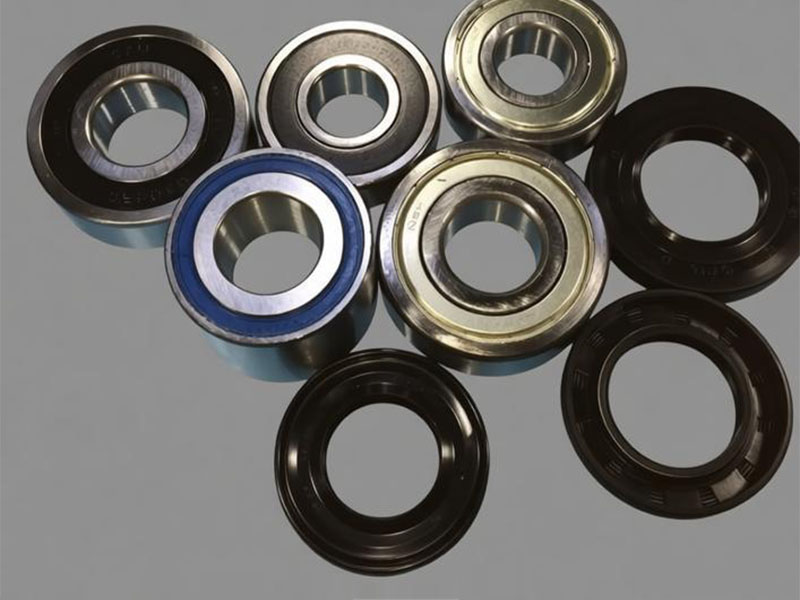
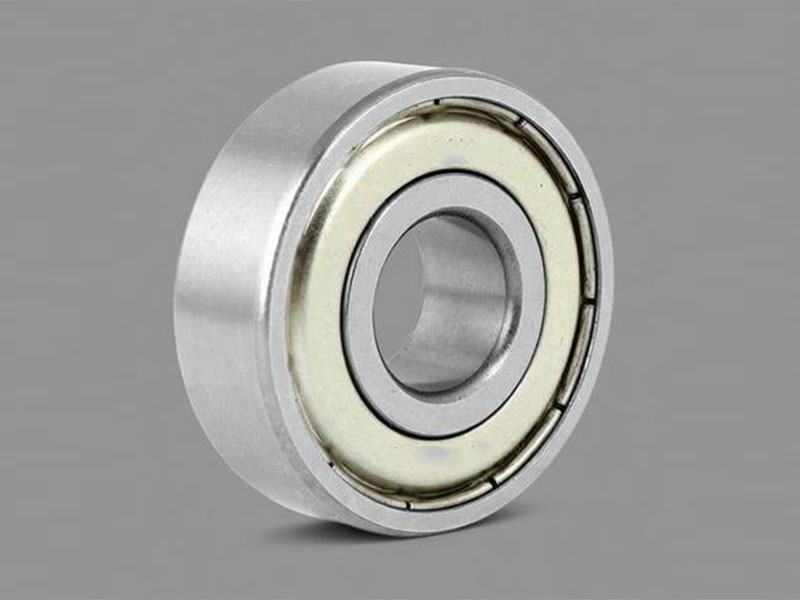
Shielded bearings, typically identified by the suffix ZZ or 2Z, feature a metal shield—usually made of stamped steel—attached to the outer ring. The defining characteristic of a shield is that it is non-contact; there is a very narrow, precisely controlled gap between the shield and the inner ring.
1.1 Design and Mechanism
The metal shield is pressed into a groove on the outer ring but does not touch the rotating inner ring. This creates a labyrinthine path that blocks large particles while allowing minimal friction.
1.2 Key Advantages of Metal-Shielded Bearings
- Low Starting Torque and Minimal Friction: Because the shield makes no contact with the inner ring, there is zero additional mechanical drag. This makes shielded bearings ideal for high-speed applications.
- Excellent High-Temperature Tolerance: Metal shields can withstand significantly higher operating temperatures than rubber seals without hardening, cracking, or degrading.
- Cost-Effective Solution: The manufacturing process for metal shields is simpler than for precision rubber seals, making shielded bearings a more economical choice for suitable applications.
- Effective Grease Retention: The narrow gap effectively retains the factory-packed grease while excluding large, dry contaminants such as dust, fibers, or wood particles
1.3 Limitations of Shielded Bearings
- Incomplete Contaminant Barrier: The non-contact design means fine dust particles can eventually migrate into the bearing.
- No Moisture Protection: The gap provides zero defense against moisture, condensation, or liquid splash. Water can easily penetrate a shielded bearing, leading to rust and lubricant breakdown.
- Relatively Shorter Life in Harsh Conditions: In dirty or wet environments, shielded bearings will fail much faster than their sealed counterparts.
2. What Are Sealed Bearings? (Rubber Seals / 2RS Type)
Sealed bearings, typically denoted by the suffix 2RS (Two Rubber Seals), 2RU, or VV, feature a synthetic rubber seal (commonly Nitrile or high-temperature Viton) bonded to a metal insert. Unlike shields, seals are designed to make positive contact with the inner ring’s landing area.
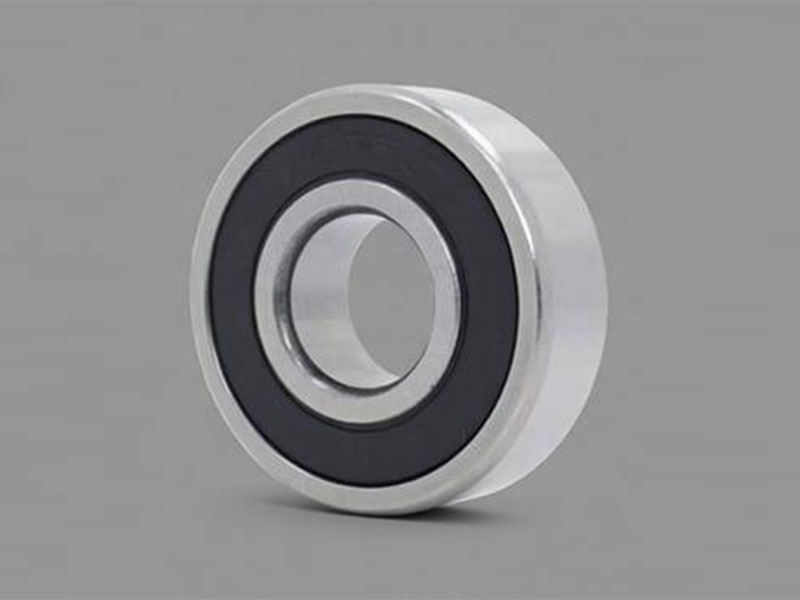
2.1 Types of Rubber Seals Used in Bearings
It is important to distinguish between the two common seal designs:
- Non-Contact Rubber Seals: The rubber forms a tortuous, labyrinthine path but does not physically touch the inner ring. They offer better protection than shields with minimal friction increase.
- Contact Rubber Seals: The rubber lip presses firmly against the inner ring. This creates the ultimate barrier against contaminants. Most standard “2RS” bearings use contact seals.
2.2 How Seals Affect Bearing Performance
The friction from contact seals generates slightly higher operating temperatures. However, this trade-off is intentional—the heat is a small price to pay for the dramatic increase in contamination protection.
2.3 Key Advantages of Rubber-Sealed Bearings
- Superior Contaminant Exclusion: Rubber seals provide a near-hermetic barrier. They effectively keep out moisture, water washdowns, condensation, fine dust, and abrasive particles that would quickly destroy a shielded bearing.
- Lubrication Retention: Seals are so effective at holding grease that sealed bearings are typically “maintenance-free” and pre-lubricated for their entire service life.
- Extended Lifespan in Harsh Environments: In dirty, wet, or outdoor applications, a sealed bearing will outlast a shielded bearing by a factor of 10 or more.
- True “Fit and Forget” Solution: Ideal for applications where regular maintenance or re-lubrication is impractical.
2.4 Limitations of Rubber-Sealed Bearings
- Lower Speed Limits: Due to contact friction, sealed bearings have lower maximum rotational speed ratings than equivalent shielded bearings.
- Higher Operating Temperatures: The friction generates more heat, which may be a concern in thermally sensitive applications.
- Increased Starting Torque: They require more force to initiate rotation, which is critical in precision instruments or small power tools.
3. Shielded vs. Sealed: The Head-to-Head Comparison
To help you visualize the practical differences, here is a direct comparison based on real-world performance metrics:
| Feature | Shielded (ZZ – Metal Shield) | Sealed (2RS – Rubber Seal) |
| Design | Non-contact metal disc | Contact or non-contact rubber lip |
| Contamination Resistance | Protects against solid, large particles only | Protects against fine dust, moisture, and splash |
| Speed Capability | High (Excellent for high RPM applications) | Reduced (Not suitable for extreme high speed) |
| Friction & Heat Generation | Very Low | Low to Moderate (Higher for contact seals) |
| Lubrication Life | Grease can slowly escape or dry out over time | Grease is locked in for life |
| Moisture Resistance | None | Excellent |
| Cost | Lower | Higher |
| Best Use Case | Clean environments, high-speed electric motors | Harsh environments, wet conditions, automotive hubs |
4. Critical Selection Factors: How to Choose the Right Type
When sourcing bearings for your project, ask yourself these three questions. The answers will immediately point you toward the correct type.
4.1 What Do I Need to Protect the Bearing From?
- If the enemy is dry dirt, dust, or fibers: A Shielded (ZZ) bearing is often sufficient. For example, a clean-room blower motor or a household fan.
If the enemy is water, steam, chemicals, or fine powder: You must choose a Sealed (2RS) bearing. For example, an agricultural implement, a food processing conveyor, or an automotive wheel hub exposed to road splash.
4.2 How Fast Will the Bearing Be Rotating?
- High RPM applications (consult specific speed ratings): The low friction of a Shielded (ZZ) bearing is usually required to prevent overheating at high speeds.
- Low to Moderate RPM: A Sealed (2RS) bearing is preferable because the benefits of contamination protection outweigh the slight speed and friction penalty.
4.3 What Is the Operating Temperature?
High Heat (>100°C / 212°F): Standard Nitrile rubber seals can become brittle and fail. If your application runs hot, you have two options:
- Choose a Shielded (ZZ) bearing with metal shields.
- Choose a specialty Viton (FKM) sealed bearing, designed for high-temperature resistance.
Conclusion: Making the Right Choice for Your Application
There is no universally “better” bearing—only the right bearing for the specific application.
- Choose Shielded Bearings (ZZ with Metal Shields) when speed and low friction are your top priorities, and the operating environment is relatively clean and dry.
- Choose Sealed Bearings (2RS with Rubber Seals) when protecting against contamination is critical, and you prioritize a long, maintenance-free life over maximum speed.
Frequently Asked Questions
Q: What does “ZZ” mean on a bearing?
A: “ZZ” indicates that the bearing has a metal shield on both sides. “Z” indicates a shield on one side only.
Q: What does “2RS” mean on a bearing?
A: “2RS” stands for “Two Rubber Seals.” It indicates the bearing has a rubber contact seal on both sides. “RS” indicates a seal on one side only.
Q: Can I replace a shielded bearing with a sealed bearing?
A: Yes, if the dimensional specifications (bore, outer diameter, width) are identical. However, you must verify that the application’s speed and torque requirements can accommodate the increased friction of a sealed bearing.
Q: Can I re-lubricate shielded or sealed bearings?
A: Standard shielded and sealed bearings are pre-lubricated and not designed for re-lubrication. Some specialized bearings have grease fittings, but standard ZZ and 2RS bearings are considered “lubricated for life.”
About DUHUI Bearing
With 20 years of manufacturing expertise and 15 years in international trade, DUHUI Bearing is your trusted partner for high-quality automotive wheel hub bearings and general industrial bearings. We understand the technical nuances between metal shields and rubber seals because we manufacture both.
Need help selecting the right bearing protection for your specific application?
[Contact our engineering team today] for a professional consultation. We provide technical data sheets, performance testing, and custom solutions tailored to your requirements.