High-temperature environments present one of the toughest challenges for rotating machinery. The bearings you choose directly impact equipment performance, maintenance intervals, and operational costs.
Two primary solutions exist for these demanding applications: ceramic bearings and specialty steel bearings. Each has distinct advantages and limitations based on material science and engineering principles.
DUHUI provides an objective comparison of both options, helping engineers and procurement professionals make informed decisions based on technical requirements rather than marketing claims.
1: Understanding High-Temperature Bearings
1.1 What Defines a High-Temperature Bearing?
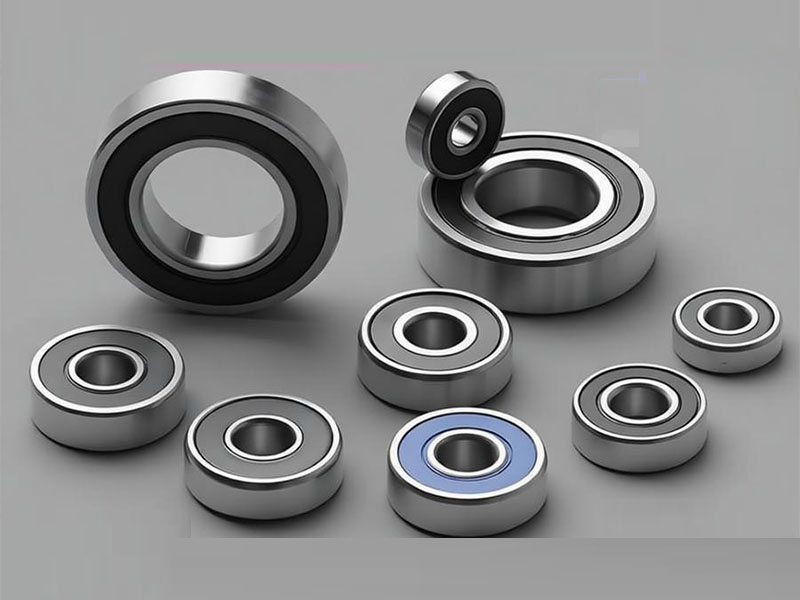
A high-temperature bearing is specifically designed to operate reliably in environments where standard bearings would quickly fail. This typically means consistent operation at temperatures exceeding 150°C, with specialized materials pushing that limit far higher. The key differentiators are the bearing’s material, internal clearance design, cage material, and the type of lubricant (or lack thereof) used.
1.2 Why “High Temperature” is a Critical Factor
Elevated temperatures wreak havoc on bearings in three main ways:
- Material Degradation: Standard steel can soften, lose hardness, and permanently deform under load at high temperatures.
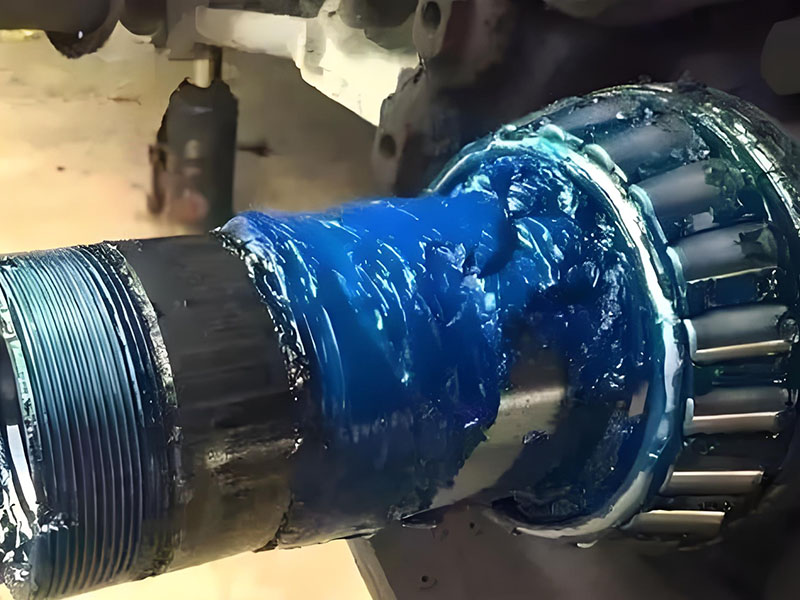
- Lubrication Failure: Conventional greases and oils evaporate, carbonize, or lose their lubricating properties.
- Geometric Instability: Thermal expansion can cause bearings to expand and seize within their housings.
2: Deep Dive into Ceramic High-Temperature Bearings
2.1 The Material Science
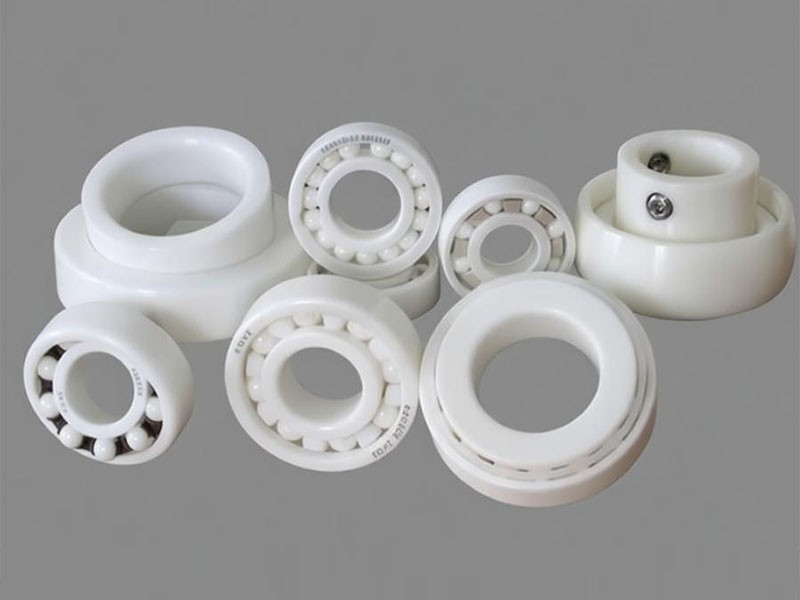
Most full ceramic bearings are made from advanced engineering materials like Silicon Nitride (Si₃N₄) or Zirconium Oxide (ZrO₂) . These materials are sintered at ultra-high temperatures to form a structure that is exceptionally hard and stable.
2.2 Core Advantages
- Extreme Temperature Resistance: This is their superpower. Ceramic bearings can operate continuously at temperatures from 800°C up to 1600°C, far beyond the melting point of steel.
- Beyond Steel’s Capabilities: They are 40% lighter than steel, reducing rotational mass and enabling higher speeds. Their low thermal expansion means they maintain precise tolerances even during rapid temperature swings.
- Self-Lubrication & Insulation: Certain ceramics have a low coefficient of friction, allowing for limited “dry running.” They are also naturally electrically insulating, preventing damage from stray currents in motors and generators.
2.3 Engineering Limitations
- Initial Cost: The manufacturing process is complex and expensive, making the upfront investment significantly higher.
- Brittleness & Shock Sensitivity: Ceramics are hard but brittle. They are susceptible to damage from sudden impact loads or improper installation techniques.
- Mating Requirements: They often require precision-ground shafts and housings made from hardened materials to prevent stress concentrations.
3: Deep Dive into Specialty Steel High-Temperature Bearings
3.1 The Material Science
Steel bearings for high temperatures aren’t made from off-the-shelf carbon steel. They utilize specialty alloys like AISI 440C stainless steel or tool steels like M50, often subjected to specialized heat treatment processes to retain hardness and dimensional stability at elevated temperatures.
3.2 Core Advantages
- Superior Load Capacity: In their effective temperature range (typically up to 300°C-500°C), steel bearings offer unmatched dynamic and static load capacities, handling heavy radial and thrust loads with ease.
- Toughness and Reliability: Steel’s inherent toughness means it can withstand significant shock and impact, making it the default choice for applications with variable or unpredictable loads.
- Cost-Effectiveness and Availability: They are more affordable to produce, widely available in countless standard sizes, and can be installed and maintained using conventional tools and techniques.
3.3 Engineering Limitations
- The Temperature Ceiling: Beyond their limit, the steel will temper, leading to a permanent loss of hardness (temper-back) and rapid failure.
- Lubrication and Corrosion: They absolutely require high-temperature lubricants, which can be messy and degrade over time. Without proper protection, they are also prone to oxidation and corrosion.
4: The Ultimate Showdown – Ceramic vs. Steel
| Feature Dimension | Full Ceramic Bearings | Specialty Steel Bearings |
| Max Temperature | Up to 1600°C | ≤ 500°C |
| Load Capacity | Susceptible to shock | Excellent |
| Speed Capability | Excellent for high speeds | Limited by lubrication |
| Corrosion Resistance | Inert to most chemicals | Requires protection |
| Self-Lubrication | Can run dry | Must be lubricated |
| Electrical Insulation | Naturally insulating | Conductive |
| Initial Cost | High | Moderate |
| Lifecycle Cost | Lower in extreme conditions | Lower in standard conditions |
5.How to Make the Right Choice – Expert Advice from DUHUI
The decision hinges on the dominant demands of your application:
- Choose Ceramic Bearings if: Your operating temperature exceeds 500°C, you are in a vacuum or clean room where lubrication is impossible, you need electrical insulation, or your priority is ultra-high speed.
- Choose Steel Bearings if: Your temperatures are consistently below 400°C, you are dealing with heavy loads or shock loading, budget is a primary concern, and you have a system for high-temperature lubrication.
Often, the best solution is a hybrid—such as ceramic balls in steel races—which combines the low friction of ceramics with the toughness of steel. Our team at DUHUI can help you navigate these nuances.
Conclusion
Selecting between ceramic and steel high-temperature bearings ultimately depends on your specific operating conditions:
- Ceramic bearings excel in extreme heat (>500°C), high-speed, or electrically sensitive applications where lubrication is difficult.
- Steel bearings remain the practical choice for moderate high temperatures, heavy loads, and applications where cost predictability matters.
No single solution fits every scenario. The right choice requires careful evaluation of your temperature range, load characteristics, and environmental factors.
With 20 years of manufacturing experience across both technologies, DUHUI Bearing offers the technical expertise to help you select the optimal solution for your application.