In the intricate world of mechanical engineering, controlling motion with precision and reliability is paramount. The one way bearing, also known as an overrunning clutch or freewheel, is a masterclass in achieving just that. This compact component performs a critical function: it transmits torque in one rotational direction and freely rotates (or “overruns”) in the opposite direction. But what makes this component so advantageous for designers and engineers across countless industries? DUHUI delves deep into the design, benefits, and applications of one way bearings, illustrating why they are an indispensable part of modern machinery.
1. What is a One Way Bearing?
At its core, a one way bearing is a mechanical device that allows a driven shaft to rotate freely in one direction but locks to transmit torque when rotation is attempted in the opposite direction. A classic analogy is the freewheel mechanism on a bicycle: you can pedal forward to drive the wheel, but when you stop pedaling or pedal backward, the wheel continues to spin forward without engaging the drivetrain. This simple yet ingenious function—a combination of “backstopping” (preventing reverse rotation) and “overrunning”—solves complex engineering challenges with elegant simplicity.
2. Key Design Elements That Define Performance and Reliability
The performance of a one way bearing is not accidental; it’s the result of meticulously engineered components. Understanding these elements is key to appreciating their advantages.
2.1 The Heart of the Mechanism: Engagement Types
The method of engagement defines the bearing’s characteristics. Common types include:
- Sprag Type: Uses specially shaped steel cams (sprags) that wedge between the inner and outer races. They offer high torque capacity in a compact space and are ideal for high-speed overrunning.
- Roller Type: Utilizes rollers on inclined planes. When rotation occurs in the locking direction, the rollers roll up the incline and wedge. They are known for their simplicity and reliability.
- Ratchet Type: A positive-engagement mechanism using pawls and gear teeth. It provides precise, no-slip indexing but is generally not suitable for high-speed overrunning.
2.2 Critical Components: Needles, Races, and Cages
Beyond the engagement mechanism, the quality of fundamental components is vital.
- Materials: High-grade bearing steel (like GCr15) is essential for rollers, races, and sprags to withstand immense contact pressures and cyclic stresses.
- Precision Manufacturing: The inner and outer races are precision-ground to exacting tolerances. Surface treatments like heat treatment and case hardening enhance hardness and wear resistance, ensuring a long service life.
- Cages: These components evenly space the rollers or sprags, preventing metal-to-metal contact, reducing friction, and guiding them smoothly in and out of engagement.
At DUHUI Bearing, we understand that the devil is in these details. Our commitment to sourcing premium materials and employing advanced CNC machining and heat treatment processes ensures that every component in our bearings meets the highest standards of durability.
3. Mechanical Advantages
The design elements translate into two powerful mechanical advantages.
3.1 The Essential Backstopping Function
The primary advantage is its ability to act as a safety device. In inclined conveyors, a one way bearing instantly locks to prevent the belt from rolling backward under load, averting potential damage or injury. In indexing tables, it ensures precise positioning by preventing reverse movement. This inherent, passive safety feature requires no external sensors or controls, making systems inherently more robust.
3.2 Enabling Overrunning (Freewheeling) for Higher Efficiency
Equally important is the overrunning function. In an automotive starter motor, the one way bearing allows the starter gear to spin the engine. Once the engine starts, it rotates faster than the starter motor. The bearing then overruns, disconnecting the starter and preventing it from being driven at destructive speeds. This seamless engagement and disengagement reduces parasitic drag and improves overall system efficiency.
4. Design and Performance Advantages
These mechanical functions lead to significant design-level benefits.
4.1 Compact and Simplified System Design
Integrating a one way bearing is often the most elegant way to achieve a unidirectional drive or prevent backstop. It eliminates the need for complex, space-consuming braking systems, electronic sensors, or separate clutches. This results in:
- Space Savings: A single, compact component performs a function that would otherwise require a larger assembly.
- Weight Reduction: Ideal for automotive and aerospace applications where every gram counts.
- Cost Efficiency: Simpler designs are cheaper to manufacture and have fewer potential points of failure.
4.2 Enhanced Durability and Reliability
When properly selected and maintained, a one way bearing offers exceptional longevity. Its robust internal construction allows it to handle high shock loads and vibrations common in industrial environments. Many designs are sealed and pre-lubricated for life, offering a “fit-and-forget” solution that minimizes downtime and maintenance costs.
5. Applications Across Industries
The unique combination of advantages makes the one way bearing incredibly versatile.
5.1 Automotive Industry: Driving Performance and Safety
- Starters: As described earlier, it’s critical for protecting the starter motor.
- Transmissions: Used in torque converters and shift mechanisms to enable smooth gear changes and manage power flow.
- Alternators: Some alternator pulleys use a one way bearing (decoupler) to absorb engine vibrations and improve belt life.
5.2 Industrial Machinery: Ensuring Precision and Continuity
- Conveyor Systems: The quintessential backstopping application, preventing runaway and material spillage.
- Packaging Machinery: For precise indexing and preventing reversal during intermittent motion.
- High-Speed Overrunning: In machines with dual drives or where a coast-down function is needed.
5.3 Aerospace and Medical: Mission-Critical Reliability
In industries where failure is not an option, the reliability of a one way bearing is paramount.
- Aircraft: Used in actuation systems for landing gear and wing flaps, ensuring mechanisms lock in place.
- Medical Devices: In surgical robots and imaging equipment, they provide smooth, controlled, and irreversible motion for patient safety.
5.4 Leisure and Sports: Enhancing User Experience
- Bicycles: The freehub in the rear wheel is a perfect example.
- Fishing Reels: Ensure the handle only turns one way to wind in line.
- Exercise Equipment: Used in magnetic resistance systems and flywheels to provide smooth, one-way motion.
6. Maximizing Lifespan and Performance
To truly leverage the advantages of a one way bearing, proper selection, installation, and maintenance are crucial.
6.1 Selection and Compatibility: Getting It Right the First Time
Choosing the correct bearing is the first and most critical step. Consider:
- Torque and Speed: What are the maximum operating conditions?
- Space Constraints: What envelope size is available?
- Operating Environment: Is it exposed to contaminants, extreme temperatures, or moisture?
Consulting with experienced engineers, like those at DUHUI Bearing, can help you navigate these variables to find the perfect match for your application.
6.2 Installation Best Practices
Improper installation is a leading cause of premature failure.
- Alignment: Ensure the shaft and housing are perfectly aligned to prevent uneven loading.
- Correct Fit: Use the recommended press-fit tolerances for mounting.
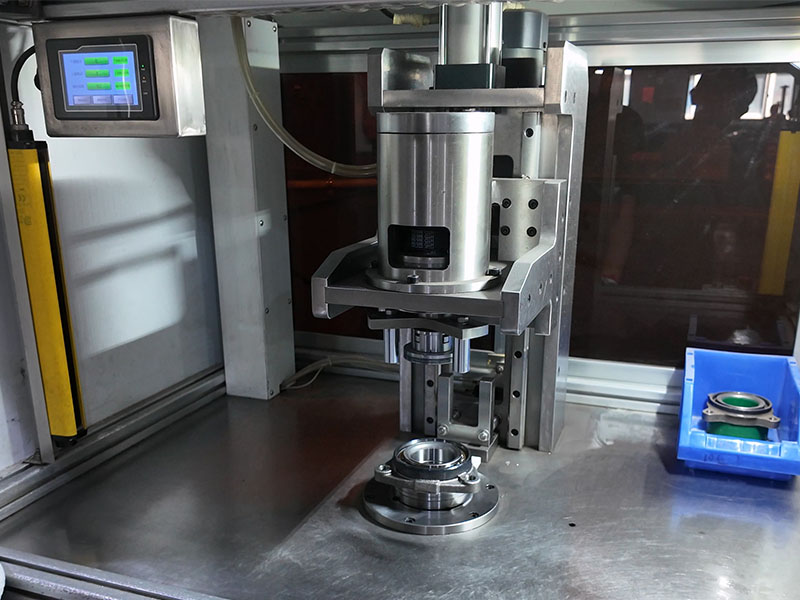
- Use Proper Tools: Never hammer the bearing directly. Use an arbor press and mounting sleeves to apply force only to the race being installed.
6.3 Maintenance for Longevity
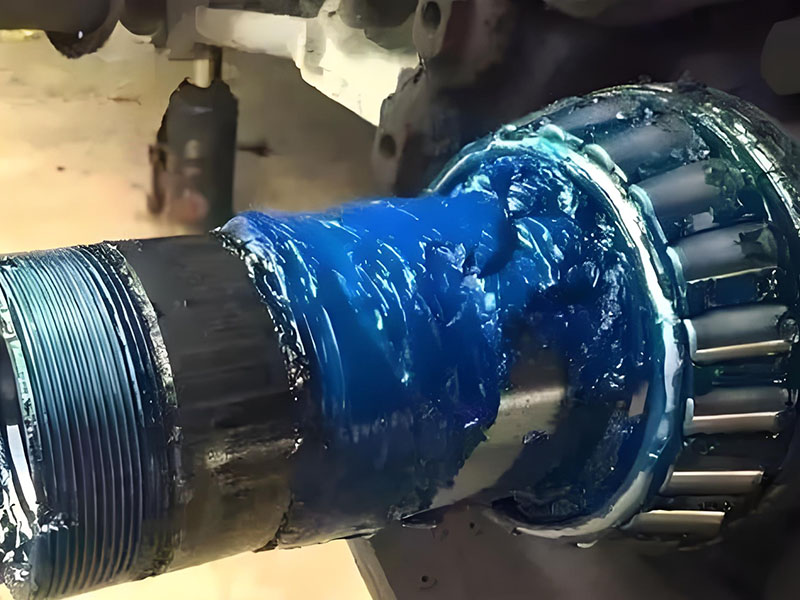
- Lubrication: Use the correct type and amount of grease or oil. Over-lubrication can be as harmful as under-lubrication.
- Regular Inspection: Monitor for unusual noise, vibration, or heat during operation. These are often the first signs of trouble.
- Contamination Control: Keep the bearing and its environment clean. Use seals or shields where necessary.
Conclusion
The one way bearing is a testament to how a simple idea—controlled, directional motion—can have a profound impact on mechanical design. From ensuring safety on a conveyor line to enabling the simple joy of coasting on a bicycle, its advantages in backstopping, overrunning, and design simplification are undeniable. It provides a pathway to creating machines that are not only more efficient and compact but also inherently more reliable.
Selecting the right bearing from a trusted partner is the final piece of the puzzle. At DUHUI Bearing, our expertise lies not just in manufacturing a wide range of high-quality bearings, but in understanding the specific needs of your application.