What Are Mechanical Bearings?
Mechanical bearings are fundamental components in nearly all rotating and linear motion systems. A mechanical bearing constrains relative motion between two parts to the desired type—typically rotation or linear movement. It reduces friction and supports loads simultaneously.
Bearings are integral to wheel hubs, industrial gearboxes, aerospace equipment, medical devices, and many other applications. Understanding bearing characteristics, types, selection criteria, and maintenance requirements is essential. This applies to automotive systems, precision machinery, and general industrial use. Engineers, maintenance professionals, and procurement specialists all need this knowledge to ensure optimal equipment performance and long service life.
Types of Mechanical Bearings
Mechanical bearings fall into two primary categories: plain bearings (bushings or sleeve bearings) and rolling-element bearings.
Plain Bearings
Plain bearings operate on sliding motion. They have no rolling elements. Instead, the shaft rotates or slides directly against the bearing surface, typically with lubrication. These bearings are optimized for high-load, low-speed applications. They are often the most cost-effective solution. Plain bearings offer excellent shock resistance, compact design, and quiet operation. Three main categories exist:
- Radial (journal) bearings for supporting perpendicular loads
- Thrust bearings for parallel loads
- Linear bearings for sliding motion
Rolling‑Element Bearings
Rolling-element bearings use balls or rollers between an inner and outer ring. They are designed for high-speed applications and precise motion control. These bearings offer approximately ten times lower friction than plain bearings. Within this category, bearings are further divided based on rolling element geometry and load handling capabilities.
Ball Bearings are the most common type. They use spherical balls, creating point contact that minimizes friction. Ball bearings excel in moderate to high-speed applications. They can handle both radial and axial loads. Common variants include deep groove ball bearings, angular contact ball bearings, and self-aligning ball bearings. Deep groove ball bearings are widely used in automotive wheel hubs, electric motors, and household appliances.
Roller Bearings use cylindrical, tapered, or spherical rollers. They create line contact, distributing loads over a larger area. This makes them suitable for heavy-duty applications with higher load capacities than ball bearings. Roller bearings generally operate at lower speeds compared to ball bearings.
- Cylindrical Roller Bearings: High radial load capacity, moderate thrust capacity. Used in gearboxes, electric motors, and industrial transmissions.
- Tapered Roller Bearings: Support both radial and axial loads in one direction. The tapered geometry provides excellent load distribution. Widely used in automotive wheel hubs and truck transmissions.
- Spherical Roller Bearings: Feature two rows of rollers and a spherical raceway, allowing self-alignment to accommodate shaft deflection or mounting errors. Designed for heavy radial loads and moderate axial loads.
Thrust Bearings are specifically designed for axial loads (forces parallel to the shaft axis). They can be configured as plain, ball, or roller bearings. These bearings are essential in applications with significant axial forces, such as turbines, gearboxes, and vertical shafts.
Needle Bearings use long, thin cylindrical rollers with a length-to-diameter ratio greater than 3:1. Their slim profile and high load capacity make them ideal for limited radial space. Common uses include automotive transmissions and small engines. Needle bearings can be supplied with or without a cage. Caged designs allow higher speeds, while full-complement versions offer greater load capacity.
Double Row Angular Contact Bearings combine two rows of balls arranged at an angle. This enables them to support both radial loads and bidirectional axial loads in a compact configuration. These bearings are commonly used in pumps, compressors, and transmissions where space constraints require a single bearing to handle multiple load directions simultaneously.
Linear Bearings are designed for linear motion rather than rotational motion. They provide smooth, precise movement along a straight path. This can use rolling balls (linear ball bearings) or sliding surfaces (plain linear bearings). Linear bearings are essential in machine tools, 3D printers, pick-and-place robots, and automated assembly lines.
Magnetic Bearings represent a specialized category. They use magnetic fields to suspend the shaft without physical contact. This design eliminates friction and wear entirely. Magnetic bearings are suitable for extremely high-speed applications such as turbines, centrifuges, and aerospace systems. However, they are significantly more expensive than conventional bearings and require active control systems.
Mechanical Bearing Materials
Material selection directly determines bearing performance, service life, and suitability for specific operating conditions. Different materials offer unique combinations of hardness, wear resistance, corrosion resistance, temperature tolerance, and cost.
Steel is the most common bearing material, particularly chrome steel grades such as SAE 52100 (GCr15). Chrome steel offers high hardness (typically 58–65 HRC), excellent wear resistance, and good fatigue strength. It is the standard choice for most rolling-element bearings. However, standard chrome steel is prone to rust and requires proper lubrication and corrosion protection. Stainless steel grades (such as 440C, 304, and 316) provide superior corrosion resistance for marine, food processing, and medical applications. They generally have lower hardness than chrome steel.
Bronze and Copper Alloys are widely used in plain bearing applications, particularly for bushings and thrust washers. Bronze offers good wear resistance, self-lubricating properties when impregnated with oil, and excellent corrosion resistance. Sintered bronze bearings can be permanently impregnated with lubricant, providing maintenance-free operation for certain applications. Brass bearings are similar but offer slightly lower strength than bronze.
Polymers (including PTFE, nylon, PEEK, and UHMWPE) are lightweight, corrosion-resistant, and can be self-lubricating. PTFE offers extremely low friction and a wide temperature range. PEEK provides high strength and chemical resistance. Polymer bearings are common in medical devices, food processing equipment, and chemical industries where metal bearings may corrode or contaminate products. Their primary limitations include lower load capacity and potential deformation under high temperatures or heavy loads.
Ceramics (typically silicon nitride, zirconia, or alumina) offer exceptional hardness, high-temperature resistance, corrosion resistance, and non-magnetic properties. They are approximately 40% lighter than steel bearings. Ceramic bearings can operate at higher speeds without lubrication. However, ceramics are brittle, difficult to manufacture, and significantly more expensive. They are typically reserved for high-value applications such as high-speed spindles, aerospace components, and laboratory equipment.
Composite Materials combine multiple material types to achieve synergistic benefits. A common configuration features a metal backing (typically steel or bronze) for structural strength, lined with a polymer layer (such as PTFE or PEEK) for low friction and self-lubrication. These composite bearings offer maintenance-free operation, high load capacity, and excellent wear resistance. They are increasingly popular in automotive, industrial, and agricultural applications.
Key Functions of Mechanical Bearings
Mechanical bearings perform several critical functions in machinery and equipment. The table below summarizes these functions.
| Function | Description | Application Impact |
|---|---|---|
| Reducing Friction | Bearings minimize friction between moving components. Plain bearings rely on a lubricant film, while rolling-element bearings use rolling elements to achieve significantly lower friction. | Improves energy efficiency, reduces heat generation |
| Supporting Loads | Bearings carry both radial loads (perpendicular to shaft) and axial loads (parallel to shaft). | Ensures structural integrity and operational stability |
| Enhancing Precision | Bearings enable precise positioning and consistent rotational accuracy. | Critical for machine tools, robotics, and measurement equipment |
| Transferring Motion | Bearings transmit rotational or linear motion from one component to another. | Enables power transmission in drive systems |
| Transmitting Forces | Bearings transfer forces between stationary and moving components. | Essential for load-carrying mechanical systems |
| Bearing Stiffness | Bearings provide rigidity against deformation under load, maintaining alignment between components. | Directly affects machining accuracy and vibration control |
Bearing stiffness deserves special attention. In precision machinery such as CNC machine tools and high-speed spindles, stiffness directly determines machining accuracy and surface finish quality.
How to Choose the Right Mechanical Bearing
Selecting the appropriate bearing requires systematic evaluation of multiple operating parameters. Proper bearing selection directly affects equipment performance, maintenance costs, and operational lifespan.
Load Capacity and Direction
Load magnitude and direction are the primary selection criteria. Radial loads (perpendicular to the shaft) require radial bearings such as deep groove ball bearings or cylindrical roller bearings. Axial loads (parallel to the shaft) require thrust bearings. Combined loads (both radial and axial forces) typically require angular contact ball bearings or tapered roller bearings. Evaluate both static load capacity (load during stationary conditions) and dynamic load capacity (load during rotation). This prevents plastic deformation and ensures adequate service life.
Speed and Precision Requirements
Operating speed significantly influences bearing selection. Ball bearings generally handle higher speeds than roller bearings. Needle bearings and plain bearings are typically limited to lower speeds. For high-speed applications (above 10,000 RPM), precision ball bearings with cages and proper lubrication are recommended. For precision applications such as machine tool spindles, bearings must meet specific tolerance classes defined by ISO 492 (Class 0, 6, 5, 4, and 2) or ABEC ratings (ABEC‑1 to ABEC‑9). Higher precision ratings enable better rotational accuracy but do not necessarily increase maximum speed.
Environmental Factors
The operating environment plays a crucial role in material and sealing selection. High-temperature environments may require ceramic or specialized steel alloys. Corrosive environments (marine, chemical processing) need stainless steel, ceramic, or polymer bearings. Contaminants such as dust, moisture, and debris require sealed or shielded bearings with appropriate ingress protection (IP) ratings. Vacuum or cleanroom applications may need specially lubricated or unlubricated bearings to prevent outgassing or particle generation.
Bearing Life and Reliability
Bearing life is typically expressed as the L10 rating. This is the number of revolutions or operating hours that 90% of a bearing population will achieve or exceed under specified conditions before fatigue failure occurs. L10 life calculation, defined by ISO 281, accounts for dynamic load rating, applied load magnitude, and rotational speed. For critical applications, engineers may specify higher reliability levels (L5 or L1 ratings) to ensure longer service life. Proper lubrication, correct mounting, and appropriate clearance selection can significantly extend actual bearing life beyond calculated ratings.
Precision and Tolerance Classes
For high rotational accuracy, bearing precision is specified by tolerance classes. According to ISO 492, tolerance classes for radial bearings include Class 0 (normal), Class 6, Class 5, Class 4, and Class 2 (highest precision). The ABEC system (ABEC‑1 through ABEC‑9) provides an equivalent classification. Tighter tolerances reduce runout, vibration, and noise but increase manufacturing costs. Selecting the appropriate precision class requires balancing accuracy against cost. Tightening dimensional tolerance from ±0.05 mm to ±0.005 mm typically increases machining costs by 200–300%.
Bearing Maintenance and Failure Prevention
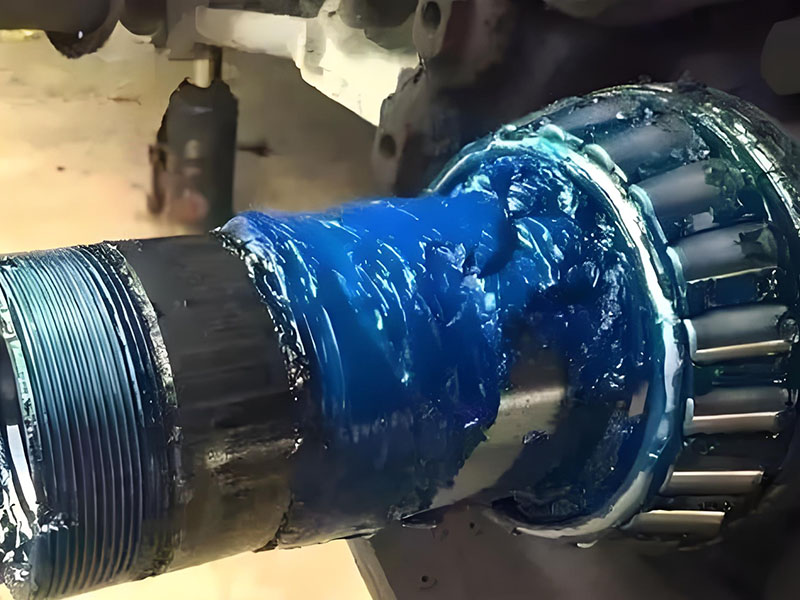
Proper maintenance significantly extends mechanical bearing service life. The most common failure modes include fatigue spalling (surface pitting from cyclic stress), abrasive wear (caused by contaminants), adhesive wear (from inadequate lubrication), and corrosion. Preventive measures include regular lubrication according to manufacturer specifications, proper sealing to exclude contaminants, vibration monitoring for early fault detection, and correct mounting procedures (avoid hammer blows, use induction heaters for interference fits). Approximately 40–50% of bearing failures originate from lubrication‑related issues. Using the correct lubricant type and relubrication interval is the single most effective maintenance action.
Conclusion
Mechanical bearings are essential components that enable motion, reduce friction, and support loads across virtually every industrial sector. Plain bearings and rolling-element bearings each offer distinct advantages for different operating conditions. Ball bearings excel in high-speed, moderate-load applications, including automotive wheel hubs and electric motors. Roller bearings provide superior load capacity for heavy-duty operations. Thrust bearings, needle bearings, linear bearings, and magnetic bearings address specialized requirements in axial loading, space‑constrained designs, linear motion, and high‑speed applications. Material selection—from chrome steel and stainless steel to polymers, ceramics, and composites—determines bearing compatibility with specific environmental and operational demands. Proper bearing selection requires careful evaluation of load characteristics, speed requirements, environmental conditions, expected service life, precision needs, and maintenance planning. Understanding these factors enables engineers and procurement professionals to optimize machinery performance, reduce maintenance costs, and extend equipment operational lifespan.
Frequently Asked Questions (FAQs)
Q1: How do I choose the right bearing type for my application?
A1: Start by analyzing load direction (radial, axial, or combined), load magnitude, operating speed, available space, and environmental conditions. For high-speed, low-to-moderate load applications, ball bearings are typically suitable. For heavy loads, roller bearings are preferred. For axial loads only, use thrust bearings. For limited radial space, consider needle bearings.
Q2: What is the difference between plain bearings and rolling-element bearings?
A2: Plain bearings operate by sliding motion with no rolling elements. They suit high-load, low-speed applications with good shock resistance and quiet operation. Rolling-element bearings (ball and roller bearings) use rolling elements between races. They offer lower friction (approximately ten times lower), higher speed capability, and greater precision, but with higher cost and lower shock tolerance.
Q3: How long should a mechanical bearing last?
A3: Bearing life is typically expressed as the L10 rating—the operating hours that 90% of bearings in a population will achieve before fatigue failure. Actual service life varies based on load, speed, lubrication, contamination, mounting quality, and maintenance. With proper selection and maintenance, bearings can operate for thousands to tens of thousands of hours.
Q4: What lubricant should I use for bearings?
A4: Lubricant selection depends on operating temperature, speed, load, and environmental conditions. Grease is suitable for most general applications and provides longer retention. Oil lubrication is preferred for high-speed or high-temperature applications where heat dissipation is critical. For extreme conditions, solid lubricants (graphite, molybdenum disulfide) or self-lubricating bearing materials may be specified.
Q5: What are the most common causes of bearing failure?
A5: The primary causes are inadequate or contaminated lubrication (approximately 40–50% of failures), improper mounting and misalignment, overloading beyond rated capacity, contamination from dirt or moisture, and corrosion. Proper installation procedures and regular maintenance significantly reduce failure rates.
Q6: What is the difference between stainless steel and chrome steel bearings?
A6: Chrome steel (SAE 52100/GCr15) offers higher hardness (58–65 HRC) and better wear resistance at lower cost but is susceptible to rust. Stainless steel (440C, 304, 316) provides corrosion resistance for marine, food, and medical applications but has lower hardness (approximately 58 HRC for 440C) and higher cost. Choose chrome steel for dry, clean environments; choose stainless steel for humid, corrosive, or wash-down applications.
Q7: What do ABEC ratings mean?
A7: ABEC (Annular Bearing Engineering Committee) ratings measure bearing precision and tolerance. ABEC‑1 is standard precision; ABEC‑3, ABEC‑5, ABEC‑7, and ABEC‑9 represent progressively tighter tolerances (higher numbers = lower tolerances = better precision). Higher ABEC ratings improve rotational accuracy, reduce vibration, and enhance smoothness but increase cost and do not necessarily increase maximum speed. ABEC‑7 or ABEC‑9 is typical for high-precision spindles and aerospace applications.
Q8: How should I mount a bearing correctly?
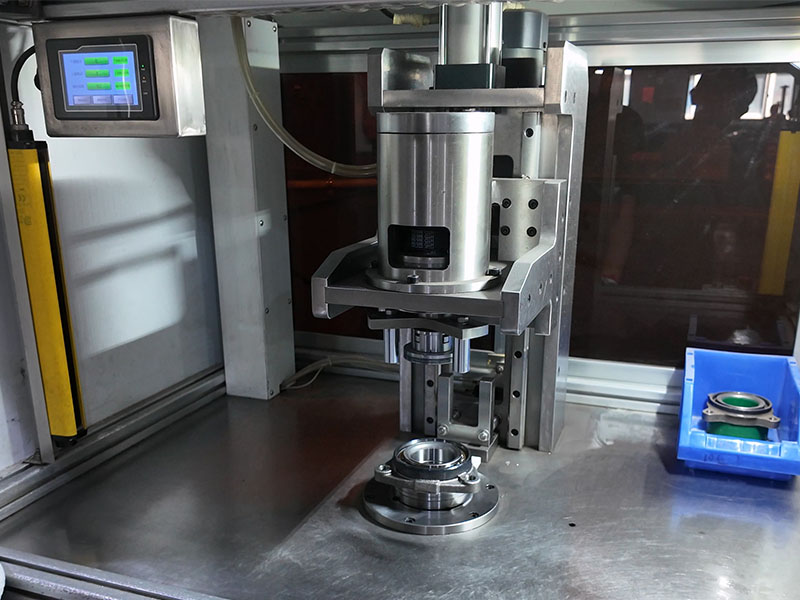
A8: Never strike a bearing directly with a hammer—this can dent raceways and cause premature failure. Use a press or appropriately sized sleeve to apply force evenly to the ring being mounted (inner ring for shaft mounting, outer ring for housing mounting). For interference fits, heat the bearing (typically to 100–120°C) to expand the inner ring before mounting. Always clean the shaft and housing, check for burrs or corrosion, and use proper mounting tools.