The wheel hub assembly is a fundamental safety component of modern vehicles, serving as the critical link between the wheel and the vehicle’s suspension . More than just a simple part, it is a precision-engineered unit that integrates several key components to ensure smooth wheel rotation, support the vehicle’s weight, and often provide data for critical systems like ABS . Understanding the key components of a wheel hub assembly is essential for anyone in the automotive industry, from manufacturers and distributors to mechanics and fleet managers. DUHUI will provide a detailed breakdown of these five core elements and their functions.
1. Wheel Bearing – The Core Rotational Component
At the heart of every hub assembly lies the wheel bearing. Its primary role is to enable the wheel to rotate freely and with minimal friction while supporting the significant radial and axial loads generated during driving, cornering, and braking .
A standard wheel bearing is a complex piece of engineering consisting of several precision parts :
- Inner and Outer Races: Hardened steel rings that provide smooth pathways for the rolling elements.
- Rolling Elements: Either steel balls for lighter, passenger car applications or tapered rollers for heavier vehicles like SUVs and trucks that endure greater loads .
- Bearing Cage: A retainer that keeps the rolling elements evenly spaced.
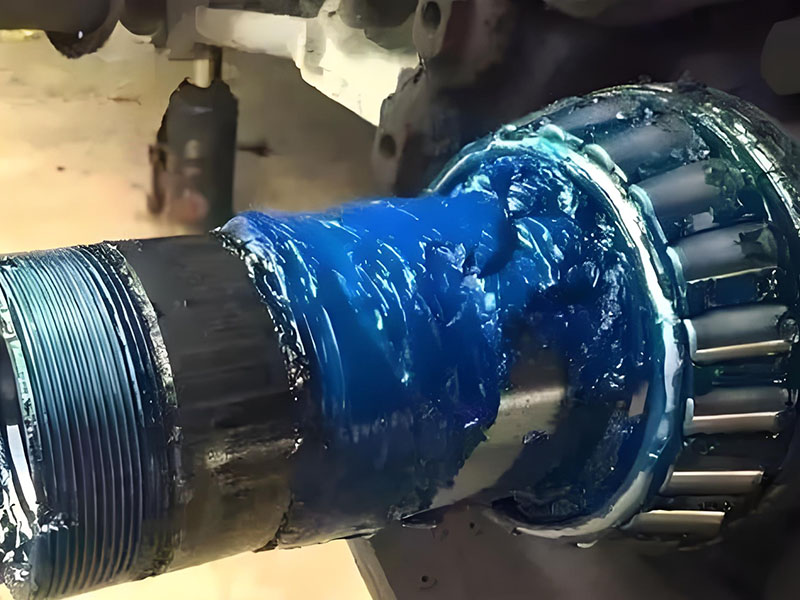
- Integrated Seals: Pre-packed with high-quality grease and sealed for life to prevent contamination .
The evolution of the wheel bearing is directly tied to the hub assembly itself. First-generation bearings were simply the double-row bearing unit . Second-generation hub bearings integrated the bearing with a mounting flange on the outer ring, simplifying installation . Third-generation hub bearings represent the highest level of integration, combining the bearing with flanges on both the inner and outer rings. They often feature an integrated ABS sensor and encoder, providing a compact, bolt-on solution that enhances reliability and performance .
2. Wheel Hub Flange – The Structural Backbone
The wheel hub flange is the large, disc-shaped metal component that serves as the structural backbone of the entire assembly . Typically manufactured from high-strength forged or cast steel, it is designed to withstand immense stresses .
Its main functions are:
- Housing the Bearing: The hub flange contains the precision-machined bore where the wheel bearing is pressed.
- Providing a Mounting Surface: It connects the bearing to the suspension knuckle on one side and provides the mounting surface for the brake rotor and wheel on the other. In second and third-generation units, this flange is an integral part of the bearing itself .
3. Wheel Hub Studs – The Wheel Mounting Points
Wheel hub studs are the threaded fasteners that project from the hub flange. They are the critical interface that physically attaches the wheel and brake rotor to the vehicle .
These studs are designed to perform a demanding job. They must precisely guide the wheel into place and then, when paired with lug nuts, provide the tremendous clamping force needed to secure the wheel under all driving conditions. The quality and integrity of these studs are non-negotiable for safety, as they bear the entire load of the vehicle during motion.
4. Oil Seal – The Protective Barrier
The oil seal is an often-overlooked but absolutely vital component. Typically made of high-quality rubber or synthetic material, it is pressed into the back of the hub assembly .
The oil seal has two critical tasks:
- Retaining Lubrication: It keeps the specialized grease inside the bearing, ensuring it remains lubricated for its entire service life .
- Excluding Contaminants: It forms a tight barrier against water, dust, road salt, and other debris that would quickly destroy the precision-ground bearing surfaces . Modern seals feature multiple lips and advanced materials to handle extreme temperatures and prevent failure .
5. Dust Cap – The First Line of Defense
Completing the assembly is the dust cap. This simple, usually metal or sometimes plastic, cup-shaped cover fits snugly over the outermost part of the hub assembly, on the wheel side .
While simple, the dust cap plays an essential role :
- Secondary Protection: It acts as the first line of defense, shielding the central spindle nut and the main oil seal from direct exposure to road debris, mud, and water.
- Preserving Integrity: By preventing the ingress of large contaminants, it helps maintain the integrity of the primary seal and the bearing grease, contributing to the long-term durability of the entire unit .
Conclusion
A modern wheel hub assembly is a masterpiece of integration, where the wheel bearing, hub flange, studs, oil seal, and dust cap work together as a single, reliable unit . The performance and safety of the assembly depend on the precision and quality of every single one of these components. At DUHUI Bearing, we specialize in manufacturing complete wheel hub assemblies that meet the highest OEM standards. We understand the engineering behind each part, ensuring that our products deliver the durability, safety, and performance your customers demand. Contact us to learn more about our comprehensive range of automotive bearing solutions.