If you’ve ever wondered how many wheel bearings a truck has, the answer isn’t as straightforward as you might think. Unlike passenger cars, trucks come in various configurations—from light-duty pickups to heavy-duty commercial vehicles—and the number of wheel bearings depends largely on the axle count and wheel-end design.
In this guide, DUHUI will break down how to calculate the number of wheel bearings for different types of trucks, explain why they matter, and share practical maintenance tips to keep your fleet running safely.
1.What Are Wheel Bearings?
Wheel bearings are critical components located inside the wheel hub. Their primary job is to allow the wheel to rotate smoothly with minimal friction while supporting the vehicle’s weight.
In trucks, you’ll commonly encounter two types:
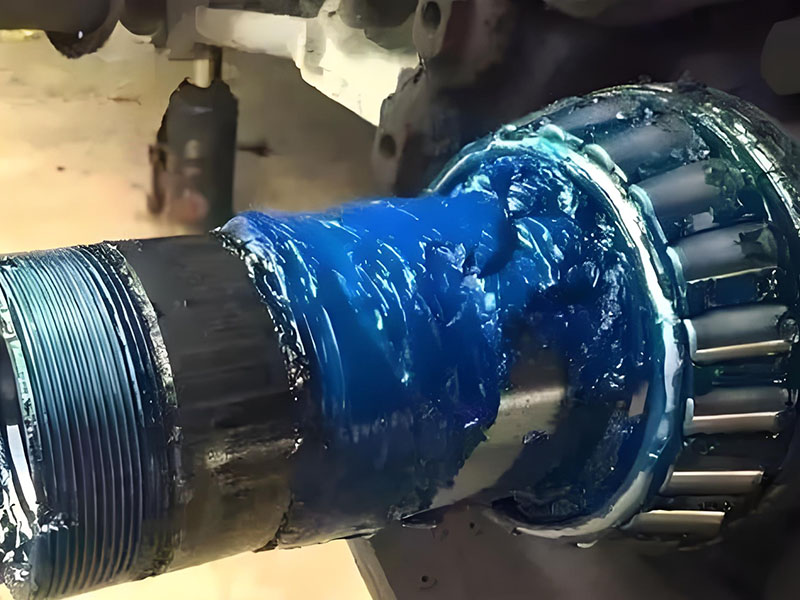
- Tapered roller bearings – traditional design with separate inner and outer bearings that require periodic adjustment and lubrication.
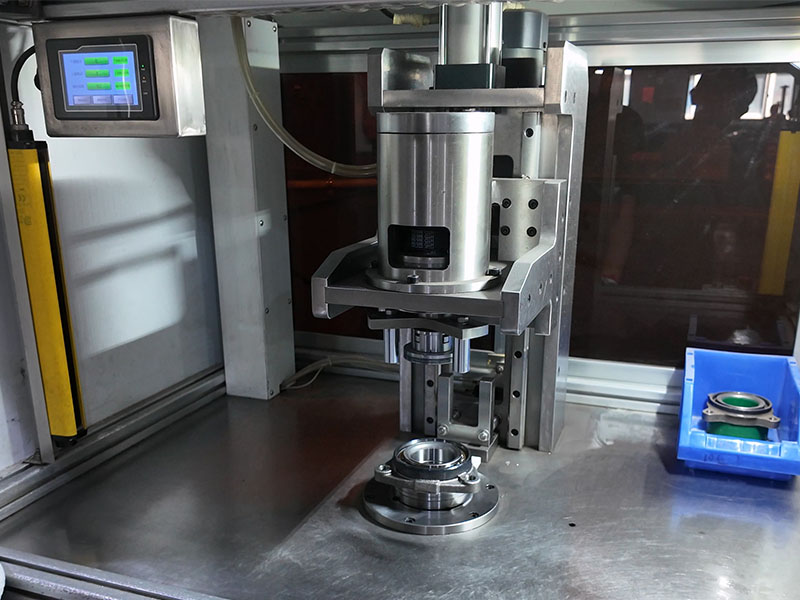
- Hub units – pre-assembled, sealed units that combine the bearing and hub into one component, often used in modern trucks for reduced maintenance.
2.Why Are Wheel Bearings Critical for Trucks?
Trucks operate under extreme conditions—heavy loads, long distances, and often rough terrain. Wheel bearings directly affect:
- Load support – they carry the entire vehicle weight plus cargo.
- Friction reduction – enabling wheels to spin freely, which improves fuel efficiency.
- Safety and handling – worn bearings can cause wheel wobble, uneven tire wear, and even wheel separation.
Because trucks endure significantly higher stress than passenger vehicles, regular inspection and timely replacement of wheel bearings are essential to avoid costly downtime and safety risks.
3.Basic Configuration: Bearings per Wheel
To understand how many bearings a truck has, start with the basics.
In traditional adjustable wheel-end designs, each wheel uses two bearings: an inner bearing and an outer bearing. This allows for proper load distribution and easy adjustment of bearing preload.
For trucks equipped with sealed hub units, each wheel typically uses one hub unit, but internally it contains two rows of rolling elements—essentially serving the same function as two separate bearings.
Thus, the general rule of thumb is: one wheel = two bearing components (either as separate bearings or integrated into a hub unit).
4.Calculating the Number of Wheel Bearings for Different Trucks
Light Trucks (Class 1–3)
Light trucks include popular models like the Ford F-150, Ram 1500, or Chevrolet Silverado 1500. These typically have:
- 4 wheels (two front, two rear)
- If using traditional bearings: 4 wheels × 2 bearings = 8 individual bearings
- If using sealed hub units: 4 hub units
Medium and Heavy Trucks (Class 4–8)
For larger trucks, the number of wheel bearings depends on the number of axles and how many wheels are on each axle.
Example 1: Single-Rear-Axle Truck (2 axles, 6 wheels)
- Front axle: 2 wheels × 2 bearings = 4 bearings
- Rear axle (dual wheels): each side has 2 wheels × 2 bearings = 4 bearings per side, total 8 bearings
- Total: 12 bearings
Example 2: Tractor Unit for Semi-Trailer (3 axles, 10 wheels)
- Front steer axle: 2 wheels × 2 bearings = 4 bearings
- Two rear drive axles: each axle has 4 wheels (dual wheels) × 2 bearings = 8 bearings per axle, total 16 bearings
- Total: 20 bearings
Example 3: Heavy-Duty Multi-Axle Truck or Trailer
Simply multiply the number of wheel positions by 2. A 5-axle truck with 18 wheels (including duals) would have approximately 36 bearings (or 18 hub units if sealed).
Special Considerations
- Steer axles vs. drive axles – both use bearings, but steer axles often require more precise adjustment due to steering loads.
- Hub units – when present, the number of physical components is halved, but the internal bearing count remains the same functionally.
5.Maintenance and Inspection Tips
Because truck wheel bearings operate under high stress, proactive maintenance is key to avoiding unexpected failures.
Common causes of bearing failure:
- Contaminated or degraded grease
- Damaged seals allowing water or debris ingress
- Overloading beyond rated capacity
- Impact damage from potholes or curbs
Best practices for extending bearing life:
- Follow service intervals – repack or replace as recommended by the vehicle or axle manufacturer.
- Check for signs of wear – listen for grinding or humming noises, feel for excessive play in the wheel, and monitor hub temperature after long drives.
- Replace in pairs – when a bearing on one side fails, replace the corresponding bearing on the same axle to maintain balanced performance.
- Use quality parts and proper tools – incorrect installation is a leading cause of premature failure.
Frequently Asked Questions
Can you replace just one wheel bearing?
Technically yes, but it’s recommended to replace bearings on the same axle as a pair. This ensures even performance and prevents one new bearing from being stressed by an older one on the opposite side.
Do all trucks have the same number of wheel bearings?
No. The number varies based on axle count, wheel configuration (single or dual wheels), and whether the truck uses separate bearings or sealed hub units.
How long do wheel bearings last on a truck?
Typically, wheel bearings on trucks can last between 100,000 to 150,000 miles (160,000–240,000 km), but heavy loads, poor road conditions, and inadequate maintenance can significantly shorten this lifespan.
How much does it cost to replace wheel bearings on a truck?
Costs vary widely depending on truck type, bearing design, and labor rates. For accurate pricing, it’s best to consult a qualified mechanic or fleet service provider.
How do I know if my wheel bearings are bad?
Common symptoms include:
- A humming, growling, or grinding noise that increases with speed
- Excessive wheel play when the vehicle is lifted
- Uneven tire wear
- ABS warning light (on vehicles with integrated speed sensors)
Can I drive with a bad wheel bearing?
No. Driving with a damaged wheel bearing is dangerous. It can lead to wheel wobble, loss of control, overheating, and even wheel detachment. If you suspect a bad bearing, have it inspected and replaced immediately.
Conclusion
So, how many wheel bearings does a truck have? The answer depends on its size, axle configuration, and whether it uses traditional bearings or modern hub units. A light pickup may have just 8 individual bearings, while a heavy semi-truck can have 20 or more.