You hear a strange grinding noise coming from your engine bay. The voltage gauge flickers. Your lights dim at idle. Chances are, your alternator bearings are failing.
The alternator bearing is a critical component in your vehicle’s charging system. Its job is to ensure the rotor spins smoothly inside the stator at thousands of revolutions per minute.
When the bearing functions properly, the rotor maintains precise alignment, generating stable electrical power for your vehicle’s battery, electronics, ignition system, and all electrical accessories.When the alternator bearing wears out, the rotor wobbles. This wobble disrupts the magnetic field, causing voltage fluctuations, reduced charging output, and eventually, complete alternator failure.
Here’s the question every car owner faces: How hard is it to repair an alternator bearing by yourself?
The honest answer: It’s moderately difficult. This is not a 10-minute job, but it’s also not rocket science. With basic mechanical skills, the right tools, and patience, a DIYer can successfully replace an alternator bearing and save hundreds of dollars on a new alternator.
At DUHUI Bearing, we’ve been manufacturing precision bearings for 20 years. We supply bearings to automotive repair shops worldwide, and we’ve seen every type of alternator failure imaginable. In this guide, we’ll walk you through exactly what it takes to repair your alternator bearing at home.
What Is an Alternator Bearing?
Before diving into the repair process, let’s understand what we’re working with.
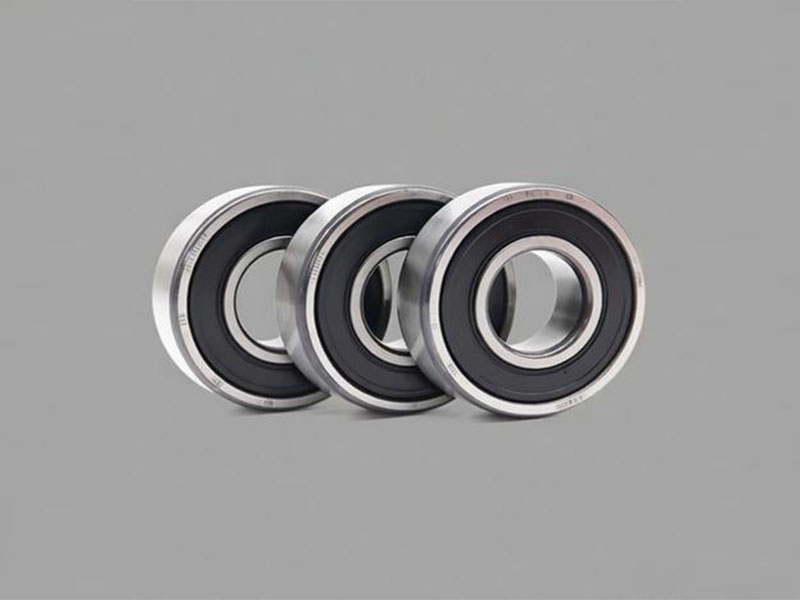
An alternator actually contains two bearings that work together to keep the rotor spinning smoothly:
- Front Bearing (Drive End Bearing): Located near the pulley, this bearing handles the most stress from belt tension and external contaminants. It supports the rotor against the pull of the drive belt.
- Rear Bearing (Slip Ring End Bearing): A smaller bearing located at the back of the alternator near the slip rings and brushes. It supports the other end of the rotor and ensures precise alignment with the stator.
Both bearings allow the rotor shaft to spin freely and smoothly while maintaining the precise air gap between the rotor and stator. This smooth rotation is essential because:
- It maintains consistent magnetic field strength
- It prevents mechanical friction that wastes engine power
- It ensures stable voltage output to your vehicle’s electrical system
- It extends the life of other components like brushes and slip rings
When either bearing fails, the smooth rotation stops—and so does your reliable electrical power.
1. Why Do Alternator Bearings Fail?
Understanding why bearings fail helps you prevent future problems and choose the right replacement.
| Cause | Explanation |
| Heat | Alternators operate underhood at high temperatures (200°F+). Heat breaks down bearing grease over time, leading to metal-on-metal contact. |
| Contamination | Road dust, moisture, and debris can penetrate worn seals and contaminate the bearing, acting like sandpaper on precision surfaces. |
| Belt Tension | An over-tightened serpentine belt puts excessive radial load on the front bearing, accelerating wear. |
| Age & Mileage | Bearings are wear items. After 100,000+ miles, even the best bearings need replacement. |
| Electrical Imbalance | A failing diode or voltage regulator can cause the rotor to “fight” against the magnetic field, putting mechanical stress on bearings. |
| Lubrication Breakdown | The high-speed grease inside bearings degrades over time. Once lubrication fails, bearing failure follows quickly. |
The result: The rotor no longer spins smoothly. You get noise, vibration, and unstable electrical output.
2. Types of Alternator Bearings
When you repair your alternator, you’ll need to choose the right bearing. Here’s a comparison of common types:
| Bearing Type | Best For | Advantages | Disadvantages |
| Sealed Ball Bearing | Most passenger vehicles | Pre-lubricated, maintenance-free, excellent contamination protection, ensures smooth rotation | Cannot be re-greased; must replace when worn |
| Roller Bearing | Heavy-duty trucks, high-torque applications | Handles heavy radial loads (belt tension) very well | Not suitable for high-speed applications; less common in alternators |
| Ceramic Hybrid | Performance vehicles, racing | Withstands extreme heat and RPM, longer lifespan, maintains smooth rotation at high speeds | Expensive, overkill for daily drivers |
DUHUI Recommendation: For 99% of standard vehicles, a high-quality sealed deep groove ball bearing is the correct choice. DUHUI alternator bearings are manufactured to ABEC-1 precision standards with high-temperature grease and robust steel shields—exactly what your alternator needs to maintain smooth rotor rotation and stable power output.
3. Safety Precautions
Before touching your alternator, read these safety warnings carefully:
3.1 Disconnect Battery Power
Always disconnect the negative battery terminal before removing the alternator. The main battery cable connected to the alternator is live at all times.
3.2 Mark Everything
Before disassembly, use a permanent marker to make alignment marks across the alternator case halves. These marks ensure proper alignment during reassembly. Also, photograph wiring connections.
3.3 Pressure Safety
When pressing bearings on or off, use the correct tools. Never hammer directly on a bearing—this damages the races and guarantees premature failure.
3.4 Soldering Safety
Many alternators require desoldering electrical connections. Work in a well-ventilated area and protect your eyes from solder splatter.
3.5 Spring Caution
Alternator brushes are under spring pressure. When disassembling, note how the brushes are retained—they can fly out unexpectedly.
4. Preparation: Tools and Parts
Before starting, gather everything you’ll need:
Tools Required:
- Socket set (metric and standard)
- Wrench set
- Bearing puller (or small three-jaw puller)
- Bearing driver set (or sockets that match bearing race diameters)
- Hammer (preferably brass or with soft face)
- Soldering iron and solder
- Multimeter (for testing electrical components)
- Small flathead screwdrivers
- Needle-nose pliers
- Vice (highly recommended)
- Safety glasses and work gloves
- Clean rags and electrical contact cleaner
Parts Required:
- Correct DUHUI alternator bearing kit (confirm your alternator model)
- New carbon brushes (recommended to replace while open)
- New voltage regulator (if integrated with brushes)
- High-temperature bearing grease (if installing open bearings)
Pro Tip: Search for your alternator model number (stamped on the housing) to ensure you order the exact bearing sizes. DUHUI can help you identify the correct bearings if you provide your vehicle make, model, and year.
5. Alternator Bearing Repair: Step-by-Step
Now, let’s get to the actual repair process.
Step 1: Remove the Alternator from Vehicle
This guide assumes you have already removed the alternator from your car. If not:
- Disconnect battery negative terminal
- Remove the serpentine belt (note belt routing)
- Unplug electrical connectors
- Remove mounting bolts
- Remove the alternator
Step 2: Remove the Pulley
Before disassembling the case, remove the pulley:
- Secure the alternator in a vice (use soft jaws to avoid damage)
- Hold the pulley with a strap wrench or pulley holding tool
- Remove the pulley nut (usually reverse thread on some vehicles—check first)
- Remove the pulley, fan, and spacers
Note: Keep all spacers and washers organized. Their positions matter.
Step 3: Disassemble the Alternator Case
- Remove the through-bolts (long bolts holding the case together)
- Locate your alignment marks from earlier
- Gently pry the front and rear case halves apart using flathead screwdrivers in the pry points (never pry on sealing surfaces)
- The stator (copper windings) will remain attached to one half
Step 4: Remove the Rotor
- The rotor will be attached to the front housing with the front bearing
- If the rotor is stuck, gently tap the rotor shaft with a soft hammer
- Remove the rotor and front housing assembly
Step 5: Remove the Rear Bearing (Slip Ring End)
The rear bearing is pressed onto the rotor shaft:
- Examine how the bearing is retained—some have retaining plates, others are simply pressed on
- Use a bearing puller to remove the rear bearing
- If you don’t have a puller, support the rotor in a vice and use a small press or bearing splitter
- Never hammer directly on the rotor shaft—this damages the threads and slip rings
Step 6: Remove the Front Bearing (Drive End)
The front bearing is usually pressed into the front housing:
- Remove any retaining plate or snap ring
- Support the front housing around the bearing pocket
- Tap the bearing out from the backside using a hammer and drift
- Alternatively, use a bearing press with appropriate size sockets
Pro Tip: Work slowly. Aluminum housings are soft and can crack if you force things.
6. Parts Maintenance and Inspection
While your alternator is completely disassembled, this is the perfect time to inspect and service other components that affect smooth rotor rotation and stable power output.
Step 1: Inspect the Slip Rings
The slip rings are the copper rings on the rotor where the brushes contact. They transfer electrical current to the spinning rotor:
- If they are smooth and shiny, simply clean them with electrical contact cleaner
- If they are slightly grooved, polish them with 1000-grit sandpaper while spinning the rotor
- If they are deeply worn or pitted, consider replacing the rotor—uneven slip rings cause brush bounce and unstable charging
Step 2: Inspect and Replace Carbon Brushes
Brushes wear down over time and can affect electrical stability:
- Measure brush length (compare to service manual specifications)
- If brushes are worn below minimum length, replace them—worn brushes cause intermittent electrical contact
- Many modern alternators combine brushes with the voltage regulator—replace this as a unit
- Ensure new brushes move freely in their holders
Step 3: Test the Rectifier (Diode Assembly)
A bad diode won’t charge your battery properly and can cause AC ripple in your DC electrical system:
- Set multimeter to diode test mode
- Test each diode in both directions
- You should see conduction in one direction only
- If any diode conducts both ways or neither way, replace the rectifier assembly
Step 4: Clean Everything
Use electrical contact cleaner and compressed air to clean:
- Stator windings
- Rotor
- Housing interiors
- All electrical connections
Never use petroleum-based cleaners on electrical components—they damage insulation.
7. Alternator Reassembly with New Bearings
Now for the satisfying part—putting it all back together with fresh DUHUI bearings to ensure smooth rotor rotation and stable power output.
Step 1: Install the New Front Bearing
- Clean the bearing pocket in the front housing thoroughly
- Apply a thin film of oil to the housing bore (helps installation)
- Place the new DUHUI bearing in the pocket
- Use a bearing driver or socket matching the outer race diameter
- Gently tap or press the bearing until fully seated
- Reinstall any retaining plate or snap ring
Step 2: Install the New Rear Bearing
- Clean the rotor shaft thoroughly
- Support the rotor properly (never support by the slip rings)
- Place the new DUHUI bearing on the shaft
- Use a bearing driver or socket matching the inner race diameter
- Press or gently tap the bearing until fully seated against the shoulder
- Install any retaining clips or plates
Critical Warning: Never apply pressure through the rolling elements (balls or rollers). Always press on the race that is being installed—inner race for shaft mounting, outer race for housing mounting.
Step 3: Spin Test the Rotor
Before full assembly:
- With the new rear bearing installed, spin the rotor by hand
- It should spin smoothly and quietly with no roughness or grinding
- Any roughness indicates a problem with installation or the bearing itself
Step 4: Reinstall Electrical Components
- Install the rectifier assembly (if removed)
- Install new brushes/voltage regulator
- If brushes need to be retracted for rotor installation, follow the specific procedure for your alternator
- Reconnect all wires, soldering where necessary
- Ensure no stray wire strands are touching the case
Step 5: Assemble Rotor and Front Housing
- Align the rotor with the front housing
- Insert the rotor shaft through the new front bearing
- Ensure everything seats properly
Step 6: Close the Case
- Align the rear housing with the front housing using your alignment marks
- Ensure the stator wires are correctly positioned and not pinched
- Gently press the halves together
- Install and tighten the through-bolts evenly
Step 7: Reinstall Pulley
- Install the fan and spacer(s) in the correct order
- Install the pulley
- Torque the pulley nut to specifications
Step 8: Final Spin Test
Before reinstalling in the vehicle:
- Spin the pulley by hand—it should spin smoothly with no grinding, wobble, or resistance
- Chuck the rotor shaft in a drill (or use a drill on the pulley)
- Spin the alternator at low speed—listen for any noise
- If you hear grinding or roughness, something is wrong—disassemble and check
8. Final Installation and Testing
- Reinstall the alternator in your vehicle
- Reconnect all electrical connectors
- Reinstall the serpentine belt
- Reconnect the battery
- Start the engine and test charging voltage (should be 13.8-14.4 volts at idle)
- Test with electrical loads on (headlights, AC, radio)—voltage should remain stable
- Listen for any abnormal noise from the alternator area
If the charging voltage is correct, stable under load, and the alternator is quiet—congratulations! You’ve successfully repaired your alternator bearing and restored your vehicle’s stable electrical power.
Frequently Asked Questions
How do you know if your alternator bearings are bad?
Listen for these warning signs:
- A high-pitched squealing noise that changes with engine RPM
- A deep growling or grinding sound from the alternator area
- Visible shaft play if you remove the belt and wiggle the pulley
- Burning smell (from friction heat)
- Dimming or flickering lights (because the rotor isn’t spinning smoothly, causing unstable power output)
- Electrical issues like erratic gauge readings or accessory problems
Is it hard to change alternator bearings?
It’s moderately difficult. The challenge isn’t the bearing replacement itself—it’s properly disassembling and reassembling the alternator without damaging electrical components or the soft aluminum housing. If you’re comfortable with basic hand tools and following detailed instructions, you can do it.
How long will a noisy alternator bearing last?
A noisy bearing is already failing. It might last days, weeks, or months—but once noise starts, internal damage accelerates. The grease is gone, metal is grinding against metal, and failure is inevitable. More importantly, the unstable rotor rotation will cause voltage fluctuations that can damage sensitive electronics in modern vehicles. We recommend immediate replacement.
What happens if I ignore alternator bearing noise?
Ignoring bearing noise risks:
- Complete alternator seizure while driving
- Serpentine belt damage or breakage
- Loss of charging, power steering, and cooling (if belt drives water pump)
- Damage to the rotor and stator from excessive wobble
- Voltage spikes or drops that can damage your vehicle’s computer, sensors, and electronics
- Being stranded unexpectedly
Can I replace just the bearing instead of the whole alternator?
Absolutely. This is called “rebuilding” your alternator. If the electrical components (windings, diodes, regulator) are healthy, replacing just the bearings restores the alternator to like-new condition at a fraction of the cost of a new unit. The key is ensuring the rotor spins smoothly again—and that’s exactly what new bearings provide.
Do I need special tools to replace alternator bearings?
A bearing puller and driver set makes the job much easier, but creative DIYers can sometimes manage with sockets and careful hammer work. However, pressing bearings without proper tools risks damaging the new bearings—invest in or borrow the right tools.
How do I know what size bearing my alternator needs?
DUHUI bearings are manufactured to industry standard sizes. To identify your bearing:
- Remove the old bearing and read the numbers stamped on the shield
- Search by your vehicle make, model, and year
- Contact DUHUI with your alternator model number for exact matching
How do new bearings affect electrical performance?
New bearings restore smooth rotor rotation, which is essential for:
- Consistent magnetic field generation
- Stable voltage output
- Proper charging at all RPMs
- Elimination of electrical noise and flicker
- Extended brush and slip ring life
Conclusion
The alternator bearing may be a small component, but its job is critical: ensuring the rotor spins smoothly to provide stable electrical power for your entire vehicle. When that bearing fails, your electrical system fails with it.
Repairing an alternator bearing by yourself is absolutely achievable. It requires patience, attention to detail, and the right components—but the satisfaction of fixing it yourself and the money saved make it worthwhile.