Have you ever heard a strange “clunk” when shifting your truck into gear, or noticed a persistent vibration that seems to come from underneath your car? These are often the first cries for help from a critically overlooked component: the universal joint. DUHUI focuses on precision-engineered rotating components, and we know that a failing U-joint can turn a simple maintenance issue into a costly breakdown. We have compiled this guide to answer the most common questions about universal joints, helping you understand, maintain, and select the right parts for your vehicle.
1. What is a Universal Joint?
A universal joint (often abbreviated as U-joint) is a flexible mechanical coupling used to connect two rotating shafts. Its primary purpose is to transmit power and rotational motion from one shaft to another when they are not in a straight line with each other, and even as the angle between them changes. The classic design consists of a center cross (or spider) with needle bearings at each end, fitting into caps that are mounted on the shaft yokes.
Working Principle: The simplest design consists of two Y-shaped yokes connected by a cross-shaped component called a cross trunnion or spider. Needle bearings on the arms of the spider allow the yokes to pivot, creating a flexible connection that rotates.
Application Scenarios:
- Automotive Drivelines: Connecting the transmission to the differential in rear-wheel-drive vehicles.
- Steering Systems: In some vehicles, they are used in the steering column.
- Industrial Machinery: Used in agricultural equipment, conveyor systems, and steel mills where power needs to be transmitted at varying angles.
2. What is the Role of a Universal Joint in a Vehicle?
In automotive applications, the universal joint is the critical link that gets power to the wheels. Its specific role varies by vehicle type:
- Rear-Wheel Drive (RWD) and Four-Wheel Drive (4WD) Vehicles: This is the most common application. Here, U-joints are essential components of the driveshaft. They connect the transmission output shaft to the differential, allowing the driveshaft to rotate and change angle as the rear axle moves up and down over bumps. The core function of a U-joint is to deliver engine torque to the differential and wheels, even as the suspension moves.
- Partial All-Wheel Drive (AWD) Vehicles: Many AWD systems use a transfer case and additional driveshafts to send power to the front or rear wheels. U-joints are often used in these shafts to manage the complex angles and movement of the drivetrain.
- Trucks and Heavy Vehicles with Multi-Section Driveshafts: Large trucks and buses often have very long drivelines. To manage length and improve strength, these drivelines are split into multiple sections supported by center bearings. U-joints are used at each connection point between these sections, as well as at the transmission and differential.
3. Are All Universal Joints the Same?
No, universal joints are not a one-size-fits-all component. They vary significantly in type, size, and application to handle different torque loads, angles, and operating conditions.
Types of Universal Joints
Understanding the different types is the first step in selecting the correct part.
Standard Single Cross Shaft Type: This is the most common type, also known as a cross and bearing style. It is used in driveshafts and is known for its simplicity and durability. However, it inherently causes fluctuations in rotational speed as the angle increases.
Constant Velocity (CV) Joint: Found primarily on front-wheel-drive vehicles and the independent rear suspension of many modern cars. CV joints are designed to transmit power smoothly without the speed fluctuations of a standard U-joint, even at high angles.
Double Cardan Joint: This is a sophisticated assembly that uses two single U-joints together to function as a constant velocity joint. It is often used in lifted vehicles or applications with extreme operating angles to reduce vibration.
Maintenance-Free Type: These U-joints are sealed and lubricated for life at the factory. They require no maintenance but must be replaced entirely when worn out.
Size and Load Capacity
Universal joints are engineered for specific applications. The size is determined by the vehicle’s gross axle weight rating, engine torque, and the physical dimensions of the driveshaft yoke.
Selecting the wrong size leads to common driveline problems:
- Installation Difficulties: The caps may not fit snugly in the yoke.
- Premature Wear: An undersized joint will be overloaded, leading to rapid wear.
- Driveline Vibration: An incorrect fit can cause the driveshaft to become unbalanced, leading to vibrations that damage other components like the transmission and differential.
4. What Are the Signs That My Universal Joint Needs Replacing?
A failing U-joint will almost always give you audible and physical warnings. Ignoring these signs can lead to a broken driveshaft, which can cause extensive and expensive damage.
- Clunking Noise: A distinct “clunk” when shifting from drive to reverse or on initial acceleration indicates excessive play in the joint.
- Vibration: A noticeable shudder or vibration that increases at specific speed ranges (e.g., 40-50 mph) is a classic sign of a worn or binding U-joint.
- Squeaking or Chirping: A high-pitched squeak, especially at low speeds, suggests the bearings are completely dry.
- Visible Rust or Grease Leakage: Look for rust-colored dust around the bearing caps (a sign of fretting corrosion) or grease leaking from the seals, which indicates seal failure and contamination.
- Driveline Play: With the vehicle safely secured, grab the driveshaft and try to move it up and down and side to side. Any clunking or free play indicates a worn joint.
5. How Long Do Universal Joints Typically Last?
The lifespan of a U-joint is highly variable, typically ranging from 50,000 to 100,000 miles in passenger vehicles. In heavy-duty trucking or industrial applications, lifespan is measured in operating hours and can be much shorter if not properly maintained.
Key factors that influence their longevity include:
- Driving Conditions: Aggressive acceleration, frequent towing, and driving over rough terrain put immense stress on U-joints. Exposure to water, road salt, mud, and contaminants can also wash away grease and cause corrosion.
- Maintenance: This is the most critical factor. U-joints need regular greasing to maintain a film of lubricant between the needle bearings and the trunnion.
- Vehicle Type: A heavy-duty truck used for togging will wear out U-joints much faster than a light commuter car.
- Product Quality: The quality of the steel, the precision of the heat treatment, and the manufacturing tolerances directly impact durability. A high-quality U-joint from a reputable manufacturer like DUHUI will always outlast a generic replacement.
6. Why Do Universal Joints Seize or Fail?
U-joints fail when the needle bearings can no longer rotate freely. This is almost always due to contamination or lubrication failure.
Improper Maintenance:
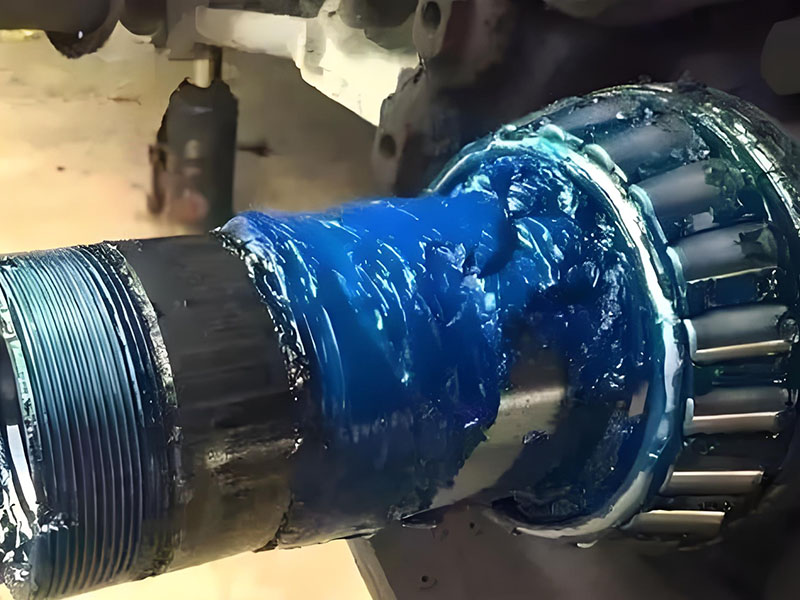
- Lack of Grease: Running a U-joint “dry” generates extreme friction and heat, rapidly destroying the bearings.
- Wrong Grease: Using an incompatible or low-quality grease that fails to stick to the bearings.
- Over-greasing: While less common, forcing too much grease can blow out the rubber seals, allowing dirt and water to enter and washing away the protective grease film.
Misalignment: If the operating angle of the U-joint is too severe (common in lifted trucks without proper angle correction), it can cause the needle bearings to “brinell” or dent the trunnion, leading to rapid failure.
Extreme Use: Consistent heavy loads, water crossings, and high-torque applications accelerate wear and introduce contaminants.
Component Failure: Over time, the needle bearings can fatigue and fracture, or the metal cross itself can twist and break under extreme torque, leading to catastrophic failure.
7. Can I Drive with a Bad Universal Joint?
Technically, the vehicle might still move, but it is extremely unsafe and not recommended. Driving with a bad U-joint creates a cascade of problems:
- Severe Vibration: The vibration from a failing joint can be uncomfortable and can shake loose other components like bolts and fasteners.
- Driveshaft Damage: A failing joint can cause the driveshaft to spin erratically, potentially bending the shaft itself or damaging the transmission output shaft and differential pinion.
- Catastrophic Failure: If the U-joint fails completely while driving, the driveshaft can detach from the vehicle. This can cause it to dig into the road, potentially flipping the car, or cause severe damage to the fuel lines, brake lines, and floor pan.
8. What Happens If I Don’t Replace a Worn Universal Joint?
Ignoring a worn U-joint leads to a predictable and dangerous chain of events:
- Driveshaft Detachment: As the joint disintegrates, the driveshaft is no longer securely connected. It can fall from the vehicle.
- Transmission and Differential Damage: A flailing driveshaft can violently damage the transmission extension housing and the differential pinion, leading to thousands of dollars in repairs.
- Loss of Vehicle Control: If the driveshaft locks up or digs into the pavement, it can cause the rear wheels to lock or the vehicle to suddenly swerve, leading to a complete loss of control and a serious accident.
9. How Many Universal Joints Does My Vehicle Have?
The number varies depending on the drivetrain layout.
- Rear-Wheel Drive Cars/Trucks: Typically have two—one at the front of the driveshaft (connected to the transmission) and one at the rear (connected to the differential).
- 4WD Trucks/SUVs: These often have multiple driveshafts. A common setup might have three to five: two on the rear driveshaft, two on the front driveshaft, and potentially one in the transfer case.
- Front-Wheel Drive Cars: These use CV joints instead of traditional universal joints, typically with four: two inner and two outer.
- Heavy Trucks and Buses: Large commercial vehicles often have driveshafts in multiple sections, supported by center bearings, and can have four to six U-joints.
- Motorcycles and Small Machinery: Usually have a small U-joint where the driveshaft connects to the rear swingarm.
10. Should I Replace All the Universal Joints at Once?
While it’s not always mandatory, it is highly recommended for several reasons:
- Smoother Ride: If one joint is worn, others are likely nearing the end of their life. Replacing them all ensures balanced performance and eliminates vibration.
- Save on Labor Costs: Since the labor to access and replace U-joints often involves removing the same driveshaft, doing them all at once saves you from paying for the same diagnostic and removal labor again in the near future.
- Improved Overall Reliability: Replacing all the universal joints gives you complete peace of mind, knowing that the entire driveline has been refreshed and is reliable for the long haul.
11. How Much Do Universal Joints Cost?
The price of a universal joint varies based on its size, type, and quality.
- General Price Range: For most passenger vehicles and light trucks, a single U-joint can range from $15 to $60. Heavy-duty or specialized industrial joints can cost significantly more.
- Cost Components: The price reflects the materials (high-grade alloy steel), precision manufacturing, heat treatment processes, and the quality of the internal needle bearings. A very cheap joint may save money upfront but will likely fail faster and cause more damage than a quality part from a reputable manufacturer.
12. Can I Replace a Universal Joint Myself?
For the experienced DIY mechanic, yes, it is possible. However, it requires specific tools and mechanical knowledge.
Required Tools:
- A sturdy bench vise
- Snap ring pliers (internal and external)
- A hammer and sockets or a proper U-joint pressing tool
- A wire brush for cleaning the yoke ears
Difficulty Assessment: While it is a common DIY task, it can be frustrating for beginners. It’s easy to damage the new joint or the driveshaft yokes if you don’t have the right technique or tools. If you are unsure, it’s always safer to have it done by a professional to guarantee a proper, vibration-free installation.
13. Where Should I Buy a Universal Joint?
You have several options, each with its pros and cons:
- Online Platforms: Offer a wide selection and competitive pricing. However, you must be certain of your vehicle’s exact specifications to get the correct part.
- Local Auto Parts Stores/Wholesalers: A good option for getting the part immediately. They can often look up the part by your vehicle’s year, make, and model.
- Brand Authorized Dealerships: This is the most expensive option, but it guarantees you are getting an Original Equipment (OE) or equivalent part that is a perfect match for your vehicle.
- Direct from a Manufacturer: For those seeking high-quality, reliable components, sourcing directly from a specialized manufacturer like DUHUI Bearing ensures you get a precision-engineered product designed for long life, often at a better value than big-box retailers.
14. Maintenance and Inspection Checklist of Universal Joints
Regular inspection can save you from a roadside breakdown. Here is a simple checklist:
- Regular Lubrication: If your U-joints have grease fittings, lubricate them at every oil change. Pump until old grease purges from all four bearing seals.
- Visual Inspection: Check for loose or missing grease fittings, rusty caps, or damaged seals. Look for rust trails, which indicate movement between the cap and the yoke.
- Physical Check: With the vehicle safely secured, grab the driveshaft and try to move it up and down and side to side. Any clunking or free play indicates a worn joint.
- Road Test: Listen for the specific noises mentioned above, and pay attention to vibrations during acceleration and cruising.
Still Have Questions About Your Universal Joints?
We have covered the essentials—from identifying symptoms of a bad universal joint to understanding the different types and maintenance requirements. At DUHUI Bearing, we understand the engineering precision required to manufacture reliable universal joints. Our product range is designed to meet or exceed OEM specifications, ensuring proper fit, material integrity, and long service life.
Do you have a specific vehicle or application in mind? Not sure which universal joint size or type you need? Or do you still have unanswered questions about installation, purchasing, or technical specifications? Our team is here to help. [Contact our engineering team today] for expert guidance—your driveline’s performance is our priority.