Mining operations expose equipment to extreme dust, shock loads, vibration, and temperature fluctuations. Bearings in this environment must maintain reliability under continuous operation. How do mining bearings withstand such conditions? DUHUI will cover their types, applications, selection criteria, failure causes, and maintenance practices.
1. What Are Mining Bearings?
Mining bearings are mechanical components that support rotating or oscillating parts in mining machinery while reducing friction. They are designed to handle high radial and axial loads, contamination, and impact. Common applications include crushers, conveyors, vibrating screens, and drilling rigs. Without robust bearings, mining equipment would experience rapid wear and unplanned downtime.
2. Types of Bearings Used in Mining Equipment
Four main bearing types serve different functions in mining machinery.
- Rolling bearings – Use balls or rollers. They offer low friction, high speed capability, and wide availability. Spherical roller bearings, a subtype, are particularly common due to their self-aligning feature and high load capacity.
- Plain bearings – Have no rolling elements; surfaces slide against each other. They are compact, shock-resistant, and suitable for pivots or space-limited assemblies.
- Thrust bearings – Specifically designed for axial loads. They maintain stability in vertical mills, vertical crushers, and large winches.
- Sealed bearings – Incorporate built-in seals to block dust and moisture. They reduce maintenance needs and are used on belt pulleys, open-pit equipment, and vibrating systems.
The table below compares these types.
| Bearing Type | Structure | Main Advantages | Typical Application Equipment |
| Rolling bearings | Balls or rollers | High speed, low friction, wide variety | Conveyors, gearboxes, motors, crushers |
| Plain bearings | No rolling elements, slides | Compact, shock-resistant, impact-resistant | Pivots, heavy suspension, space-limited setups |
| Thrust bearings | Axial-load-specific design | Withstand heavy axial forces, keep stability | Vertical mills, vertical crushers, large winches |
| Sealed bearings | Built-in seal design | Dustproof, waterproof, low maintenance | Belt pulleys, open-pit equipment, vibration systems |
3. Applications of Bearings in Mining Equipment
Different mining machines place distinct demands on bearings.
- Crushers – Experience high impact and radial loads. Spherical roller bearings and tapered roller bearings are common in jaw, cone, and gyratory crushers.
- Conveyors – Require bearings that support long, continuous operation. Ball bearings and spherical roller bearings in idlers and pulleys handle moderate loads with low friction.
- Vibrating Screens – Subject bearings to high-frequency oscillations and acceleration. Specialized vibrating screen bearings (a type of spherical roller bearing with tighter clearances) are used.
- Drilling Rigs – Combine axial and radial loads, plus vibration. Thrust bearings and sealed rolling bearings protect against rock dust and drilling fluid.
- Heavy Machinery (e.g., loaders, haul trucks) – Use plain bearings in suspension pivots and sealed bearings in wheel ends.
4. How to Select the Right Bearings for Mining Applications
Selecting mining bearings requires evaluating five factors.
Load– Calculate both radial and axial loads. For impact loads, choose bearings with higher dynamic load ratings (e.g., spherical roller bearings).
Speed – Determine operating RPM. Rolling bearings suit higher speeds; plain bearings are for low-speed, high-load pivots.
Temperature – Mining environments range from below freezing to high heat (e.g., near crushers). Select bearings with appropriate thermal stability and lubrication.
Environmental conditions – Dust, water, and chemicals demand sealed or protected bearings. Open bearings may require external seals or frequent cleaning.
Equipment type – Refer to manufacturer specifications. Vibrating screens need vibration-resistant bearings; conveyors prioritize longevity under constant rotation.
5. Common Causes of Bearing Failure in Mining
Understanding failure modes helps prevent unplanned downtime.
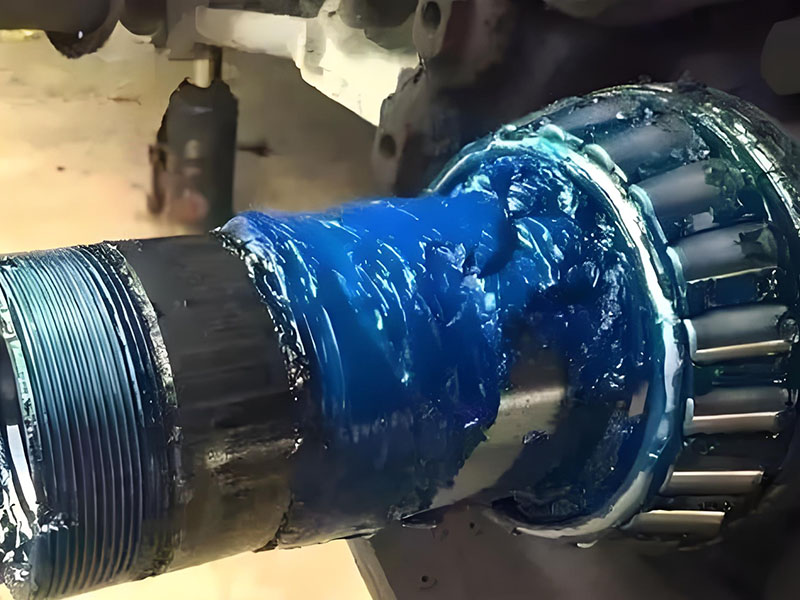
Contamination – Dirt, rock dust, or water ingress degrades lubricant and causes abrasive wear. Sealed bearings or proper housing seals reduce this risk.
Lubrication – Insufficient, excessive, or degraded lubricant leads to overheating, friction, and eventual seizure. Regular lubrication intervals are critical.
Overload – Operating beyond rated load causes plastic deformation of rolling elements or raceways. Select bearings with adequate safety margins.
Bearing fatigue – Repeated stress cycles create subsurface cracks, leading to spalling. Fatigue life is predictable but accelerated by contamination or misalignment.
Improper installation – Misalignment, incorrect mounting force, or damaged seals cause premature failure. Follow OEM procedures.
6. Best Practices for Mining Bearing Maintenance and Replacement
Regular maintenance extends bearing life in mining conditions.
- Visual inspection – Check for signs of rust, seal damage, unusual noise, or vibration. Perform at scheduled downtimes.
- Regular lubrication – Use the correct lubricant type (grease or oil). Grease is common for rolling bearings in crushers and conveyors; oil circulation suits high-speed or high-temperature applications. Relubrication frequency depends on operating hours and environment – typically every 200–500 hours for heavy-duty mining bearings.
- Alignment check – Misaligned shafts create uneven load distribution. Use laser alignment tools during installation and periodic checks.
- Predictive diagnostics – Monitor vibration, temperature, and acoustic emissions. Spike energy or envelope analysis detects early-stage bearing defects.
7. Key Challenges for Bearings in the Mining Industry
Mining presents unique bearing challenges.
- Harsh operating conditions – Abrasive dust and moisture continuously attack seals and rolling surfaces. Solution: use sealed bearings with labyrinth seals or purgeable housings.
- Heavy loads and high impact – Sudden shock loads (e.g., rock falling into a crusher) exceed static ratings momentarily. Solution: select bearings with high toughness and case-hardened steel.
- Continuous operation – Many mines run 24/7. Bearings must have adequate cooling and lubrication to avoid heat buildup.
- Corrosion and contamination – Water and chemicals cause rust and lubricant breakdown. Solution: stainless steel or coated bearings, plus waterproof greases.
8. Frequently Asked Questions
What are spherical roller bearings used for in mining?
Spherical roller bearings are widely used due to their self-aligning function, high radial and axial load capacity, impact and vibration resistance, and long lifespan with low maintenance. They appear in crushers, conveyors, vibrating screens, and fans.
Which bearing type is most commonly used in mining?
Spherical roller bearings (a rolling bearing type) are most common, followed by tapered roller bearings for heavy combined loads and plain bearings for pivots.
How often should mining bearings be inspected?
Inspection frequency depends on operating intensity. For heavy-duty equipment (crushers, screens), visual checks should be weekly, with vibration analysis monthly. For conveyors, monthly visual inspection is typical. Always follow equipment manufacturer guidelines.
What are the lubrication types for mining bearings?
Two primary types: grease (semi-solid, suitable for most mining bearings, easy to apply) and oil (used in circulating or splash systems for high-speed or high-temperature applications). Solid lubricants are used in extreme conditions where grease or oil cannot be retained.
Conclusion
Mining bearings must withstand dust, shock, heavy loads, and continuous operation. This guide has explained the four main bearing types (rolling, plain, thrust, sealed), their applications in crushers, conveyors, screens, drills, and heavy machinery, plus how to select them based on load, speed, temperature, environment, and equipment type. Common failure causes include contamination, poor lubrication, overload, fatigue, and improper installation. Regular inspection, correct lubrication, alignment checks, and predictive diagnostics are essential for maximizing bearing life. By following these practices, mining operations can reduce unplanned downtime and maintenance costs.