If you own a Dodge or RAM truck, you know they’re built for work—whether that’s towing a heavy trailer, hauling a full bed, or conquering off-road trails. But with that capability comes stress on key drivetrain components. Have you recently heard a loud “clunk” when shifting from Reverse to Drive, or felt a strange vibration in your seat at highway speeds? These are classic signs of a failing universal joint (U-Joint). As a critical link in your truck’s driveshaft, a failing U-Joint isn’t just a nuisance; it’s a safety risk that can leave you stranded. DUHUI will walk you through the common symptoms, causes, and solutions for U-Joint issues, helping you keep your Dodge or RAM truck running smoothly.
1. Common U-Joint Failure Symptoms
Before you start ordering parts, it’s essential to confirm the U-Joint is the culprit. Here are the most common symptoms experienced by Dodge and RAM truck owners:
- Squeaking Noise: This is often the first sign. You’ll hear a high-pitched chirping or squeaking sound at low speeds, especially when starting from a stop or pulling away from a parking spot. It’s a tell-tale sign of metal-on-metal friction from a dry or worn bearing.
- Clunking Noise: A sharp “clunk” or “bang” when shifting between Park, Reverse, and Drive is a hallmark of excessive wear. This sound indicates there’s too much free play in the U-Joint, allowing the driveshaft to “slap” against the yokes.
- Vibrations: As a U-Joint deteriorates, it can cause the driveshaft to spin out of balance. You’ll feel a distinct vibration that starts at a specific speed (e.g., 30-40 mph) and intensifies as you go faster. It’s often described as a “seat-of-the-pants” vibration.
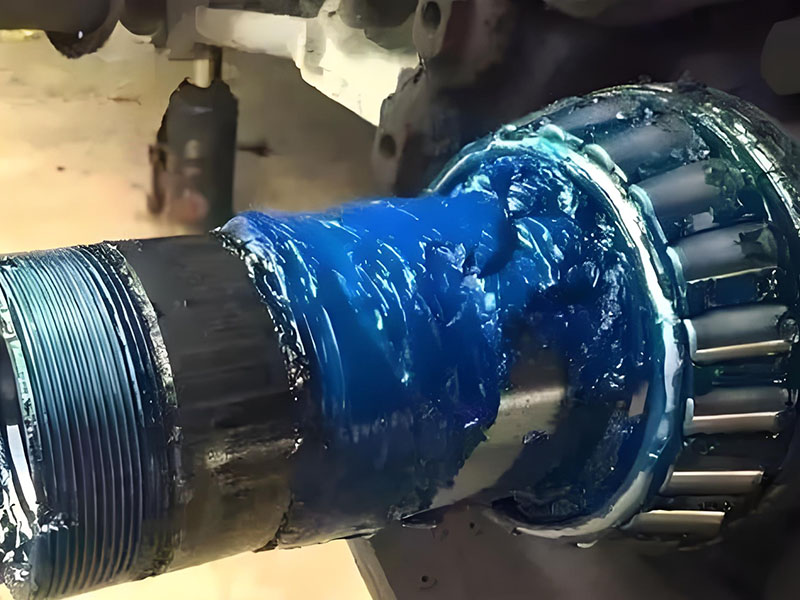
- Grease Leakage: Take a look under your truck. If you see fresh, bright-colored grease splattered around the U-Joint caps or on the underside of the vehicle, the seals have failed. While some U-Joints are sealed, a leaky one is a sure sign of impending failure.
2. Why Do U-Joints Fail? Common Root Causes
Understanding why U-Joints fail can help you prevent premature wear. For a heavy-duty truck like a Dodge or RAM, these components face extreme stress. Here are the most common reasons:
- Lack of Maintenance & Lubrication: Many factory and aftermarket U-Joints have grease fittings (zerks). If these are not regularly lubricated with a grease gun, the internal needle bearings run dry, leading to rapid wear and heat generation.
- Extreme Operating Angles & Load: Lifting your truck or frequently hauling heavy loads changes the working angle of the driveshaft. Constant operation at these steep angles puts immense strain on the U-Joint cross and bearings, causing them to wear out prematurely.
- Impact Damage & Off-Road Use: Off-roading can expose your U-Joints to direct impacts from rocks or debris. Hard landings and sudden wheel spin can also shock-load the driveline, causing internal damage that isn’t visible from the outside.
- Corrosion & Water Intrusion: If you frequently drive through water or in areas where roads are salted in winter, moisture can seep past the seals. Once inside, it causes the needle bearings and trunnion to rust, leading to failure.
- Worn Out from Age & Mileage: Like any mechanical part, U-Joints have a finite lifespan. Metal fatigue, microscopic pitting, and general wear over hundreds of thousands of miles will eventually take their toll.
3. How to Diagnose and Fix U-Joint Issues
3.1 Step-by-Step Diagnosis
Before you start, always prioritize safety: Park on a level surface, chock the wheels, and use heavy-duty jack stands. Never rely solely on a jack.
- Visual Inspection: Look for rust, missing or damaged snap rings, cracked bearing caps, or signs of grease sling around the driveshaft yokes.
- Driveline Shake Test: With the transmission in neutral and the parking brake engaged, crawl under the truck. Grasp the driveshaft firmly near the U-Joint and try to twist and shake it vigorously. There should be no perceptible movement. Any clicking or clunking confirms a worn joint.
- Road Test: Combine the visual and shake tests with a road test to confirm the symptoms mentioned in Section 1.
3.2 Professional Repair Tips
- Removal Precautions: Before removing the driveshaft, use a marker or paint pen to scribe alignment marks on the driveshaft and the differential yoke. This ensures you reinstall it in the same orientation to maintain factory balance.
- Replacement Strategy: It is highly recommended to replace all U-Joints in a driveshaft at the same time. Replacing just one can introduce new vibrations due to uneven wear patterns.
- Component Selection: When choosing replacement U-Joints, quality matters. For a demanding vehicle like a Dodge/RAM, standard economy parts often fail quickly. DUHUI Bearing, a professional manufacturer, engineers its U-Joints with high-strength bearing steel and advanced heat treatment. This ensures they can withstand the high torque, heavy loads, and harsh operating angles common to these trucks, providing a reliable, long-lasting solution.
4. Preventive Maintenance: Extending U-Joint Life
Once you’ve fixed the issue, a proactive maintenance routine is your best defense against future failures.
- Regular Lubrication: If your U-Joints have grease fittings, make it a habit to lubricate them every 5,000 miles or during every oil change. Use a high-quality, extreme-pressure (EP) grease.
- Inspect After Heavy Use: After a weekend of towing a heavy trailer or a day of off-roading, do a quick visual check for any signs of grease leakage or physical damage.
- Maintain Proper Suspension Height: If you’ve lifted your truck, consider installing a driveshaft spacer or a double-cardan driveshaft to correct the pinion angle, which helps reduce stress on the U-Joints.
- Act on Early Signs: Don’t ignore that initial squeak or minor clunk. A simple U-Joint replacement is a quick, affordable job. Ignoring it can lead to a broken driveshaft, which can cause catastrophic—and expensive—damage to your transmission or differential.
Conclusion
The universal joint is a small component that plays a massive role in the performance and safety of your Dodge or RAM truck. Recognizing the early symptoms of failure, understanding the root causes, and performing timely, high-quality repairs are key to keeping your truck on the road. Of course, when it comes time for a replacement, the quality of the part you choose directly impacts how long it will last.