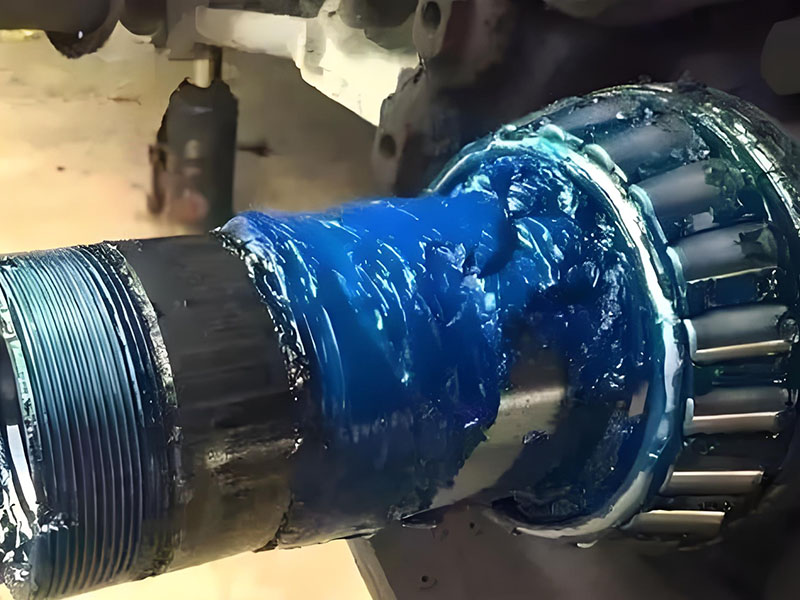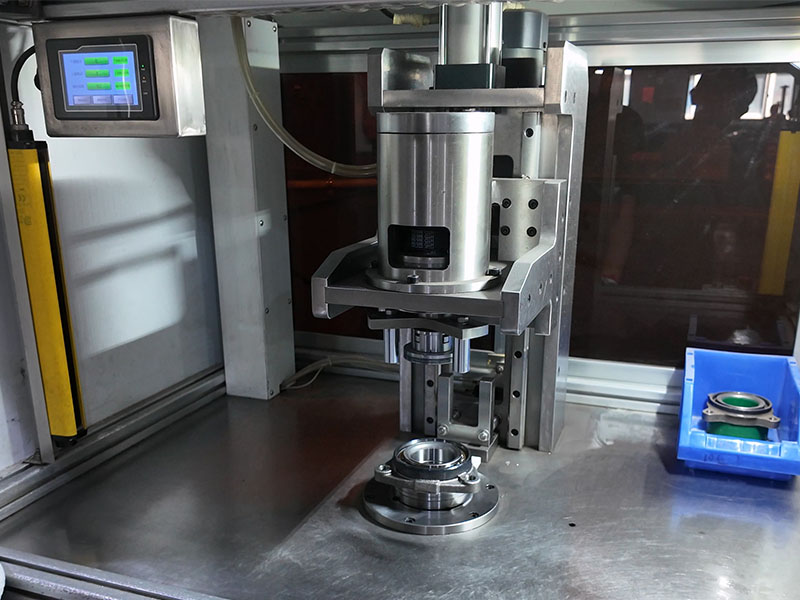
When designing mechanical systems, engineers often face a fundamental question: should you use a bushing or a bearing? Both reduce friction between moving parts, but they operate on different principles and excel in different conditions. Choosing the wrong component can lead to premature wear, excessive noise, or system failure. DUHUI will compare bushings and bearings, explain their key characteristics, and provide a practical framework to help you decide which is right for your application.
What Is a Bushing?
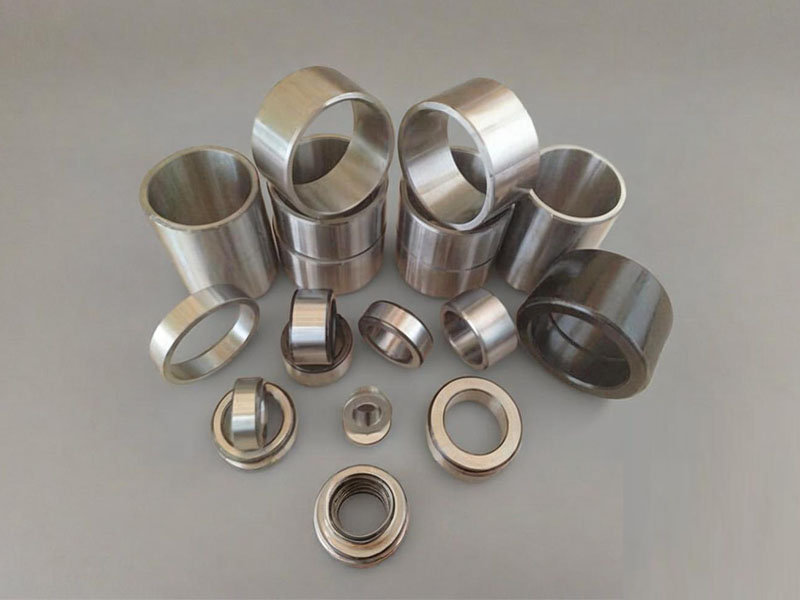
A bushing, also known as a sleeve bearing, is a cylindrical lining that provides a sliding contact surface between two moving parts. Unlike rolling-element bearings, bushings have no moving rollers or balls. Instead, they rely on a low-friction material or lubricant to allow relative motion.
Types of Bushings
Bushings are categorized by shape and material composition:
By shape:
- Sleeve bushings – simple cylindrical tubes
- Flange bushings – include a flange at one end to handle axial loads
By material:
- Bronze and metal bushings – often sintered or solid; high load capacity; may be oil-impregnated
- Plastic bushings – made from PTFE, nylon, or acetal; lightweight, corrosion-resistant, and often self-lubricating
Bushing Selection Considerations
Proper bushing selection requires calculating the pressure-velocity (PV) value. This value determines whether the bushing will operate within its thermal limits.
Use the following formulas:
PV = P × V
Where:
- P = unit pressure (psi or MPa)
- V = surface velocity (ft/min or m/s)
Calculate surface velocity from:
V = 0.262 × rpm × D (D = shaft diameter in inches)
Calculate unit pressure from:
P = Total Load (lbs) / Contact Area (in²)
For a sleeve bushing, contact area ≈ D × L (D = shaft diameter, L = bushing length)
Example: A 1-inch diameter shaft rotating at 500 rpm with a 100-lb load and 1-inch long bushing gives V ≈ 131 ft/min, P ≈ 100 psi, PV ≈ 13,100. Compare this value to the bushing material’s maximum rated PV.
Bushing Maintenance
Many modern bushings are self-lubricating. Bronze bushings can be oil-impregnated (permanently lubricated), and plastic bushings often contain PTFE or graphite. However, non-self-lubricating metal bushings require periodic greasing. Bushings generally need less frequent maintenance than rolling bearings but should be inspected for wear on the inner diameter.
Common Applications of Bushings
- Automotive suspension and steering linkages
- Agricultural equipment
- Hydraulic cylinders
- Pumps and compressors (low-speed)
- Heavy machinery with oscillating motion
What Is a Rolling Bearing?
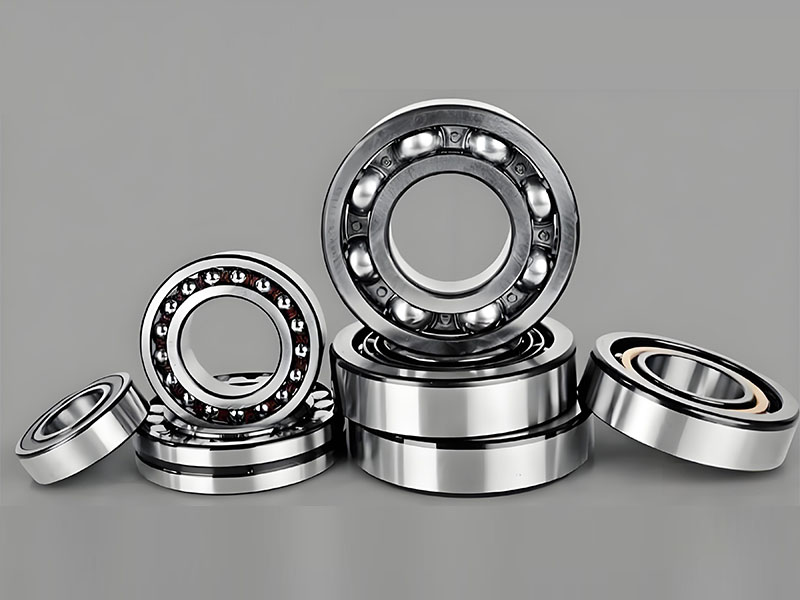
A rolling bearing (typically what people mean by “bearing”) uses rolling elements – balls or rollers – between an inner and outer ring. This rolling motion reduces friction significantly compared to sliding contact. Rolling bearings are standardized, interchangeable, and suitable for a wide range of speeds and loads.
Main Types of Rolling Bearings
By rolling element:
- Ball bearings – point contact; lower friction; suitable for high speeds and moderate loads
- Roller bearings (cylindrical, tapered, spherical) – line contact; higher load capacity; often used in heavy-duty applications
By load direction:
- Radial bearings – primarily support perpendicular (radial) loads
- Thrust bearings – designed for axial loads
Bearing Selection Criteria
When selecting a rolling bearing, consider:
- Load condition – radial, axial, or combined? Tapered roller bearings handle combined loads well.
- Available space – compact designs may require thin-section bearings or needle rollers.
- Load rating – match the bearing’s dynamic load rating (C) with your application’s equivalent load (P). Ensure C/P ratio meets desired life (L10).
- Speed – ball bearings handle higher speeds than rollers; cages and lubrication affect speed limits.
Bearing Maintenance
Rolling bearings require regular lubrication (grease or oil) to prevent metal-to-metal contact. Maintenance schedules depend on speed, temperature, and environment. Sealed or shielded bearings reduce contamination risk but cannot be relubricated. Unsealed bearings need periodic regreasing. Vibration monitoring and temperature checks help predict bearing failure.
Common Applications of Rolling Bearings
- Electric motors and gearboxes
- Automotive wheel hubs (hub bearings)
- Conveyor rollers
- Machine tool spindles
- Fans and blowers
Key Differences Between Bushings and Bearings
| Parameter | Bushing (Sleeve Bearing) | Rolling Bearing |
|---|---|---|
| Friction type | Sliding | Rolling |
| Coefficient of friction | 0.05–0.20 (lubricated) | 0.001–0.01 |
| Load capacity (per size) | Higher (full surface contact) | Lower (point/line contact) |
| Speed capability | Low to moderate | Low to very high |
| Lubrication | Often self-lubricating or grease | Grease or oil, periodic |
| Noise | Quiet | Can be noisy (especially ball bearings) |
| Precision/tolerances | Wider tolerances possible | Tight tolerances (low runout) |
| Initial cost | Lower | Higher |
| Replacement | May require reaming or custom sizing | Standardized, easy replacement |
Advantages of bushings:
- Self-lubricating options available (no maintenance)
- Lower initial cost
- Quieter operation than most rolling bearings
- Handle shock loads well
- Compact (no need for rolling element space)
Disadvantages of bushings:
- Wider tolerances – more slop or backlash possible
- Higher starting friction (breakaway torque)
- Limited speed capability
- Heat generation under continuous high-speed operation
Advantages of rolling bearings:
- Smoother rotation, especially at high speeds
- Tight tolerances – reduced sloppiness and backlash
- Predictable life (L10 calculation)
- Lower running friction
- Interchangeable globally
Disadvantages of rolling bearings:
- Higher purchase cost
- Require regular maintenance (relubrication)
- Louder operation, especially with wear or contamination
- More sensitive to misalignment
How to Choose Between Bushings and Bearings
Making the right choice involves evaluating five key factors.
Velocity and Loading
- High load, low speed → bushing. The full surface contact distributes load well, and low speed prevents overheating.
- High speed (over 5–10 m/s surface velocity) → rolling bearing. Sliding friction in bushings generates excessive heat at high speeds.
- High load and high speed → rolling bearing with adequate cooling or special bushing materials (e.g., PTFE-lined).
Smoothness and Precision
- Applications requiring minimal runout or precise positioning (machine tools, robotics) → rolling bearing.
- Non-critical alignment or low-precision assemblies (agricultural linkages, mounting pivots) → bushing.
Maintenance and Lubrication
- Hard-to-access or sealed systems → self-lubricating bushing. No relubrication needed.
- Accessible, routine maintenance accepted → rolling bearing or greased bushing.
Operating Noise
- Noise-sensitive environments (office equipment, medical devices, residential HVAC) → bushing (especially plastic).
- Industrial machinery where noise is secondary → either, but note bearings may produce whirring or clicking.
Budget
- Lower initial cost, larger production volume → bushing.
- Higher upfront budget, but lower friction losses over time → rolling bearing (energy savings may offset cost).
Practical Scenarios
| Application | Recommended choice | Reason |
|---|---|---|
| Automotive door hinge | Bushing | Low speed, intermittent motion, low cost |
| Electric motor (1 HP, 3000 rpm) | Rolling bearing | High speed, need low friction |
| Hydraulic cylinder pivot | Bushing | Oscillating motion, heavy load, self-lubricating option |
| Conveyor roller (high speed) | Rolling bearing | Continuous rotation, speed, reliability |
| Agricultural disc harrow | Bushing | Dirty environment, shock loads, easy replacement |
Frequently Asked Questions
What is a self-lubricating bearing?
A self-lubricating bearing (almost always a bushing) contains solid lubricants like graphite, PTFE, or molybdenum disulfide embedded in the material, or is impregnated with oil. It does not require external grease or oil during operation.
Why use bronze bushings?
Bronze bushings offer high load capacity, good corrosion resistance, and can be oil-impregnated for lifelong lubrication. They are cost-effective for medium-speed, heavy-load applications like gearboxes and pumps.
How does the performance of sleeve bearings (bushings) compare with ball bearings?
Sleeve bearings provide higher load capacity per unit size and quieter operation but have higher starting friction and lower speed limits. Ball bearings excel in high-speed, low-friction, and high-precision applications but cost more and can be noisier.
What factors should be considered when choosing a bearing?
Always consider load (magnitude and direction), speed, available space, required precision, lubrication access, environmental conditions (dirt, moisture, temperature), and total cost of ownership.
Conclusion
Choosing between bushings and bearings is not about which is universally better – it depends entirely on your operating conditions. Use bushings for low-speed, high-load, cost-sensitive, or hard-to-lubricate applications. Use rolling bearings when you need high speed, tight tolerances, smooth rotation, and predictable service life. By evaluating velocity, load, maintenance requirements, noise constraints, and budget, you can confidently select the right component for your mechanical system. When in doubt, consider both options and compare their PV rating (for bushings) and L10 life (for bearings) under your actual operating parameters.