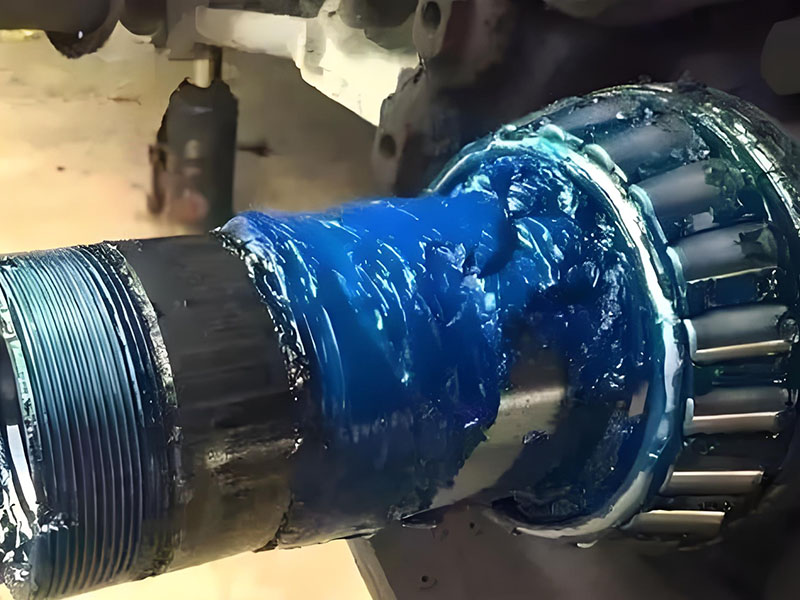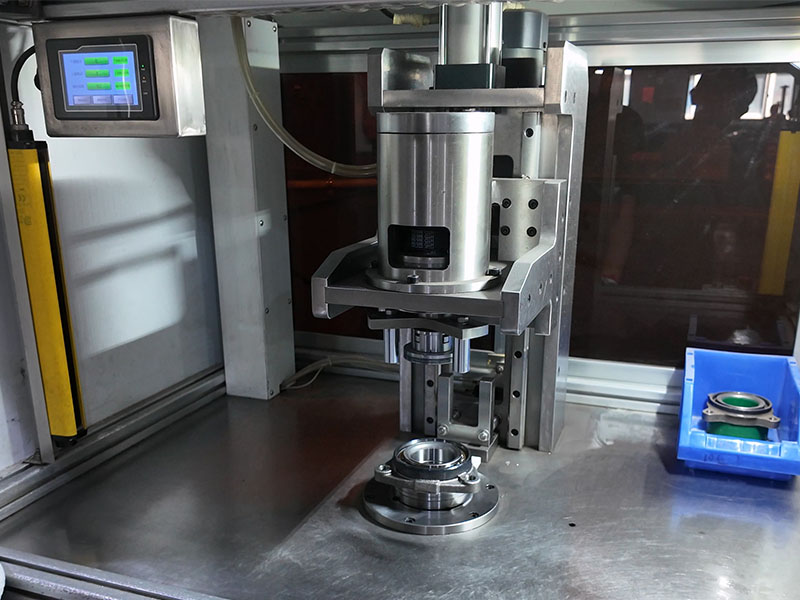
Selecting the best grease for pillow block bearings is a critical maintenance decision that directly impacts equipment reliability and service life. With countless options on the market—each claiming superior performance—how do you identify the right lubricant for your specific application?
DUHUI will examine the essential properties that define high-performance bearing grease, provide detailed recommendations from leading manufacturers presented in easy-to-compare tables, and share proven practices for storage and application.
1. Key Properties of High-Quality Bearing Grease
Understanding what makes grease effective is the first step in selecting the best grease for pillow block bearings. A premium lubricant balances several critical characteristics.
1.1 Base Oil Viscosity
The base oil is the actual lubricant—the thickener is simply a delivery system. Viscosity, measured in ISO VG (Viscosity Grade) or cSt at 40°C, determines how well the oil film separates moving surfaces.
- Insufficient viscosity leads to metal-to-metal contact and accelerated wear
- Excessive viscosity causes churning losses and elevated operating temperatures
For most industrial pillow block bearings operating under moderate loads and speeds, an ISO VG 150-220 mineral oil provides optimal film strength. Synthetic oils (PAO, esters) offer wider temperature ranges and longer life but at higher cost.
1.2 Consistency (NLGI Grade)
The National Lubricating Grease Institute (NLGI) consistency grade indicates grease “stiffness.”
| NLGI Grade | Consistency | Typical Application |
| #000 to #0 | Semi-fluid | Centralized lubrication systems, gearboxes |
| #1 | Soft | Low-temperature applications, long supply lines |
| #2 | Medium (Standard) | Most pillow block bearings – ideal balance |
| #3 | Stiff | High-temperature, vertical shafts, vibrating equipment |
For general industrial use, NLGI #2 consistently proves the best grease for pillow block bearings.
1.3 Additives
Modern greases contain performance-enhancing chemicals:
| Additive Type | Function |
| Extreme Pressure (EP) | Prevents metal welding under heavy or shock loads |
| Anti-Wear (AW) | Reduces friction under normal operating conditions |
| Rust & Oxidation Inhibitors | Protects against corrosion and extends grease life |
| Tackifiers | Improves adhesion to metal surfaces |
1.4 Thickener Types and Their Performance
The thickener acts as a sponge, holding the oil and releasing it as needed. Different thickeners offer distinct advantages:
| Grease Type | Key Performance Attributes |
| General Lithium-based | Excellent All-Rounder: Superior mechanical stability, water & oxidation resistance, and rust prevention. |
| Calcium-based | Reliable Water & Oxidation Protection: Good resistance to water washout and oxidation. |
| Complex Calcium-based | High-Temperature & Humid Condition Specialist: Ideal for demanding environments with high heat and moisture. |
| Calcium-Sodium-based | Balanced Stability: Offers good mechanical and colloidal stability. |
| Sodium-based | Heat-Resistant, Water-Sensitive: Performs well under heat but lacks water resistance. |
| Synthetic Sodium-based | Water-Sensitive, Heat-Tolerant: Not suitable for water exposure, despite heat resistance. |
1.5 Temperature Considerations
Temperature dramatically affects grease performance.
- High-Temperature Applications: Above 100°C, standard greases oxidize rapidly. Look for synthetic oils, polyurea or complex thickeners, and high dropping points (>220°C).
- Low-Temperature Applications: Below -20°C, greases become stiff. Synthetic oils (PAO, esters) maintain fluidity, and softer NLGI #1 or #0 grades reduce starting torque.
2. Best Grease Recommendations by Manufacturer
After extensive evaluation of leading manufacturers, here are top-performing greases suitable as the best grease for pillow block bearings across various applications. The following tables organize recommendations by manufacturer for easy comparison.
SKF Grease Recommendations
| Grease Model | NLGI | Temp. Range (°C) | Base Oil | Thickener | Color | Key Features & Performance |
| LGWA 2 | 2 | -30 to +140 (peaks +220) | Mineral | Lithium Complex | Amber | Excellent EP |
| LGFG 2 | 2 | -30 to +140 | White mineral | Aluminum Complex | Brown | Food grade grease, water resistance and corrosion protection |
| VT307 | 000-00 | -25 to +80 | Mineral | Lithium | Brown | Semi-Fluid |
| LGMT 2 | 2 | -30 to +120 | Mineral | Lithium | Amber | Oxidation Stability |
| LGMT 3 | 3 | -30 to +120 | Mineral | Lithium | Amber | Stiffer Consistency |
Timken Grease Recommendations
| Grease Model | NLGI | Temp. Range (°C) | Base Oil | Thickener | Color | Key Features & Performance |
| Industrial Grease | 2 | -29 to +177 | Mineral | Lithium Complex | Red | Excellent EP |
| Automotive Grease | 2 | -40 to +177 | Mineral | Lithium Complex | Red | Superior Wheel Bearing Protection |
| Rail Grease | 2 | -40 to +121 | Mineral | Lithium Complex | Dark Brown | Railway Specific |
Leading Industrial Grease Brands
| Manufacturer | Grease Model | NLGI | Temp. Range (°C) | Base Oil | Thickener | Color | Key Features & Performance |
| Chevron | SRI Grease 2 | 2 | -29 to +177 | Mineral | Polyurea | Green | High Temp Stability |
| FAG | Arcanol | 2 | -30 to +140 | Mineral | Lithium Complex | Yellow/Brown | Optimized for Schaeffler Bearings |
| Fuchs | Renolit CX-EP | 2 | -30 to +140 | Mineral | Calcium Sulfonate | Blue | Water Resistance |
| Klüber | BEM 41-141 | 1/2 | -30 to +150 (short-term +180) | Synthetic (Ester) | Polyurea | Beige | High-Speed Bearings |
| Mobil | Mobilgrease XHP 222 | 2 | -20 to +140 | Mineral | Lithium Complex | Blue | Excellent Water Washout |
Specialty Grease Recommendations
| Manufacturer | Grease Model | NLGI | Temp. Range (°C) | Base Oil | Thickener | Color | Key Features & Performance |
| Molykote | Longterm 2 Plus | 2 | -25 to +110 | Mineral | Lithium soap | Black | High load, solid lubricants, anti-wear |
| Molykote | Multilub | 2 | -25 to +120 | Mineral | Lithium soap | Yellowish-Beige | EP additives, corrosion protection, suitable for medium to heavy loads |
| NSK | Clean Grease LGU | 2 | -30 to +130 | Synthetic (PAO) | Polyurea | White | Low Dust Generation, Excellent in cleanroom environments |
| NSK | Clean Grease LG2 | 2 | -20 to +110 | Mineral | Lithium | Cream/Yellow | Low particle emissions, low torque, long life |
| Shell | Gadus S2 V220 AD2 | 2 | -25 to +130 (peaks +180) | Mineral | Lithium Complex | Red | High-Performance EP, Heavy Duty Protection, Water Resistant |
Selection Guide by Application
To help you quickly identify the best grease for pillow block bearings for your specific needs, use this application-based guide:
| Application Requirement | Recommended Grease Models | Key Reason |
| General Purpose | SKF LGMT 2, Mobilgrease XHP 222, Shell Gadus S2 V220 | Balanced performance, wide availability |
| Heavy Loads / EP | SKF LGWA 2, Timken Industrial Grease | Superior extreme pressure additives |
| High Temperature | Chevron SRI Grease 2, Kluber BEM 41-141 | High dropping point, oxidation resistance |
| Wet Environments | Fuchs Renolit CX-EP, Mobilgrease XHP 222 | Excellent water washout resistance |
| Food Grade | SKF LGFG 2 | NSF H1 registered, safe for incidental contact |
| Cleanroom / Low Dust | NSK Clean Grease LGU | Low particle generation, synthetic PAO |
| High Speed | Klüber BEM 41-141 | Synthetic ester, NLGI 1/2 for low churning |
3. Grease Storage and Management Practices
Even the best grease for pillow block bearings will fail if improperly stored.
3.1 Storage Conditions
- Temperature: Store in a cool, dry environment (10-30°C). Avoid extreme temperature fluctuations that cause oil separation.
- Humidity: Keep humidity low. Moisture contamination degrades grease and promotes corrosion.
- Cleanliness: Store containers sealed. Dust and dirt are abrasive contaminants.
- Stacking: Do not stack pallets excessively high, which can deform containers and cause separation.
3.2 Shelf Life Management
| Grease Type | Unopened Shelf Life | After Opening |
| Mineral Oil-Based | 2-5 years | 6-12 months |
| Synthetic Oil-Based | 5-7 years | 6-12 months |
Expiration Signs: Discard grease showing oil separation, darkening, hardening, or rancid odor.
4. How to Lubricate Pillow Block Bearings
Correct application is as important as product selection.
4.1 Manual Greasing Procedure
- Preparation & Safety: Clean the grease fitting and surrounding area thoroughly. Wear appropriate PPE.
- Determine Correct Quantity: A common formula: Grams = Bearing OD (mm) × Bearing Width (mm) × 0.005. For regreasing, add only until fresh grease purges from seals.
- Lubrication Frequency: Based on operating hours, temperature, and environment. Start with manufacturer recommendations and adjust based on condition monitoring.
- Lubrication Procedure: Apply grease slowly using a hand or air-operated gun. Fast application risks seal damage.
- Post-Greasing Inspection: Run the equipment and check for abnormal temperature rise or leaking seals.
4.2 Automatic Lubrication Systems
For critical or hard-to-access bearings, automatic systems offer significant advantages:
- Prevents under- or over-lubrication: Delivers precise, consistent quantities
- Improves safety and efficiency: Reduces manual intervention in hazardous or remote locations
- Extends bearing life: Timed, measured doses maintain optimal lubricant film
Conclusion
Selecting the best grease for pillow block bearings requires understanding your operating conditions—load, speed, temperature, and environment—and matching them to the right base oil viscosity, NLGI grade, thickener type, and additive package. The comprehensive recommendations in this guide, organized by manufacturer and application, provide a solid starting point for your selection process. Remember that proper storage and correct application are equally vital to achieving maximum bearing life.