When it comes to mechanical systems, bearings are the unsung heroes that reduce friction and enable motion. However, not all bearings are created equal. If you are an engineer, a procurement specialist, or an automotive enthusiast, you have likely wondered: What exactly is the difference between a ball bearing and a wheel bearing?
The answer is more nuanced than it first appears. While they share a common ancestry, these components are designed for vastly different missions. Moreover, “wheel bearings” themselves have evolved—from simple first-generation designs to sophisticated second and third-generation hub units, and they can utilize either balls or rollers as rolling elements.
In this article, we will break down their structural nuances, functional priorities, and application scenarios. Drawing on our extensive experience at DUHUI Bearing—a manufacturer specializing in both precision ball bearings and the full spectrum of automotive wheel hub bearings—we aim to provide the clarity needed to make the right selection for your project.
1. What Are Ball Bearings?
1.1 Definition and Basic Structure
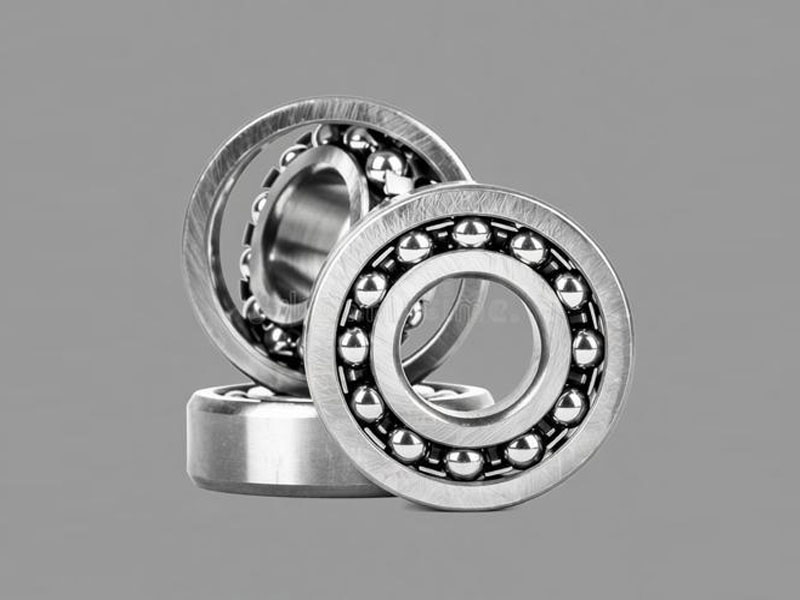
A ball bearing is a type of rolling-element bearing that uses spherical balls to maintain separation between the bearing races. The basic structure consists of an inner ring, an outer ring, a set of steel balls, and a cage that keeps the balls evenly spaced. This simple yet ingenious design allows for the support of both radial (perpendicular to the shaft) and axial (parallel to the shaft) loads.
1.2 Working Principle
Ball bearings operate on the principle of rolling friction. As the inner ring rotates, the balls roll along the raceways of both rings, significantly reducing friction compared to sliding contact. The contact between the balls and the raceways is theoretically point contact, which minimizes friction but also influences load capacity.
1.3 Common Applications
Thanks to their low friction and high-speed capability, ball bearings are ubiquitous across industries:
- Precision Instruments: Hard drives, medical devices.
- Industrial Machinery: Electric motors, gearboxes, pumps.
- Automotive Components: Alternators, air conditioning compressors, transmission parts.
- Consumer Electronics: Fans, power tools.
1.4 Advantages of Ball Bearings
- High Efficiency & Low Friction: Ideal for high-speed rotations.
- Versatility: Available in many sizes, materials, and precision grades.
- Moderate Load Handling: Capable of managing both radial and axial loads.
- Quiet Operation: Well-suited for noise-sensitive applications.
1.5 Limitations of Ball Bearings
- Limited Load Capacity: The point contact means they can be damaged by heavy shock loads.
- Sensitivity to Contamination: Dust or moisture can easily compromise performance without proper sealing.
- Precision Requirements: They often require precise shaft and housing fits, as well as regular lubrication.
- Maintenance: In many configurations, they need periodic re-lubrication and alignment checks.
2. What Are Wheel Bearings?
2.1 Definition and Specific Role
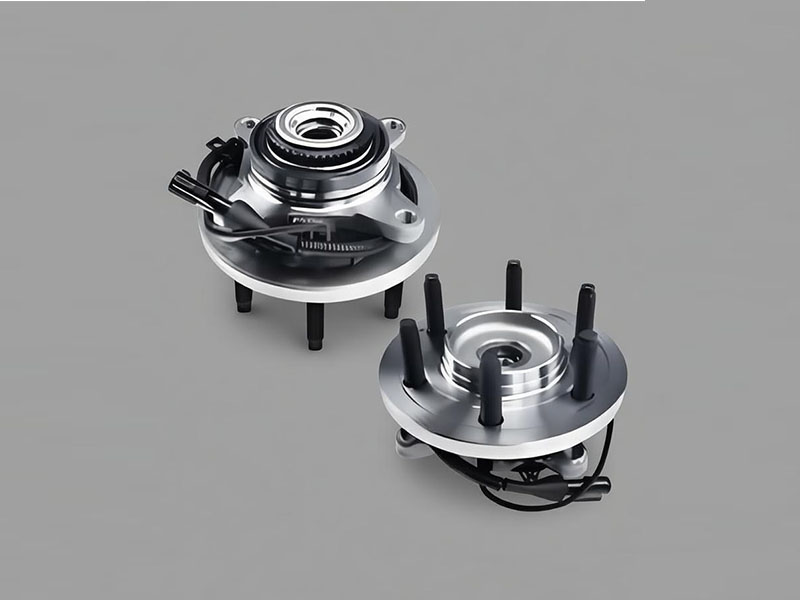
A wheel bearing is a specialized bearing designed exclusively for automotive wheels. Its primary job is to support the entire weight of the vehicle (radial load) while also handling cornering forces (axial load) and allowing the wheel to rotate with minimal friction.
However, to understand wheel bearings fully, one must recognize that they are not a single product type—they have evolved across three generations, and they utilize either balls or tapered rollers as rolling elements depending on the application.
2.2 Wheel Bearing Types: Generations and Rolling Elements
By Generation: The Evolution of Integration
The automotive industry has progressively integrated more components into the bearing assembly to improve reliability and simplify assembly:
First-Generation Wheel Bearings (Gen 1):
- Description: These resemble heavy-duty versions of standard ball or roller bearings. They consist of inner and outer rings with rolling elements in between, but they do not have an integrated flange.
- Installation: They must be pressed into a separate hub or knuckle, and clearance is often adjusted during assembly (e.g., using a locknut).
- Typical Rolling Elements: Can use either double-row ball bearings or tapered roller bearings (usually two separate cones assembled as a set).
Second-Generation Wheel Hub Bearings (Gen 2):
- Description: A significant step in integration. The outer ring (or inner ring) incorporates a flange for direct bolting to the steering knuckle or the wheel hub.
- Installation: Bolts directly to the suspension knuckle or brake drum/disc. Pre-set clearance eliminates manual adjustment.
- Advantage: Reduces component count and installation complexity.
Third-Generation Wheel Hub Bearings (Gen 3):
- Description: The highest level of integration. Both the inner and outer rings have flanges—one flange bolts to the knuckle, the other directly to the wheel. It also integrates the wheel speed sensor (ABS) ring (either magnetic encoder or tone ring) into the seal or inner race.
- Installation: A complete bolt-on solution. It combines the bearing, hub, flange, and ABS sensor into a single, pre-assembled, maintenance-free unit.
- Advantage: Maximum simplicity, reliability, and precision for modern vehicles with ABS and stability control.
By Rolling Element: Ball vs. Roller
Just as with industrial bearings, the choice of rolling element in a wheel bearing significantly impacts performance:
Ball-Type Wheel Bearings:
- Contact: Point contact.
- Characteristics: Lower friction, better fuel efficiency, quieter operation, and good high-speed capability.
- Applications: Commonly found in passenger cars, SUVs, and light trucks where comfort and efficiency are priorities. Most Gen 2 and Gen 3 hub units for passenger vehicles use double-row ball bearings.
Roller-Type Wheel Bearings (Usually Tapered):
- Contact: Line contact.
- Characteristics: Higher load capacity (especially for heavy shock loads), better resistance to impact, and greater rigidity. However, they generate slightly more friction.
- Applications: Preferred for heavy-duty vehicles—pickup trucks, commercial vans, and light trucks that carry heavy loads or tow trailers. Many Gen 1 applications for trucks use tapered roller bearing sets.
2.3 Core Functions of All Wheel Bearings
Regardless of generation or rolling element type, all wheel bearings share these critical functions:
- Load Support: Constantly manages the vehicle’s mass and dynamic loads from driving.
- Friction Reduction: Ensures smooth wheel rotation for fuel efficiency and performance.
- Stability & Safety: Maintains precise wheel geometry, critical for handling and tire wear.
2.4 Common Challenges and Failure Signs
- Wear and Fatigue: Constant load leads to eventual material fatigue.
- Contamination: Although modern seals are robust, damage can let contaminants in.
- Symptoms of Failure: Common signs include humming, growling, or rumbling noises that change with vehicle speed, as well as wheel vibration or loose steering.
3. Ball Bearing vs Wheel Bearing: Detailed Comparison
To make an informed choice, it helps to see them side by side. The table below highlights the critical differences, now incorporating the nuances of wheel bearing generations and rolling elements.
| Aspect | Ball Bearing | Wheel Bearing (Hub Assembly Context) |
| Design Structure | Simple: inner ring, outer ring, balls, cage. | Gen 1: Separate bearing, pressed fit. Gen 2/3: Integrated flange(s), pre-set clearance, built-in seals, ABS sensor (Gen 3). |
| Rolling Elements | Spherical balls (point contact). | Ball-type: Double-row balls (point contact). Roller-type: Usually tapered rollers (line contact). |
| Primary Function | Minimize rotational friction in machinery. | Support vehicle weight and ensure smooth wheel rotation under dynamic loads. |
| Load Capacity | Moderate radial and axial loads; point contact limits heavy loads. | Ball-type: Good for passenger cars. Roller-type: Superior for heavy loads, towing, and impacts. |
| Speed Capability | Excellent for very high speeds (e.g., electric motors up to 10,000+ RPM). | Optimized for typical automotive wheel speeds (up to ~2000 RPM). |
| Application Environment | Controlled environments (machinery interiors, clean spaces). | Harsh environments (road dirt, water, temperature swings, impacts, salt). |
| Maintenance | Often requires periodic lubrication and precise alignment. | Gen 1: May require periodic adjustment. Gen 2/3: Maintenance-free (sealed for life). |
| Integration | Standalone component; requires housing and sealing. | Gen 1: Low integration. Gen 2: Partial integration (flange). Gen 3: Fully integrated (hub, flange, bearing, ABS sensor). |
| Typical Cost | Lower initial cost. | Higher initial cost, but lower total ownership cost due to durability and ease of installation. |
While a standard ball bearing could technically be used in a wheel application, it would lack the necessary robustness, sealing, and integration. The wheel bearing is a purpose-evolved family of products, designed specifically for the demanding automotive environment.
4. How to Select the Right Bearing for Your Application
Choosing between a general-purpose ball bearing and a dedicated wheel bearing—and then selecting the right type of wheel bearing—depends entirely on your specific requirements. Use this guide to evaluate your needs:
4.1 Load and Speed Requirements
If your application involves high rotational speeds with moderate loads (e.g., a small electric motor), a precision ball bearing is the best fit.
If the component must support heavy, dynamic loads at lower speeds (e.g., a car wheel), a wheel bearing unit is non-negotiable.
Within wheel bearings: Choose roller-type for heavy trucks/towing; choose ball-type for passenger comfort and efficiency.
4.2 Operating Environment
For clean, controlled environments where sealing can be handled separately, standard ball bearings are cost-effective.
For exposure to water, dust, or road debris, the integrated sealing of a wheel bearing is essential.
Within wheel bearings: Gen 2 or Gen 3 units offer the best protection against contamination.
4.3 Precision, Durability, and Integration
Consider how the bearing will be mounted. Ball bearings often require separate housings and locking mechanisms.
Wheel bearings offer varying levels of ready-to-install convenience:
- Gen 1: Requires pressing and precise adjustment.
- Gen 2: Bolt-on with pre-set clearance.
- Gen 3: Complete bolt-on solution with ABS integration.
4.4 Installation and Maintenance Capabilities
- Do you have the facilities to press and accurately align individual bearings? If not, a Gen 2 or Gen 3 hub unit simplifies assembly.
- If your goal is low maintenance and long service intervals, the sealed, pre-greased nature of modern hub assemblies is superior.
4.5 Balancing Performance with Cost
While a wheel hub assembly may have a higher upfront cost than a simple ball bearing, its durability and ease of installation often result in a lower total cost of ownership for automotive applications. For industrial machinery where speed and precision are paramount, investing in a high-quality ball bearing is the right choice.
Conclusion
While ball bearings and wheel bearings share the fundamental principle of reducing friction through rolling elements, they are engineered for completely different worlds. Ball bearings are the versatile workhorses of general machinery, optimized for speed and precision. Wheel bearings are the rugged specialists of the automotive world, designed to bear heavy loads and survive harsh environments.
However, the story of wheel bearings is one of evolution. From the simple first-generation bearings (which may use balls or rollers) to the highly integrated second and third-generation hub assemblies, modern wheel bearings are sophisticated, application-tuned components. The choice between ball-type (for efficiency and quietness) and roller-type (for maximum load capacity) further refines the selection process.
Understanding these differences is not just an academic exercise—it is crucial for ensuring safety, performance, and cost-efficiency in your projects. By matching the bearing type to your specific application demands, you avoid premature failures and maximize system longevity. Choosing the right one remains a decision best made with knowledge and expert guidance. At DUHUI Bearing, we are committed to providing both.