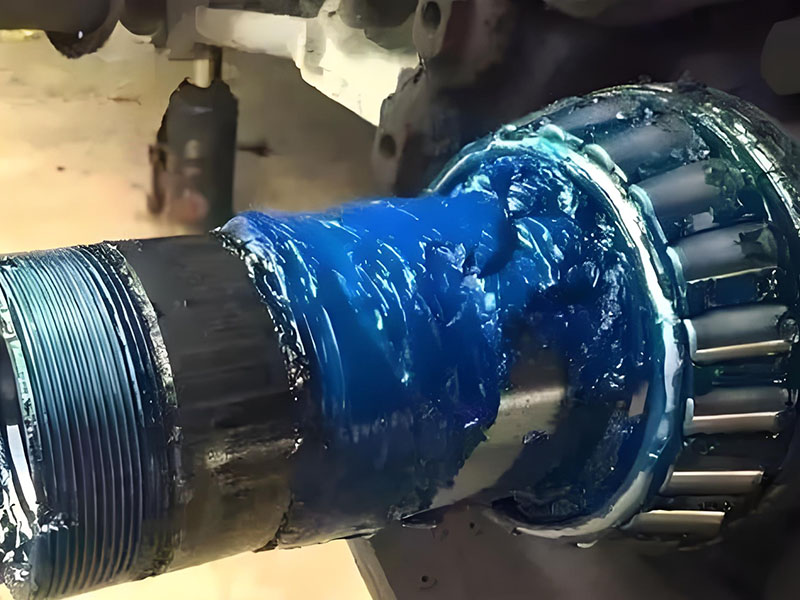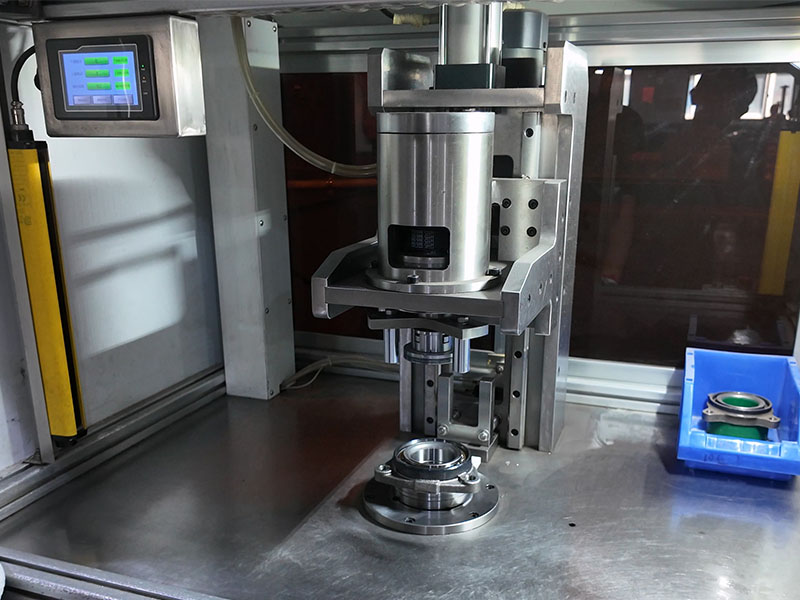
In the world of rolling bearings, few names carry as much weight as FAG. For over a century, this German-born brand has set the standard for precision, durability, and engineering excellence. Whether you operate a fleet of heavy goods vehicles, maintain industrial machinery, or simply want to understand what makes a premium bearing different, there is a great deal to know about FAG bearings. What do the numbers in a bearing code mean? Where are they actually made? How can you tell if a bearing is genuine? And why are they becoming increasingly important in electric commercial vehicles? DUHUI will cover everything you should know.
1.The Century-Long Legacy of FAG Bearings
The story of FAG begins not with a brand name, but with a revolutionary invention. In 1883, Friedrich Fischer, a German entrepreneur, developed a ball mill that enabled the mass production of steel balls with unprecedented roundness and precision. This invention is widely regarded as the foundation of the modern rolling bearing industry. The company he founded, Fischer Aktien-Gesellschaft—abbreviated as FAG—grew into one of the most respected names in mechanical engineering.

Today, FAG is a core brand within the Schaeffler Group, a global leader in automotive and industrial technology headquartered in Germany. As part of Schaeffler, FAG benefits from decades of accumulated research, continuous innovation, and a commitment to technological leadership. The brand represents the highest tier of rolling bearing engineering within the group, carrying forward a legacy that began more than 140 years ago.
2.Where Are FAG Bearings Manufactured?
A common question among buyers and maintenance professionals is about the origin of FAG bearings. The answer reflects a global yet highly standardized approach. As part of the Schaeffler Group, FAG operates manufacturing facilities across multiple continents, including Germany, China, the United States, South Korea, Brazil, and other locations.
What matters most, however, is consistency. Regardless of where a bearing is produced, all Schaeffler plants adhere to the same rigorous technical specifications, quality control protocols, and testing standards. This means an FAG bearing manufactured in one part of the world delivers the same performance, dimensional accuracy, and service life as one produced in Germany. It is a model best described as global manufacturing with a German engineering core.
3.Decoding FAG Bearing Nomenclature: What the Numbers Mean
For those who work with bearings regularly, understanding the product code is essential. FAG uses a standardized nomenclature system that conveys key information about the bearing type, size, and design features. While the full system can be detailed, here is a simplified breakdown.
Take the bearing designation FAG 32206-A as an example:
- 32 indicates a metric tapered roller bearing series.
- 206 refers to the bore size—in this case, 30 mm (the last two digits multiplied by five).
- A denotes an internal design modification, such as an optimized internal geometry for higher load capacity.
Other common suffixes include:
- TVP for a polyamide cage.
- 2RSR for a bearing with two rubber seals.
- XL for a high-performance design with extended fatigue life.
Understanding these codes helps users quickly identify the correct replacement bearing and avoid mismatches that can lead to premature failure.
4.FAG Bearings Product Portfolio for Heavy-Duty Applications
FAG offers an extensive range of bearings, but certain product lines are particularly relevant for commercial vehicles and heavy-duty applications.
- FAG Wheel Bearings (Hub Units): These are pre-assembled units that combine the bearing, hub, and seal into a single component. They simplify installation, reduce the risk of installation errors, and are widely used in both passenger cars and light commercial vehicles.
- FAG Tapered Roller Bearings: Designed to handle combined radial and axial loads, tapered roller bearings are a fundamental component in HGV wheel-end systems. Their robust design makes them capable of withstanding the extreme forces generated by heavily loaded trucks.
- FAG Hub Bearing Units: For modern commercial vehicles, these advanced units integrate multiple functions into a compact, maintenance-free package. They offer weight savings, reduced friction, and longer service intervals compared to traditional bearing arrangements.
5.Why FAG Bearings Are Ideal for Heavy Goods Vehicles (HGV)
Heavy goods vehicles operate under some of the most punishing conditions imaginable. Fully loaded trucks place immense stress on every component, especially wheel-end bearings. FAG bearings are engineered specifically to meet these challenges.
Engineered for Extreme Loads
The design philosophy behind FAG HGV bearings centers on high load-carrying capacity. From material selection to internal geometry, every aspect is optimized to handle the static and dynamic loads that commercial vehicles experience daily.
Three Core Strengths for Heavy-Duty Applications
- High Precision and Load Capacity: FAG bearings are manufactured to micron-level tolerances. This precision minimizes internal friction, even under maximum load, resulting in lower operating temperatures and improved fuel efficiency over time.
- Exceptional Durability: Using high-grade bearing steel and advanced heat treatment processes, FAG achieves superior fatigue life. This means the bearing resists material fatigue far longer than standard alternatives, reducing the frequency of replacements.
- Robust Environmental Adaptability: HGV wheel bearings face constant exposure to road salt, water, mud, and dust. FAG addresses this with advanced multi-lip sealing systems that effectively keep contaminants out while retaining lubricant, ensuring reliable performance in all weather conditions.
6.FAG Bearings vs. Standard Bearings: A Quality Perspective
When choosing a bearing for commercial applications, the decision often comes down to balancing initial cost against long-term value.
Reputation for Reliability
FAG has earned an exceptional reputation among fleet operators and independent owner-operators. This trust is built on decades of consistent performance, where reliability translates directly to vehicle uptime and lower operational costs.
Engineering-First Philosophy
Unlike some manufacturers that prioritize cost reduction in production, FAG maintains an engineering-first approach. Their bearings are designed for users who demand maximum engineering quality, predictable long-term performance, and the assurance that components will perform as specified.
Total Cost of Ownership (TCO)
While the initial purchase price of an FAG bearing is typically higher than that of a non-premium alternative, the total cost of ownership is often significantly lower. Enhanced durability reduces replacement frequency. Fewer unplanned failures minimize downtime and roadside repair costs. When labor, vehicle downtime, and replacement part costs are factored in, premium bearings often prove to be the more economical choice over the full service life.
7.Installation and Maintenance Best Practices for FAG Bearings
Even the highest-quality bearing can fail prematurely if installed incorrectly. Proper installation and maintenance are critical to achieving the expected service life.
Key Installation Guidelines
- Cleanliness: Ensure all components are free of dirt, debris, and old lubricant before installation. Contamination is one of the leading causes of bearing failure.
- Correct Torque: Use a calibrated torque wrench to achieve the manufacturer-specified torque values. Under-torquing can lead to loosening, while over-torquing can damage the bearing or hub.
- Proper Mounting: For press-fit bearings, apply force evenly to the bearing ring that is being pressed—never through the rolling elements. Using the correct tooling prevents internal damage.
Common Installation Mistakes
- Using a hammer or impact tool to install a bearing.
- Failing to replace the hub nut after removal.
- Ignoring manufacturer-specified torque and preload settings.
Maintenance Considerations
For commercial vehicle wheel-end bearings, regular inspection is recommended as part of scheduled maintenance. Listen for unusual noise, check for excessive play, and monitor for signs of lubricant leakage. While many modern hub units are designed as maintenance-free, early detection of issues can prevent catastrophic failure.
8.How to Identify Genuine FAG Bearings
The market for counterfeit bearings is a persistent challenge, particularly for premium brands. Counterfeit products not only fail to deliver the expected performance but also pose significant safety risks. Here is how to verify authenticity.
- Check the Packaging: Genuine FAG bearings come in high-quality packaging with clear, professionally printed branding and labeling. Blurry text, poor color reproduction, or generic boxes are warning signs.
- Inspect the Laser Engraving: The bearing itself will feature a distinct, high-resolution laser engraving of the FAG logo and the complete part number. Counterfeits often have shallow, poorly defined, or incorrect markings.
- Verify the Origin: Authentic FAG bearings include traceable information that can be cross-referenced with Schaeffler records.
- Purchase from Authorized Distributors: The most reliable way to guarantee authenticity is to buy from authorized distributors listed on the official Schaeffler Group website. If a price seems too good to be true, it almost certainly is.
9.Warranty, Support, and What to Expect
FAG bearings are backed by the Schaeffler Group’s comprehensive quality assurance and warranty framework. While warranty terms may vary by region and application, genuine FAG bearings purchased through authorized channels are covered against manufacturing defects.
For technical support, Schaeffler provides detailed documentation, including installation guides, dimensional drawings, and application-specific recommendations. In many regions, authorized distributors also offer technical assistance to help users select the correct bearing and troubleshoot installation issues.
10.The Future: FAG Bearings in Electric Commercial Vehicles
As the commercial vehicle industry undergoes a fundamental shift toward electrification, bearing technology must evolve to meet new demands. Electric trucks and buses introduce operating conditions that differ significantly from conventional diesel vehicles.
Higher Rotational Speeds: Electric motors typically operate at higher speeds than internal combustion engines. Bearings must be capable of sustaining these speeds without compromising durability.
Reduced Friction: In electric vehicles, every watt of energy saved translates directly to increased range. Low-friction bearing designs are becoming increasingly critical.
Electrical Corrosion Protection: Electric powertrains introduce the risk of electrical current passing through bearings, which can cause fluting and premature failure. FAG has developed advanced solutions, including insulated bearings, to mitigate this risk.
Schaeffler, as the parent company of FAG, has been actively developing bearing technologies specifically tailored for electric commercial vehicles. These innovations position FAG to remain a leader as the industry transitions to new powertrain architectures.
Conclusion
FAG is far more than a brand name stamped on a bearing. It represents over a century of engineering innovation, a global manufacturing network built on uncompromising quality standards, and a deep understanding of what makes heavy-duty applications succeed. From understanding the meaning behind bearing codes to mastering proper installation techniques, and from recognizing genuine products to anticipating future trends in electric mobility, the knowledge outlined here covers what you should know about FAG bearings.