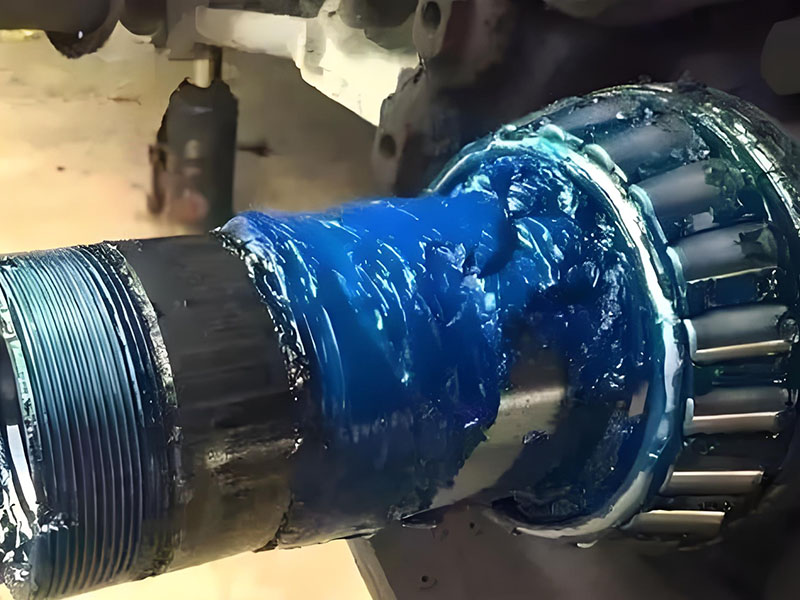
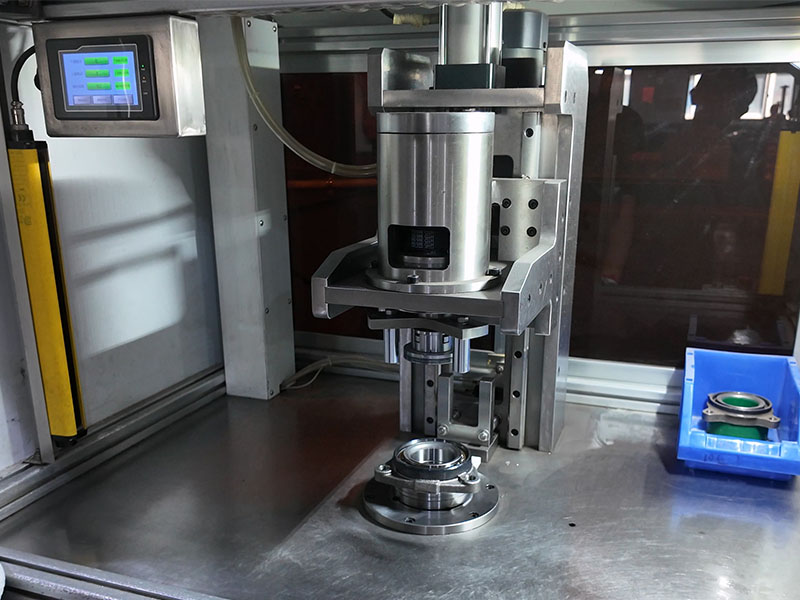
In the world of rotating machinery, efficiency and reliability are paramount. At the heart of countless industrial applications, from simple conveyor belts to complex agricultural equipment, lies a critical component: the mounted bearing. But what exactly is a mounted bearing, and why is it so universally preferred by design engineers and maintenance professionals?
Unlike a basic bearing that requires a precisely machined housing for installation, a mounted bearing is a pre-assembled, off-the-shelf unit. It consists of a rolling element bearing (usually an insert bearing) housed inside a pre-machined, pre-drilled housing that can be bolted directly onto a mounting frame or structure.
In this guide, DUHUI will delve into their types, advantages, selection criteria, and maintenance best practices to help you make the most informed decision for your machinery.
1. Understanding Mounted Bearing Configurations
A mounted bearing is more than just a bearing in a box; it’s a sophisticated system. Understanding its core components is the first step to appreciating its functionality.
- The Bearing Insert: This is the “heart” of the unit, typically a deep groove ball bearing designed to accommodate misalignment.
- The Housing: This is the “body,” which supports the insert and provides the mounting surface. Common materials include cast iron for heavy-duty use, pressed steel for lightweight applications, and stainless steel for corrosive environments.
- The Sealing System: Often overlooked, the seal is the first line of defense against contaminants like dust, water, and debris, which are the primary enemies of bearing life.
- Locking Device: This mechanism secures the bearing insert to the rotating shaft. Common types include set screw locking, eccentric locking collars, and taper adapters.
2. Major Types of Mounted Bearings
The versatility of mounted bearings is evident in the variety of housing configurations available, each designed for specific mounting situations.
- Pillow Block (Plummer) Block Bearings: The most common type, featuring a housing with a base that has two bolt holes. They are designed to support a shaft parallel to the mounting surface and are ideal for conveyors, fans, and drive shafts.
- Flange Mount Bearings: These units have a flanged housing that mounts perpendicular to the shaft. They are perfect for supporting shafts where a pillow block cannot be used, such as on the side frames of machinery. Variations include 2-bolt, 3-bolt, and 4-bolt designs.
- Take-Up Bearings: These are special units designed to fit into a linear frame, allowing for tension adjustment of a conveyor belt or chain. They are crucial in material handling systems.
Hanger Bearings: Used primarily in screw conveyors, these bearings support the rotating screw from above, hanging inside the conveyor trough. - Specialized Units: For demanding environments, specialized units like corrosion-resistant bearing units made from stainless steel or with advanced coatings are essential for industries like food processing and chemical handling.
3. Advantages of Using Mounted Bearings
Why are mounted bearings the go-to choice for so many applications? The advantages are compelling.
- Simplified Installation and Replacement: Because the bearing is pre-assembled in a precisely machined housing, installation is as simple as bolting it to the structure. This drastically reduces downtime during replacement.
- Built-In Misalignment Compensation: Most mounted bearing inserts can self-align within the housing, compensating for minor shaft deflections or mounting inaccuracies, which reduces stress on the bearing.
- Superior Protection: The integrated, high-performance seals in a mounted bearing unit offer far better protection against contamination than a separately housed bearing.
- Design Flexibility: With a vast array of housing types, materials, and sizes, engineers can easily find the perfect solution for any spatial constraint and operational requirement.
4. Critical Factors in Mounted Bearing Performance
The performance and longevity of your mounted bearing are not just about the bearing itself; it’s a combination of factors.
- Housing Material: Cast iron offers strength and vibration damping. Pressed steel is cost-effective for light-duty applications. Stainless steel provides superior corrosion resistance.
- Bearing Material & Lubrication: High-quality bearing steel ensures long fatigue life, while the correct lubricant—whether standard grease or food-grade for hygiene-critical applications—is vital.
- Seal Type: Contact seals (like nitrile rubber) provide the best protection but may have higher friction, while non-contact seals (like metal shields) are suitable for high-speed, clean environments.
While the unit is designed for ease of use, improper installation—such as misalignment, overtightening of bolts, or using the wrong locking device—can lead to premature vibration, overheating, and failure, negating all the built-in advantages.
5. How to Select the Right Mounted Bearing for Your Application
Choosing the correct mounted bearing requires a systematic approach. Follow these steps to ensure optimal performance.
- Step 1: Analyze the Loads. Determine the type and magnitude of loads. Is it purely radial (perpendicular to the shaft), axial (thrust along the shaft), or a combination? This dictates the bearing series required.
- Step 2: Assess the Operating Environment. Consider temperature extremes, exposure to water, chemicals, or abrasive dust. A food-grade stainless steel housed unit is essential for washdown environments, while a heavy-duty cast iron unit with triple-lip seals is better for a dusty quarry.
- Step 3: Evaluate Speed Requirements. High-speed applications demand precision bearings and may require specific lubrication and non-contact seals.
- Step 4: Consider Shaft Mounting and Alignment. Choose the right locking mechanism. For example, set screw locking is common for general use, while eccentric locking collars are better for reversing loads, and taper adapter units provide a tight, concentric fit for high-speed or vibration-prone applications.
By carefully considering these factors, you can avoid premature failure and maximize equipment uptime.
6. Common Applications Across Industries
The adaptability of mounted bearings makes them indispensable across a wide spectrum of industries.
- Material Handling: Take-up bearings and pillow blocks are the workhorses of conveyor systems, managing belt tension and supporting heavy loads.
- Agriculture: Dusty and wet conditions in farm machinery demand robust, well-sealed mounted bearing units.
- Food & Beverage: The need for frequent sanitation makes stainless steel flange and pillow block units the standard for processing and packaging lines.
- Industrial Fans: Precision pillow block bearings ensure smooth, reliable, and quiet operation of large air handling units.
7. Maintenance Tips to Maximize Service Life
Even the highest quality mounted bearing requires regular care to achieve its full service life.
- Regular Relubrication: Follow the manufacturer’s guidelines on relubrication intervals and the correct type and amount of grease. Over-greasing can be as harmful as under-greasing.
- Condition Monitoring: Train maintenance staff to listen for unusual noises (grinding, clicking) and feel for excessive vibration or heat. These are early signs of trouble.
- Visual Inspections: Periodically check the integrity of the seals for damage and ensure the housing mounting bolts remain tight.
- Proactive Replacement: If a bearing shows signs of failure, replace it promptly to prevent damage to the shaft or other machinery components.
Conclusion
Mounted bearings are a testament to smart engineering, offering a perfect blend of performance, protection, and convenience. From the common pillow block to specialized corrosion-resistant units, they provide a reliable foundation for rotating equipment across nearly every industry. By understanding the different types, making an informed selection based on your specific application needs, and adhering to a routine maintenance schedule, you can significantly enhance your machinery’s efficiency and longevity.
For over two decades, DUHUI Bearing has been a trusted manufacturer and exporter of high-quality mounted bearing units. Whether you need standard pillow block bearings or custom-engineered solutions for a unique challenge, our team is ready to provide the expertise and products you need.