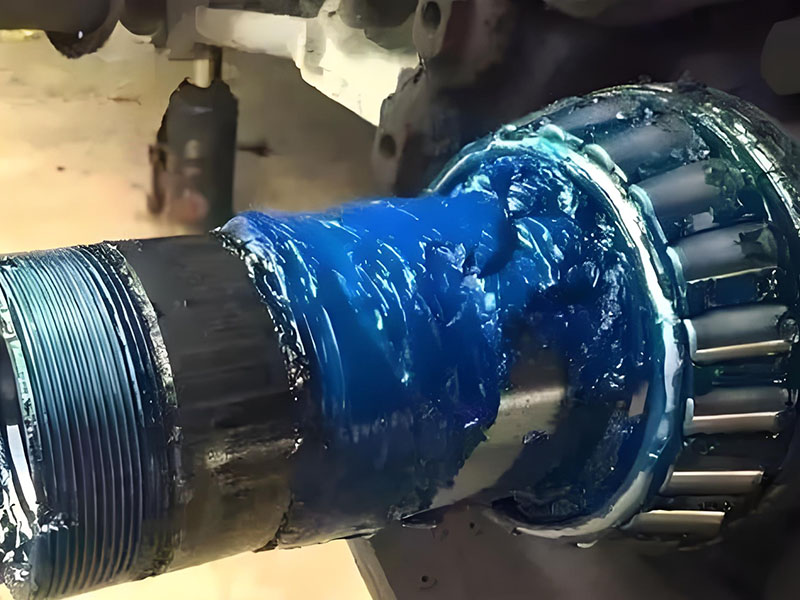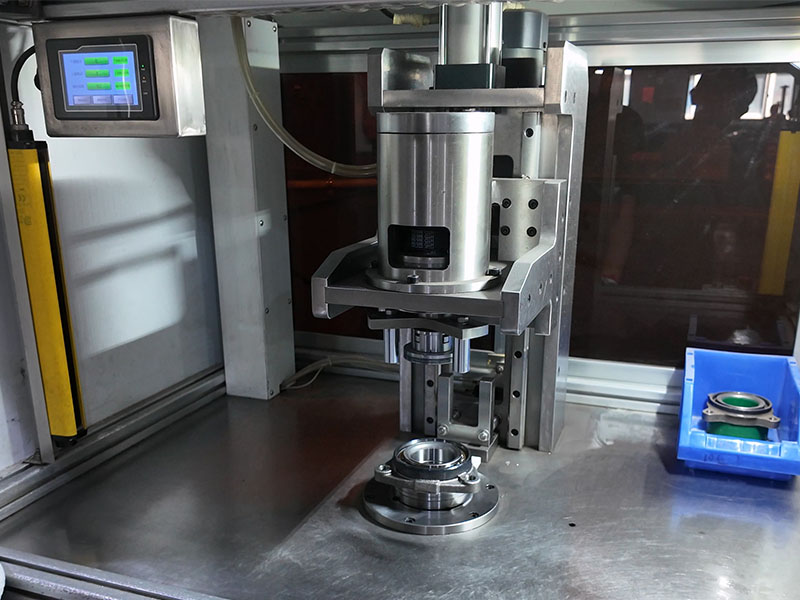
Choosing the right bearing type for your machinery can be challenging. With options ranging from deep groove ball bearings to tapered roller bearings and mounted units, how do you determine which one will deliver reliable performance under your specific operating conditions? Selecting incorrectly often leads to premature failure, unplanned downtime, and increased maintenance costs. DUHUI will provide a systematic approach to understanding bearing types and making informed selection decisions based on real-world engineering principles.
What Are Bearings and Why Does Type Selection Matter?
Bearings are mechanical components that enable rotational or linear motion by reducing friction between moving parts while supporting loads. Their proper selection directly impacts equipment reliability, energy efficiency, and service life.
When a bearing type does not match its application requirements, several problems can arise:
- Excessive heat generation and friction loss
- Abnormal noise and vibration
- Premature fatigue and failure
- Damage to shafts or housings
- Unplanned production stoppages
Understanding the characteristics of different bearing types helps prevent these issues and ensures your mechanical systems operate as designed.
Key Factors to Consider When Selecting a Bearing Type
Before examining specific bearing types, it is essential to evaluate your application’s operating conditions. The following factors form the foundation of proper bearing selection.
Load Direction and Magnitude
The first consideration is understanding the loads the bearing will support. Radial loads act perpendicular to the shaft, while axial loads (thrust loads) act parallel to the shaft axis. Many applications involve combined loads, requiring bearings designed to handle forces from multiple directions.
Equally important is accurately estimating both static and dynamic load magnitudes. Underestimating load conditions is a common cause of premature bearing failure in industrial applications.
Operating Speed and Precision
Different bearing types have varying speed capabilities. Generally, ball bearings can operate at higher speeds than roller bearings due to lower friction characteristics. Applications requiring high rotational precision—such as machine tools or precision measuring equipment—demand bearings with tighter internal geometry tolerances.
Environmental Conditions
The operating environment significantly influences bearing performance and longevity. Consider:
- Operating temperature range
- Exposure to dust, moisture, or corrosive substances
- Presence of shock loads or vibration
- Cleanliness requirements
In harsh environments, sealing effectiveness often becomes more critical than speed capability.
Lubrication and Sealing
Proper lubrication reduces friction, dissipates heat, and protects bearing surfaces. Selection considerations include:
- Grease or oil lubrication method
- Relubrication intervals and accessibility
- Open, shielded, or sealed bearing designs
Sealing effectiveness is particularly important in applications where contamination is a concern.
Installation and Maintenance
Consider how the bearing will be mounted and maintained. Some applications benefit from pre-assembled bearing units that simplify installation and reduce alignment errors. Others may require bearings with adjustable internal clearance or the ability to withstand repeated installation and removal.
Comprehensive Overview of Bearing Types
With a clear understanding of your application requirements, you can evaluate which bearing type best aligns with your needs.
Ball Bearings
Ball bearings use spherical rolling elements and are characterized by relatively low friction and high speed capability.
Deep Groove Ball Bearings
These are the most commonly used bearing type due to their versatility. They support radial loads and moderate axial loads in both directions. Their simple, reliable design makes them suitable for high-speed operation. Typical applications include electric motors, pumps, household appliances, and automotive auxiliary components.
Angular Contact Ball Bearings
Designed to handle combined radial and axial loads, these bearings have a contact angle that provides higher axial load capacity and greater rigidity. They are often used in machine tools, pumps, compressors, and automotive transmissions where precision and stiffness are required.
Self-Aligning Ball Bearings
These bearings accommodate shaft misalignment and deflection, making them suitable for applications where precise alignment is difficult to achieve or maintain. They are commonly found in agricultural machinery, conveyors, and ventilation systems.
Thrust Ball Bearings
Specifically designed for axial loads, these bearings support loads parallel to the shaft axis but cannot accommodate radial loads. They are used in applications such as turntables, vertical shafts, and low-speed axial load systems.
Roller Bearings
Roller bearings use cylindrical or tapered rolling elements with line contact, providing higher load capacity than ball bearings of comparable size.
Tapered Roller Bearings
These bearings are specifically designed for combined radial and axial loads. Their unique geometry, with conical rollers and raceways, provides high load capacity and rigidity. In automotive systems, tapered roller bearings are widely used in wheel hub assemblies, axles, and transmissions where they must withstand complex load conditions. Industrial applications include gearboxes, heavy machinery, and rolling mills.
Cylindrical Roller Bearings
With high radial load capacity and relatively low friction, these bearings are commonly used in gearboxes, electric motors, pumps, and industrial machinery where radial loads dominate.
Spherical Roller Bearings
These self-aligning bearings offer extremely high load capacity and can accommodate significant misalignment. They are ideal for heavy-duty applications such as mining equipment, construction machinery, and paper mills where shock loads and shaft deflection are common.
Needle Roller Bearings
Characterized by a compact cross-section, needle roller bearings provide high load capacity in limited space. They are commonly used in transmissions, compressors, and automotive components where space constraints are critical.
Insert Bearings and Mounted Units
Insert bearings are designed for applications where ease of installation and replacement are priorities. These units typically consist of a bearing with a spherical outer diameter housed in a cast iron or stamped steel housing.
Set Screw Insert Bearings (UC200 and UC300 Series)
These bearings use set screws to lock onto the shaft, providing simple installation for light to medium-duty applications. They are widely used in agricultural machinery, conveyors, fans, and material handling equipment.
Tapered Bore Insert Bearings (UK200 and UK300 Series)
Using adapter sleeves for mounting, these bearings offer higher load capacity and more secure shaft fixation. They are suitable for industrial machinery applications with higher load requirements.
Eccentric Locking Collar Bearings (SA200 Series)
This locking mechanism provides reliable shaft fixation under moderate operating conditions. These bearings are commonly found in fans, conveyors, and agricultural equipment.
Mounted Bearing Units
Pillow block and flange units combine the bearing with a housing, reducing installation time and alignment requirements. These pre-assembled solutions are widely used in material handling systems, ventilation equipment, and industrial machinery.
How to Match Bearing Types to Your Application
Understanding bearing characteristics is essential, but applying that knowledge to your specific application requires careful consideration.
For Automotive Systems
Applications such as wheel hubs, transmissions, and steering components typically require bearings that can handle combined loads, shock loads, and varying operating conditions. Tapered roller bearings are often the preferred choice for wheel hub assemblies due to their ability to manage complex load scenarios. Deep groove ball bearings are commonly used in auxiliary components where speed and reliability are priorities.
For Industrial Machinery
Gearboxes, pumps, and compressors often require bearings with high load capacity and reliability. Cylindrical roller bearings, spherical roller bearings, and angular contact ball bearings are frequently specified depending on load characteristics and speed requirements.
For Agricultural and Off-Highway Equipment
These applications often operate in dusty, dirty environments with exposure to moisture. Self-aligning ball bearings and insert bearings with effective sealing are commonly used to accommodate misalignment and protect against contamination.
For Material Handling Systems
Conveyors and material handling equipment often benefit from mounted bearing units that simplify installation and maintenance. Insert bearings with set screw or eccentric locking collars are widely used in these applications.
Ensuring Long-Term Bearing Performance
Selecting the right bearing type is only part of achieving reliable operation. Proper installation, maintenance, and monitoring practices are equally important.
Installation Best Practices
- Ensure shafts and housings are clean and within specified tolerances
- Use appropriate mounting tools to prevent damage to rolling elements and raceways
- Follow recommended fit and clearance specifications
- Verify alignment before operation
Maintenance Considerations
- Establish appropriate relubrication intervals based on operating conditions
- Monitor operating temperature and vibration as indicators of bearing condition
- Replace seals if contamination is observed
- Keep detailed records of bearing service life for predictive maintenance planning
Many manufacturers provide technical resources and application engineering support to assist with proper bearing selection, installation, and maintenance practices. Leveraging these resources can help optimize bearing performance and extend service life.
Conclusion: Making an Informed Bearing Selection
Selecting the appropriate bearing type requires balancing multiple factors: load characteristics, speed requirements, environmental conditions, installation considerations, and expected service life. No single bearing type is optimal for all applications.
Understanding both the capabilities and limitations of different bearing types—from deep groove ball bearings to tapered roller bearings, cylindrical roller bearings to mounted units—enables more informed engineering decisions. When facing complex applications or uncertain operating conditions, consulting technical resources or manufacturer application engineering support can provide valuable guidance.
For engineers and maintenance professionals seeking reliable bearing solutions, working with an experienced manufacturer ensures access to quality products and technical expertise. Whether your application involves automotive wheel hub assemblies, industrial machinery, or agricultural equipment, proper bearing selection forms the foundation of reliable mechanical system performance.