Engineers and procurement professionals often ask: which bearing material delivers better performance for a given application — ceramic or chrome steel? The answer depends on operating speed, load, environment, and budget. This article provides a technical comparison of ceramic and chrome steel bearings based on material properties, performance characteristics, and real-world industrial use cases.
Key technical differences at a glance
– Ceramic bearings: lower friction, higher speed capability, corrosion resistant, electrically insulating, but brittle and higher cost
– Chrome steel bearings: higher load capacity, impact resistant, cost-effective, but susceptible to corrosion and temperature limits
– Hybrid bearings (ceramic balls + steel rings): a practical middle ground
Understanding Ceramic Bearings
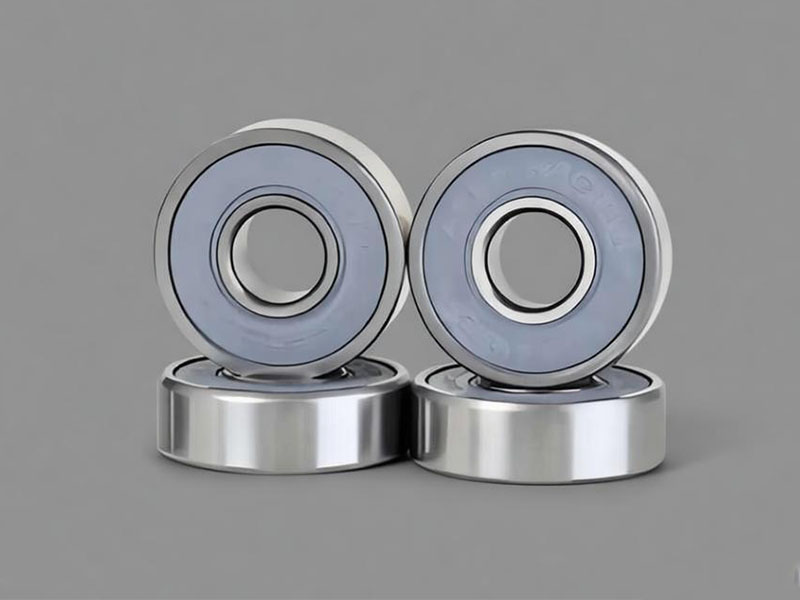
Ceramic bearings use ceramic materials for rolling elements and, in full ceramic versions, for raceways as well. They are engineered for demanding conditions where conventional steel bearings may fail.
Materials
The most common ceramic grades in bearing applications are silicon nitride (Si₃N₄) and zirconia (ZrO₂). Silicon nitride offers the best combination of low density, high hardness, and fracture toughness for high-speed precision applications. Zirconia provides higher toughness and is often selected for corrosive environments. Aluminum oxide (Al₂O₃) and silicon carbide (SiC) are also available but less common.
Advantages of Ceramic Bearings
- Superior corrosion resistance – Ceramics do not rust or react with most chemicals. This makes them suitable for wet environments, chemical processing, and marine applications.
- Lightweight – Ceramic balls are approximately 60% lighter than steel balls of the same size. Lower mass reduces centrifugal forces and heat generation at high speeds.
- Low friction – The lower coefficient of friction of ceramic rolling elements reduces energy loss and operating temperatures.
- Electrical insulation – Full ceramic bearings are non-conductive, preventing electrical arcing damage in electric motors and generators.
- High-temperature stability – Ceramics retain hardness and dimensional stability at temperatures where steel softens (above 120°C).
Limitations of Ceramic Bearings
- Brittleness and impact sensitivity – Ceramics are harder but more brittle than steel. Shock loads or impact can cause cracks or fracture.
- Lower load capacity – For the same envelope size, ceramic bearings have lower static and dynamic load ratings than chrome steel bearings.
- Higher initial cost – The sintering and precision grinding processes for ceramics require specialized equipment, resulting in significantly higher upfront cost.
Understanding Chrome Steel Bearings
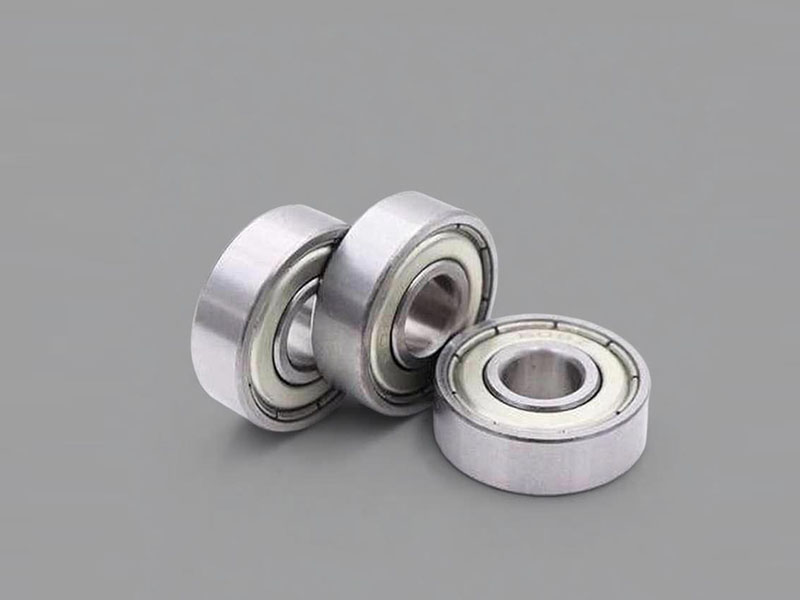
Chrome steel bearings are the industry standard for general industrial applications due to their balanced mechanical properties and cost-effectiveness.
Materials
The most widely used chrome steel for bearings is SAE 52100 (also known as 100Cr6 in Europe, SUJ2 in Japan, and GCr15 in China). This high-carbon chromium alloy steel is through-hardened to 60–67 HRC, providing excellent wear resistance and fatigue strength.
Advantages of Chrome Steel Bearings
- High load capacity – Chrome steel bearings can handle heavy radial and axial loads, making them suitable for high-stress applications.
- Toughness and impact resistance – Steel exhibits ductility and can absorb shock loads without fracturing, unlike ceramics.
- Cost-effective – Chrome steel bearings are substantially less expensive than ceramic alternatives, especially in high-volume production.
- Established standards – SAE 52100 bearings benefit from decades of standardization, ensuring interchangeability and predictable performance.
Limitations of Chrome Steel Bearings
- Corrosion susceptibility – Chrome steel is not corrosion-resistant. In humid or wet environments, it requires proper lubrication, sealing, or protective coatings.
- Temperature constraints – Continuous operation above 120°C degrades hardness and load capacity. Intermittent use up to 150°C may be possible with special lubrication.
- Lubrication dependence – Steel bearings rely on consistent lubrication to prevent metal-to-metal contact. Lubrication failure leads to rapid wear.
Ceramic Bearings vs. Chrome Steel Bearings: A Side-by-Side Comparison
Friction and Efficiency
Ceramic bearings exhibit a lower coefficient of friction than chrome steel bearings. This reduces energy loss and heat generation, allowing ceramic bearings to run cooler at equivalent speeds.
Speed Capability
The lower density of ceramic rolling elements (60% lighter than steel) reduces centrifugal forces, enabling ceramic bearings to operate at speeds approximately 20–40% higher than equivalent steel bearings under similar conditions. This performance advantage is widely recognized in high-speed spindles and racing applications.
Hardness and Wear Resistance
Silicon nitride is nearly twice as hard as SAE 52100 steel. This hardness provides superior resistance to surface wear and particle indentation, especially in contaminated environments. However, higher hardness comes with reduced fracture toughness.
Corrosion Resistance
Ceramic bearings offer excellent corrosion resistance without coatings. Chrome steel bearings have limited corrosion resistance and require supplementary protection in moist or chemical environments.
Load Capacity and Toughness
Chrome steel bearings maintain a clear advantage in load capacity and toughness. For applications involving heavy loads, shock, or vibration, steel bearings are the safer choice. Ceramic bearings are not recommended for high-impact conditions.
Electrical and Magnetic Properties
Full ceramic bearings are electrical insulators and non-magnetic. This makes them suitable for electric motors, generators, and MRI equipment. Chrome steel bearings are conductive and magnetic, which may interfere with sensitive electronics.
Maintenance and Lubrication
Ceramic bearings can operate under marginal lubrication for extended periods. Some full ceramic configurations run dry in specific applications. Steel bearings require consistent lubrication. Hybrid ceramic bearings (ceramic balls with steel rings) reduce lubrication frequency while maintaining steel raceway toughness.
Cost and Life Cycle Value
The initial cost of ceramic bearings is significantly higher than chrome steel. However, in applications where ceramics extend service life by 3–5 times (hybrid) or more (full ceramic), total life cycle cost may be competitive. Hybrid bearings offer the best value for many users.
Application-Based Selection Guide
When to Choose Chrome Steel Bearings
- Heavy static or dynamic loads
- Impact or shock loading expected
- Operating temperature below 120°C
- Non-corrosive or well-sealed environment
- Budget-sensitive or high-volume production
- No electrical insulation or non-magnetic requirement
When to Choose Ceramic Bearings
- Very high rotational speeds exceeding steel limits
- Corrosive environments (chemicals, moisture, washdown)
- Continuous operation above 120°C
- Electrical insulation needed
- Non-magnetic requirement for sensitive equipment
- Minimal lubrication or maintenance access
When to Consider Hybrid Configurations
Hybrid ceramic bearings (ceramic balls + steel rings) provide a practical compromise for many industrial applications. They offer:
- Reduced friction and lower operating temperature
- Higher speed capability than all-steel bearings
- Improved wear resistance at the rolling contact interface
- Lower cost than full ceramic bearings
- Electrical insulation (ceramic balls prevent current passage)
For engineers who need performance improvement over steel but cannot justify full ceramic cost, hybrid bearings are often the optimal solution.
Conclusion
Chrome steel bearings deliver high load capacity, toughness, and low cost for general industrial use. Ceramic bearings provide superior speed, corrosion resistance, and electrical insulation for demanding environments. Hybrid configurations balance performance and cost. Selection should be based on operating conditions, performance priorities, and total cost of ownership, not material preference alone.
Frequently Asked Questions (FAQs)
Q1: Are ceramic bearings always better than chrome steel bearings?
No. Ceramic bearings excel in speed, corrosion resistance, and friction reduction, while steel bearings are better for heavy loads, impact resistance, and cost-sensitive applications. The better choice depends on the specific use case.
Q2: How much longer do ceramic bearings last compared to steel bearings?
Hybrid ceramic bearings typically last 3–5 times longer than all-steel bearings under comparable conditions. Full ceramic bearings can achieve even longer service life, provided shock loads are avoided.
Q3: Can ceramic bearings run without lubrication?
Some full ceramic bearings can operate without lubrication in select low-load, low-speed applications. However, most industrial applications still benefit from proper lubrication to optimize performance and service life.
Q4: Why are ceramic bearings more expensive?
The higher cost comes from energy-intensive sintering, precision grinding of hard materials, and stringent quality control. Ceramic components are more difficult and costly to machine than steel.
Q5: What is the maximum operating temperature for chrome steel bearings?
Continuous operation up to 120°C is standard. Intermittent operation up to 150°C may be possible with special high-temperature lubricants, but hardness and load capacity will decrease.
Q6: Are ceramic bearings suitable for heavy-load applications?
Generally no. Ceramic bearings have lower load ratings than steel bearings of the same size. For heavy loads or impact conditions, chrome steel bearings are recommended. Hybrid bearings retain steel raceways for load support.
Q7: What are common applications for ceramic bearings?
Electric motors, automotive racing, aerospace systems, medical imaging equipment, wind turbines, high-speed machine spindles, and electric vehicle drivetrains (where electrical insulation and high-speed capability are critical).
Q8: Are hybrid ceramic bearings a good alternative to full ceramic bearings?
Yes. Hybrid bearings combine ceramic balls with steel raceways, offering many benefits of ceramics (lower friction, higher speed, electrical insulation) at a lower cost than full ceramic bearings. They are often the preferred solution for industrial upgrades.