Deep groove ball bearings are among the most widely used rolling bearings in modern machinery. From automotive drivetrains and electric motors to agricultural equipment and aerospace systems, these bearings are integral to the reliable operation of countless mechanical assemblies. But what exactly makes them so versatile? How do engineers select the right bearing for a specific application, and what performance characteristics should be considered? This article examines the design, specifications, applications, and performance considerations of deep groove ball bearings in contemporary industrial contexts.
Deep Groove Ball Bearings: Definition and Operating Principles
A deep groove ball bearing is a type of rolling-element bearing characterized by a single row of balls running in deep raceway grooves on both the inner and outer rings. The depth of these grooves—greater than the radius of the balls—enables the bearing to accommodate not only radial loads but also axial loads in both directions. This non-detachable design contributes to their robustness and ease of handling.
The operating principle of a deep groove ball bearing relies on the rolling motion of the balls between the inner and outer raceways. When a radial load is applied, the load is distributed among the balls in the lower half of the bearing. For axial loads, the deep groove geometry creates a contact angle that allows the balls to transmit thrust forces. This dual-load capability, combined with relatively low friction torque, makes deep groove ball bearings suitable for high-speed applications. Minor angular deviations between shaft and housing are permissible during operation without causing immediate failure.
The major boundary dimensions of single-row deep groove ball bearings are standardized according to ISO 15 (Radial bearings – boundary dimensions) and DIN 625-1. This standardization ensures interchangeability across manufacturers and simplifies the design and procurement processes for machinery builders worldwide.
Key Specifications and Performance Parameters
When selecting a deep groove ball bearing for a given application, several key specifications must be evaluated. These parameters are defined by international standards and are consistently documented in manufacturer catalogs.
Basic Dimensional Parameters. The size of a deep groove ball bearing is primarily defined by three dimensions, standardized globally under ISO 15:2017 and ABMA/ANSI standards: bore diameter (d)—the inner diameter that fits onto the shaft; outer diameter (D)—the diameter that fits into the housing; and width (B)—the total axial dimension of the bearing. For metric series bearings, the last two digits of the bearing number typically multiply by five to indicate the bore diameter in millimeters (e.g., 6204 bearing has a bore of 04 × 5 = 20 mm). Standard bore sizes range from 3 mm to 400 mm.
Load Ratings. The basic dynamic load rating (Cr) represents the constant radial load that 90% of a group of identical bearings can sustain for one million revolutions before showing signs of fatigue. The basic static load rating (Cor) indicates the maximum static load that can be applied without causing permanent deformation that would impair bearing performance. These ratings are essential for calculating bearing service life under specific operating conditions.
Speed Capabilities. Deep groove ball bearings are capable of high-speed operation due to their low friction characteristics. Each bearing type has a reference speed (suitable for standard operating conditions with adequate lubrication) and a limiting speed (the maximum rotational speed permissible under ideal conditions). Speed capabilities are influenced by bearing size, internal design, cage material, lubrication method, and seal type.
Tolerance Classes. Bearings are manufactured to different precision grades, from standard tolerances (PN, conforming to ISO 492) through higher precision grades such as P6, P5, and P4. Higher precision grades are required for applications demanding extremely accurate shaft positioning, such as machine tool spindles and precision instruments.
Radial Internal Clearance. The radial internal clearance—the total distance one ring can be displaced relative to the other in the radial direction—is classified under ISO 5753-1 into groups including CN (normal), C2 (smaller than normal), C3 (greater than normal), C4, and C5. Larger clearances are often specified for applications involving high operating temperatures, interference fits, or heavy loads.
Design Variants: Seals, Cages, and Materials
Deep groove ball bearings are available in numerous design variants, allowing engineers to tailor bearing selection to specific operating conditions.
Sealing Configurations. Sealing is a critical consideration in bearing selection. Open bearings (no suffix) allow for maximum speed but require external lubrication and sealing systems. Shielded bearings (suffix Z or ZZ) feature metal shields that provide protection against large contaminants while maintaining low friction and high speed capability. Sealed bearings (suffix 2RS or 2RSH) incorporate rubber seals that contact the inner ring, offering superior protection against moisture and fine particles, though with some increase in friction torque. Low-friction seal designs are also available, providing a balance between sealing effectiveness and speed capability.
Cage Materials and Designs. The cage (or retainer) separates the rolling elements and guides their motion. Steel cages (pressed sheet metal) are standard for most applications, offering good strength at moderate cost. Glass-fiber-reinforced polyamide 66 (PA66) cages are suitable for continuous operation at temperatures up to 120°C and are commonly used in high-speed applications due to their low mass and good sliding properties. Brass cages are employed in heavy-duty applications requiring high strength and resistance to aggressive lubricant additives.
Material Selection. Standard deep groove ball bearings are manufactured from high-quality bearing steel, typically through-hardened chromium steel such as GCr15 (SAE 52100). For applications involving corrosion risk, stainless steel bearings (440C grade) provide enhanced resistance to moisture and chemicals. Hybrid ceramic bearings combine steel rings with ceramic rolling elements made of bearing-grade silicon nitride (Si3N4). This configuration provides electrical insulation (protecting against current-induced damage), higher speed capability (due to lower density and reduced centrifugal forces), extended service life, and reduced sensitivity to temperature gradients. Hybrid bearings have demonstrated speed increases of up to 30% compared to conventional all-steel bearings.
Standard Dimensions: Series 60, 62, and 63
Deep groove ball bearings are manufactured in standardized dimension series, each optimized for different load and speed requirements. The most commonly used series include the 60 series (light section bearings, narrower width for space-constrained applications), 62 series (standard section, the most widely used for general industrial applications), and 63 series (heavy section, with larger cross-section for higher load capacity).
The table below presents the key dimensions for common deep groove ball bearings in the 6000, 6200, and 6300 series. All dimensions conform to ISO 15 standards, ensuring global interchangeability.
| Bearing No. | Bore (d) mm | Outer (D) mm | Width (B) mm | Weight (g) | Typical Applications |
|---|---|---|---|---|---|
| 6000 | 10 | 26 | 8 | 19 | Small electric motors, instruments |
| 6001 | 12 | 28 | 8 | 22 | Power tools, small pumps |
| 6002 | 15 | 32 | 9 | 30 | Household appliances |
| 6003 | 17 | 35 | 10 | 39 | Small gearboxes |
| 6004 | 20 | 42 | 12 | 69 | Office equipment |
| 6005 | 25 | 47 | 12 | 80 | Conveyor rollers |
| 6200 | 10 | 30 | 9 | 32 | General machinery |
| 6201 | 12 | 32 | 10 | 37 | Automotive accessories |
| 6202 | 15 | 35 | 11 | 45 | Agricultural equipment |
| 6203 | 17 | 40 | 12 | 66 | Industrial fans |
| 6204 | 20 | 47 | 14 | 106 | Electric motors, pumps |
| 6205 | 25 | 52 | 15 | 128 | Conveyors, gearboxes |
| 6300 | 10 | 35 | 11 | 54 | High-load applications |
| 6301 | 12 | 37 | 12 | 62 | Industrial machinery |
| 6302 | 15 | 42 | 13 | 82 | Agricultural implements |
| 6303 | 17 | 47 | 14 | 112 | Heavy-duty equipment |
| 6304 | 20 | 52 | 15 | 144 | Power transmission |
| 6305 | 25 | 62 | 17 | 230 | Industrial gearboxes |
When selecting a bearing size, engineers must consider the required load capacity, available space, operating speed, and the nature of the load (radial vs. axial). For the same bore diameter, moving from the 62 series to the 63 series provides increased load capacity at the expense of larger outer diameter and greater width.
Industry Applications
The versatility of deep groove ball bearings makes them indispensable across a wide range of industrial sectors.
Automotive Industry. Deep groove ball bearings are extensively used in passenger-car electric drives, including traction motors, e-axle and reducer input/output positions, as well as high-speed auxiliaries such as oil pumps, coolant pumps, and e-compressors. For battery electric vehicles (BEV), plug-in hybrid electric vehicles (PHEV), and hybrid electric vehicle (HEV) platforms, manufacturers provide low-friction deep groove ball bearings to minimize torque losses and heat generation, along with hybrid-ceramic bearings engineered to mitigate inverter-related electrical effects. The global shift toward vehicle electrification is driving new requirements for bearings with higher speed capability, lower friction, and compact dimensions. Recent industry developments include compact, lightweight deep groove ball bearings for EV drive units that achieve a 10% reduction in outer diameter, 38% reduction in width, 51% reduction in weight, and 25% reduction in torque compared to conventional products. Some large-diameter deep groove ball bearings for coaxial e-axles now support high-speed rotation with a dmn value of 1.5 million and provide more than 50% lower torque than standard products.
Mechanical Engineering. Industrial machinery—from compressors and pumps to conveyors and fans—relies on deep groove ball bearings for reliable rotating support. Their ability to operate at high speeds with relatively low maintenance requirements makes them the default choice for most general machinery applications.
Aerospace Industry. Aerospace applications demand bearings with high precision, low weight, and reliable performance under extreme conditions. Deep groove ball bearings are used in aircraft actuation systems, auxiliary power units, and various rotating assemblies, where compliance with stringent quality standards is mandatory.
Agricultural Machinery. Agricultural equipment operates in harsh environments characterized by dust, moisture, and vibration. Sealed deep groove ball bearings with enhanced contamination protection are widely used in tractors, harvesters, and tillage equipment, where long service life and low maintenance are critical.
Electronic Equipment. Miniature deep groove ball bearings support the high-speed spindles in hard disk drives, cooling fans, and precision instruments. Industry analysis indicates that the miniature deep groove ball bearing market is experiencing sustained growth, reflecting the increasing demand for compact, high-precision bearings in consumer electronics and medical devices.
Performance in High-Speed and High-Temperature Conditions
Deep groove ball bearings are capable of operating under demanding conditions when properly selected and maintained.
High-Temperature Applications. Standard deep groove ball bearings with outer diameters up to 240 mm are typically dimensionally stabilized for operation up to 150°C. For higher temperatures, specialized high-temperature bearings are available. Some deep groove ball bearing variants are optimized for operation at temperatures up to 350°C (660°F), featuring increased radial internal clearances, graphite-based lubricants, and manganese phosphate surface treatment to enhance lubricant adhesion and running-in properties. These bearings are designed for challenging environments such as furnaces, ovens, and high-temperature industrial processes.
High-Speed Performance. The maximum achievable rotational speed of a deep groove ball bearing depends on bearing size, internal geometry, cage design, lubrication, and sealing arrangement. Ceramic hybrid bearings offer superior high-speed performance due to the lower density of silicon nitride rolling elements, which reduces centrifugal forces on the cage and outer ring at high rotational speeds. Some high-speed deep groove ball bearings have demonstrated reference speeds of 38,000 r/min under appropriate lubrication conditions. In the EV sector, bearings are now being engineered to support dmn values of 1.5 million, more than double the capability of standard products, enabling higher motor speeds and more compact drivetrain designs. These high-speed capabilities further reinforce the role of deep groove ball bearings in modern industry, particularly as electric drivetrains demand ever-higher rotational speeds.
Service Life and Maintenance
The service life of a deep groove ball bearing directly affects equipment reliability and maintenance costs. Understanding how to predict and extend bearing life is essential for optimizing machinery performance.
Life Prediction. The basic fatigue life of a deep groove ball bearing is expressed as the L10 life—the number of revolutions (or hours at constant speed) that 90% of a group of identical bearings will achieve before the first signs of fatigue failure appear. For ball bearings, the basic L10 life formula is: L10 = (C/P)³ × 10⁶ revolutions, where C is the basic dynamic load rating and P is the equivalent dynamic bearing load. For time-based calculations, this formula can be extended to L10h (hours) by incorporating rotational speed. Manufacturers provide detailed application examples demonstrating how to calculate service life under specific load and speed conditions.
Life Extension Strategies. Several practices can extend the operational life of deep groove ball bearings:
- Proper installation and alignment. Bearings should be installed using appropriate tools and techniques. The shaft and housing must be accurately aligned to prevent uneven load distribution.
- Proper lubrication. Selecting the correct lubricant type and maintaining adequate lubrication levels is critical. Lubricants should be checked and replaced according to manufacturer recommendations.
- Contamination control. Keeping bearings and their working environment clean prevents abrasive wear. Sealed bearings provide enhanced protection in contaminated environments.
- Avoiding overloading. Bearings should not be subjected to loads exceeding their design ratings.
- Temperature control. Operating bearings at excessively high temperatures degrades lubricant and reduces material strength.
- Regular inspection. Vibration analysis, temperature monitoring, and periodic visual inspection help detect developing issues before they cause failure.
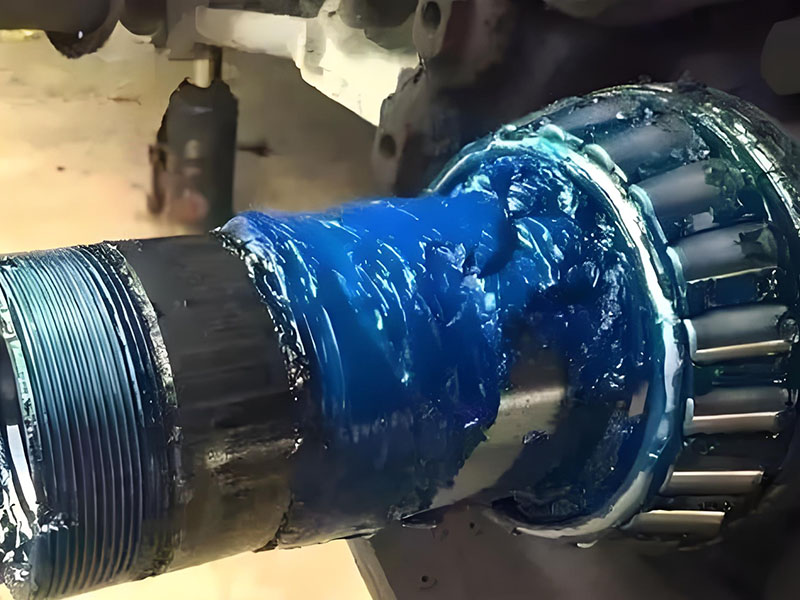
Lubrication. Most deep groove ball bearings are lubricated with grease or oil. Grease lubrication is common for sealed and shielded bearings, with initial grease filling typically occupying 1/3 to 1/2 of the bearing internal volume. For high-speed applications, oil lubrication is often preferred as it provides better heat dissipation and lower friction torque.
Conclusion
Deep groove ball bearings are foundational components in modern industry, from automotive drivetrains and industrial machinery to aerospace systems and electronic equipment. Their ability to accommodate both radial and axial loads, combined with relatively low friction and suitability for high-speed operation, explains their widespread adoption across virtually every industrial sector.
Standardization under ISO 15 ensures global interchangeability and simplifies engineering selection. The availability of multiple design variants—different sealing configurations, cage materials, and rolling element materials (including hybrid ceramic options)—enables engineers to optimize bearing selection for specific application requirements. As industries evolve, particularly with the global transition to electric vehicles, deep groove ball bearings continue to advance in capability, achieving higher speeds, lower friction, and more compact dimensions while maintaining reliability and service life.
For engineers and equipment designers, understanding the specifications, performance characteristics, and maintenance requirements of deep groove ball bearings is essential for achieving optimal machinery performance and longevity. Proper bearing selection, installation, and maintenance deliver measurable benefits in equipment reliability, energy efficiency, and reduced operating costs.
Frequently Asked Questions
Q1: How are deep groove ball bearings manufactured, and what quality control measures are in place?
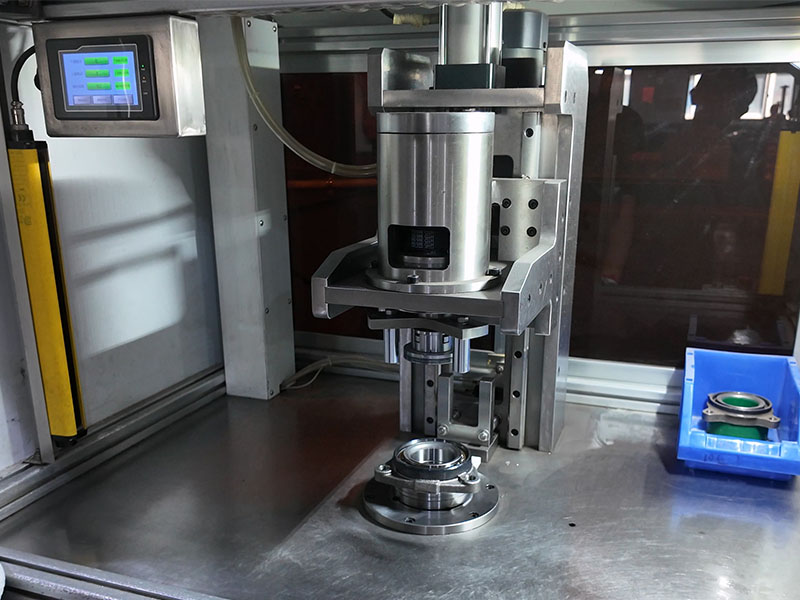
A1: The manufacturing process involves multiple stages: forging of rings from bearing steel, turning and heat treatment, precision grinding of raceways, superfinishing, ball manufacturing, assembly, and final inspection. Quality control measures include dimensional measurement tests to verify race and ball geometry, material analysis for composition and hardness verification, performance testing to measure friction torque and noise levels, and in some cases x-ray inspection to confirm the full complement of balls within the raceways. Rigorous quality assurance throughout every manufacturing stage ensures consistent bearing performance and reliability.
Q2: What are the advantages of using ceramic balls in deep groove ball bearings?
A2: Hybrid ceramic bearings combine steel rings with ceramic rolling elements (typically silicon nitride, Si3N4). Advantages include: electrical insulation protecting against current-induced damage (critical in electric motors and generators); higher speed capability (up to 30% higher than all-steel bearings) due to lower density and reduced centrifugal forces; extended service life; higher wear resistance; higher stiffness; reduced risk of smearing and false brinelling; and reduced sensitivity to temperature gradients. These benefits make hybrid bearings particularly suitable for demanding conditions including high-speed machinery, contaminated environments, and electric vehicle drivetrains.
Q3: What is the lifespan of a deep groove ball bearing, and how can I extend its longevity?
A3: The theoretical L10 life represents the service life that 90% of bearings in a population will exceed under specified conditions. Actual lifespan depends on load magnitude, operating speed, lubrication quality, temperature, and environmental conditions. To extend bearing life: ensure proper installation and alignment; maintain appropriate lubrication (correct type, quantity, and replacement intervals); keep bearings and their environment clean; avoid overloading; control operating temperature; and perform regular inspections using methods such as vibration analysis and temperature monitoring.
Q4: Can deep groove ball bearings be used in high-temperature or high-load applications?
A4: Yes, with appropriate selection. For high temperatures, specialized bearings are available with increased radial internal clearances (to accommodate thermal expansion), heat-stabilized steel rings (some variants rated up to 350°C / 660°F), and graphite-based lubricants or high-temperature grease. For high-load applications, larger bearings within the 63 series or 64 series provide increased load ratings, or hybrid ceramic bearings with higher stiffness can be specified. For applications requiring both high temperature and high load capability, consultation with a bearing engineer is recommended.
Q5: What is a deep groove ball bearing, and how does it work?
A5: A deep groove ball bearing is a rolling-element bearing with a single row of balls running in deep raceway grooves on both the inner and outer rings. The depth of these grooves—greater than the ball radius—allows the bearing to accommodate radial loads and axial loads in both directions simultaneously. During operation, the balls roll between the raceways, converting sliding friction into rolling friction. The cage separates the balls and guides their motion. This design enables high rotational speeds, relatively low friction torque, and versatility across a wide range of applications.
Q6: What is the difference between 6200 series and 6300 series deep groove ball bearings?
A6: For the same bore diameter, the 6300 series bearings have larger outer diameters and greater widths than 6200 series bearings. This larger cross-section provides higher load ratings (both dynamic and static) at the expense of increased weight and larger space requirements. For example, a 6204 (bore 20 mm) has outer diameter 47 mm and width 14 mm, while a 6304 (same bore 20 mm) has outer diameter 52 mm and width 15 mm, with a correspondingly higher load rating. The choice between series depends on load requirements versus space constraints.
Q7: What is the L10 life of a deep groove ball bearing, and how is it calculated?
A7: L10 life is the basic rating life in revolutions that 90% of a sufficiently large group of identical bearings will achieve or exceed before fatigue failure. For deep groove ball bearings, the L10 life formula is L10 = (C/P)³ × 10⁶ revolutions, where C is the basic dynamic load rating and P is the equivalent dynamic bearing load. For time-based life calculations (L10h), the formula is adjusted to incorporate rotational speed. Manufacturers provide application calculation examples demonstrating the process for real-world conditions.
Q8: How do I choose between open, shielded, and sealed deep groove ball bearings?
A8: Open bearings (no suffix) offer maximum speed capability and lowest friction but require external lubrication and sealing within the assembly. Shielded bearings (Z or ZZ suffix) provide metal shields that exclude large particles while maintaining low friction and high speed—suitable for relatively clean environments. Sealed bearings (2RS or 2RSH suffix) feature rubber seals contacting the inner ring, offering superior protection against moisture and fine particles—ideal for contaminated or outdoor environments. The trade-off is that seals increase friction torque and reduce maximum allowable speed compared to shields. Selection should be based on the level of contamination expected, required operating speed, and maintenance accessibility.