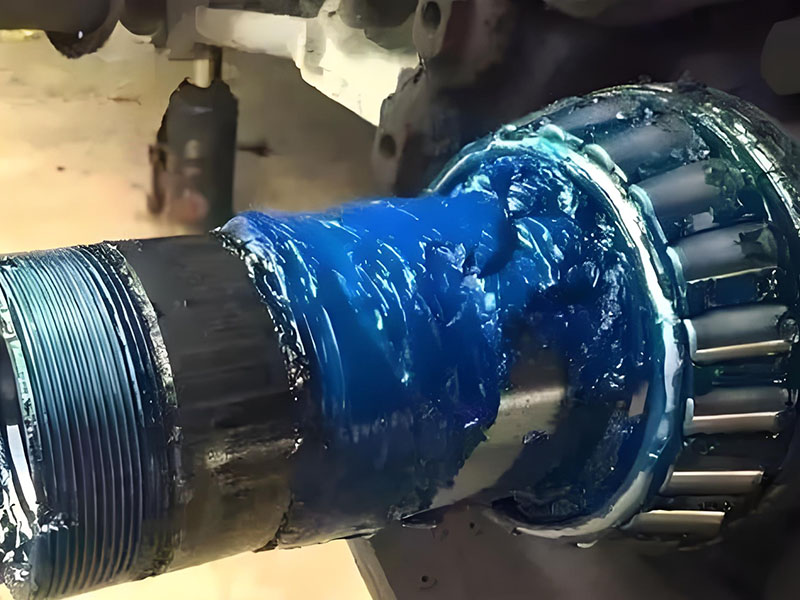
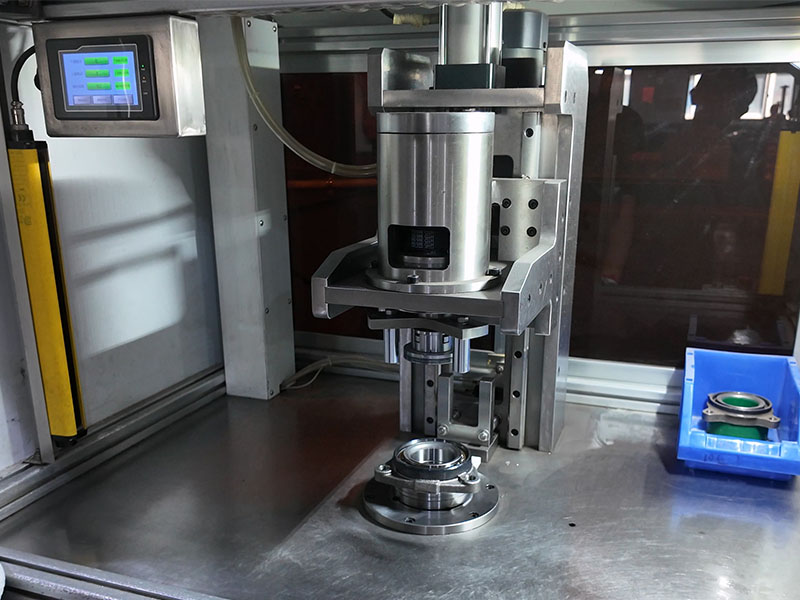
How do you distinguish between tapered, cylindrical, needle, and spherical roller bearings? And when should you choose a roller bearing over a ball bearing? This guide answers these questions by providing a structured overview of common roller bearing types, their key characteristics, and real-world applications. Whether you are involved in equipment maintenance, procurement, or design, understanding these differences will help you make technically sound and cost-effective decisions.
What Are Roller Bearings?
Roller bearings are a subcategory of rolling bearings, which include both ball bearings and roller bearings. The fundamental difference lies in the rolling element geometry: ball bearings use spheres, while roller bearings use cylindrical, tapered, needle, or barrel-shaped rollers. This shape difference creates a larger contact area between the roller and the raceway, directly influencing load and friction behavior.
Common roller shapes include cylindrical, tapered, spherical, and needle. Each shape is optimized for specific load directions (radial, axial, or combined) and operating conditions.
Key Characteristics of Roller Bearings
- High Load Capacity: Line contact (or modified line contact) distributes stress over a larger area than the point contact of ball bearings, allowing roller bearings to support heavier radial loads.
- Larger Contact Area: This reduces contact stress and improves fatigue life under moderate to heavy loads, though it may generate more friction at very high speeds.
- Variety of Roller Shapes: Different profiles enable engineers to tailor bearing selection to load direction, misalignment tolerance, and space constraints.
Why Use Roller Bearings?
Roller bearings are preferred over ball bearings or plain bearings when the application demands high radial load capacity, rigidity, or resistance to shock loads. Specific advantages include:
- Lower friction than plain bearings in most rotary applications.
- Ability to handle combined radial and axial loads (especially tapered roller bearings).
- Interchangeability due to standardized dimensions (ISO, ABMA).
- Longer service life in heavy-duty environments such as rolling mills, conveyor systems, and automotive wheel ends.
For pure axial (thrust) loads, specially designed thrust roller bearings exist, but they are not the focus of this guide. Most standard roller bearing types primarily support radial loads or combinations of radial and axial loads.
Tapered Roller Bearings
Tapered roller bearings feature conical rollers and tapered inner/outer ring raceways. The rollers are guided by a flange on the inner ring (cone). A single-row tapered roller bearing can support high combined radial and axial loads in one direction; for opposite axial loads, a second bearing or paired mounting is required.
Advantages: High load-carrying capacity, adjustable internal clearance, and separable components (cone and cup can be mounted independently). Common applications include automotive wheel hubs, truck axles, differentials, and industrial gearboxes. These bearings typically operate within a temperature range of -30°C to +120°C, and their contact angle can be varied to optimize axial load capacity.
Well-known global bearing manufacturers offer popular tapered roller bearing series. Examples include:
- TIMKEN – TS, TSF, TTC series (metric and inch).
- SKF – Explorer series (e.g., 302xx, 303xx, 322xx).
- NSK – HR series for heavy-duty applications.
- NTN, FAG, JTEKT (KOYO) – widely used in automotive and industrial drivelines.
Cylindrical Roller Bearings
Cylindrical roller bearings use solid cylindrical rollers with a length-to-diameter ratio typically less than 3. The rollers are guided by integral flanges on either the inner or outer ring. These bearings offer high radial load capacity, low friction, and are suitable for relatively high speeds. Common configurations include single-row, double-row, and full-complement (cageless) designs.
Key features: Separable rings for easy assembly/disassembly, high radial rigidity, and ability to accommodate limited axial displacement (in designs without flanges on both rings). Typical applications: electric motors, industrial pumps, gearboxes, and rolling mill backup rolls. Speed limits for cylindrical roller bearings can reach up to 60% higher than comparably sized tapered roller bearings, making them a preferred choice for high-speed rotating machinery. Polyamide or brass cages are available depending on operating temperature.
Needle Roller Bearings
Needle roller bearings are characterized by long, thin rollers with a length-to-diameter ratio of 3 to 10 or higher. Their very small cross-section allows high load capacity in space-constrained applications. Needle roller bearings can be used with or without an inner ring; when no inner ring is used, the shaft itself serves as the raceway (provided it has adequate hardness and surface finish).
Common configurations: Drawn cup needle roller bearings, solid raceway needle roller bearings, and needle roller assemblies. Typical applications include connecting rods, rocker arm pivots, automatic transmissions, and compact gearboxes. Due to their small roller diameter, needle roller bearings typically operate at lower speeds than cylindrical roller bearings – often limited to under 5,000 rpm depending on lubrication and cage design.
Spherical Roller Bearings
Spherical roller bearings have barrel-shaped rollers that operate between an inner ring with two raceways and an outer ring with a common spherical raceway. This design allows the bearing to accommodate significant angular misalignment (typically up to 1.5°–3°) as well as heavy radial and moderate axial loads. They are self-aligning and require no special alignment of housing and shaft.
Advantages: High static and dynamic load ratings, tolerance to shaft deflection, and suitability for vibrating or shock-load conditions. Widely used in vibrating screens, wind turbine main shafts, paper machine rolls, and bulk material conveyors. Spherical roller bearings often incorporate asymmetrical rollers and optimized raceway profiles to reduce edge stresses under heavy loads. Operating temperature limits typically range from -40°C to +200°C with special heat-stabilized materials.
Applications of Different Types of Roller Bearings
The following table summarizes typical applications for each roller bearing type, helping you quickly match bearing selection to operating conditions.
| Roller Bearing Type | Typical Applications |
|---|---|
| Tapered Roller Bearings | Car wheel hubs, truck axles, differentials, conveyor rollers, industrial gearboxes. |
| Cylindrical Roller Bearings | Electric motors, industrial fans, pumps, machine tool spindles, rolling mills. |
| Needle Roller Bearings | Automatic transmissions, connecting rod ends, rocker arm pivots, universal joints. |
| Spherical Roller Bearings | Vibrating screens, wind turbine main shafts, paper machine rolls, mining equipment, bulk material conveyors. |
Frequently Asked Questions (FAQs)
Roller bearings vs. ball bearings – which one to choose?
Choose ball bearings for high-speed, low-to-moderate radial load applications (e.g., electric fans, small motors). Choose roller bearings for heavier radial loads, shock loads, or combined radial/axial loads (e.g., wheel hubs, conveyors, rolling mills).
Can I replace a tapered roller bearing with a cylindrical roller bearing?
Not directly. Tapered roller bearings are designed to handle combined radial and axial loads, while standard cylindrical roller bearings primarily support radial loads. Replacing one with the other would require redesign of the bearing arrangement and load path.
What does “radial load” and “axial load” mean for roller bearings?
Radial load acts perpendicular to the shaft axis (e.g., weight of a rotor). Axial load acts parallel to the shaft axis (e.g., thrust from a helical gear). Some roller bearing types, such as tapered roller bearings, can handle both simultaneously.
Are needle roller bearings suitable for high-speed applications?
Generally, needle roller bearings have lower speed limits than cylindrical or ball bearings due to their small roller diameter and higher friction. They are best for oscillating or low-to-medium speed, high-load, space-limited applications.
How to identify the correct roller bearing type for a wheel hub?
Most automotive wheel hubs use tapered roller bearings (for heavier vehicles like trucks) or angular contact ball bearings (for passenger cars). Check the original bearing part number, measure dimensions (bore, OD, width), and verify load direction – wheel hubs experience both radial (vehicle weight) and axial (cornering forces) loads.
How to properly lubricate different roller bearing types?
Tapered and cylindrical roller bearings typically use grease or oil bath lubrication; spherical roller bearings in high-temperature environments often require circulating oil. Needle roller bearings with thin cross-sections need low-viscosity grease to prevent drag. Always follow the manufacturer’s lubrication specification for the specific bearing series and operating speed.
What is the typical service life of a tapered roller bearing?
Under proper lubrication, alignment, and normal load conditions, a tapered roller bearing can achieve a calculated L10 life of 30,000 to 100,000 hours depending on application. Contamination, misalignment, or overloading will significantly reduce actual service life.
How to detect roller bearing failure early?
Common signs include increased operating temperature, abnormal vibration, unusual noise (grinding or clicking), and visible spalling on raceways after disassembly. Regular vibration analysis and thermography can help predict failure before it causes downtime.
Conclusion
Selecting the correct roller bearing type requires evaluating load direction (radial, axial, or combined), magnitude, speed, misalignment tolerance, and available mounting space. Tapered roller bearings excel at combined loads; cylindrical roller bearings provide high radial capacity and speed; needle roller bearings fit compact designs; spherical roller bearings handle misalignment and heavy shocks. Always refer to manufacturer datasheets for specific load ratings, speed limits, and installation guidelines. By understanding these distinctions, you can improve mechanical reliability and reduce unplanned downtime.