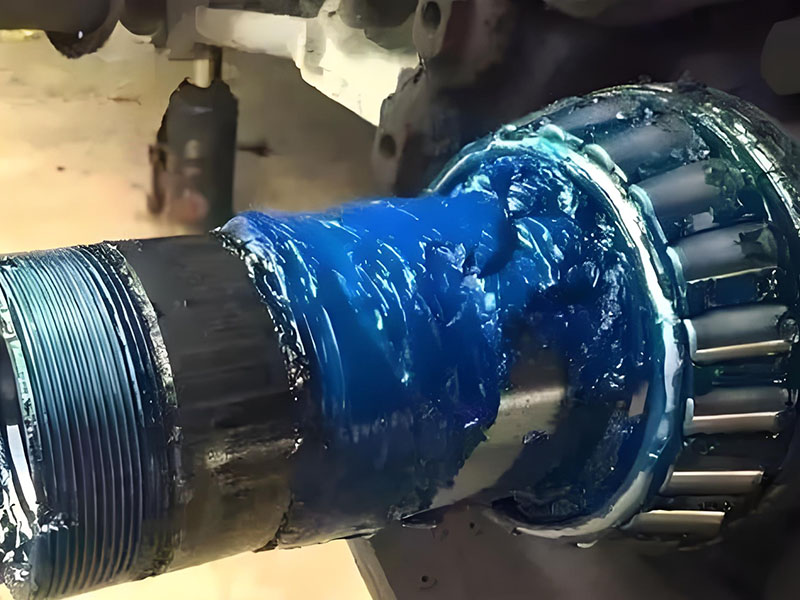
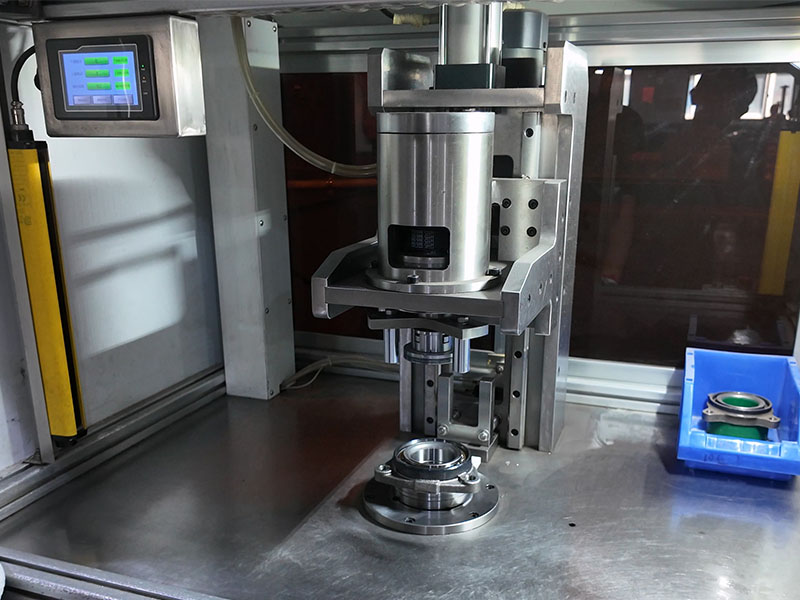
Have you ever wondered why two seemingly identical bearings can have drastically different service lives? Often, the answer lies in a small but mighty component: the bearing seal.
A bearing seal, essentially a barrier mounted between the inner and outer rings of a bearing, has two critical missions:
- To keep lubrication in: Retaining grease or oil to ensure long-term, low-friction operation.
- To keep contamination out: Preventing damaging elements like dust, water, mud, and debris from entering the bearing’s precision internal components.
Choosing the correct seal is not just a detail; it is a fundamental decision that dictates the reliability and longevity of your entire machine.
The Two Main Technologies: Contact vs. Non-Contact Seals
Bearing seals are broadly categorized by whether they make physical contact with the inner ring of the bearing.
Contact Seals
As the name suggests, contact seals feature a flexible lip that presses firmly against the inner ring of the bearing. This creates a tight, physical barrier.
Advantages:
- Excellent Sealing Efficiency: Provides the highest level of protection against fine dust, moisture, and other contaminants.
- Versatility: Suitable for a wide range of general-purpose industrial applications.
- Robustness: Performs well in challenging environments where contamination is a primary concern.
Limitations:
- Friction & Heat: The physical contact generates friction, which can lead to heat buildup, especially at high speeds.
- Wear: Over long periods, the sealing lip can wear down, potentially reducing its effectiveness.
- Speed Limit: The generated heat imposes a maximum speed limit, making them less ideal for ultra-high-speed applications.
Common Types:
- Lip Seals: The most common type, often featuring a primary sealing lip and a secondary “dust lip” for added protection.
- Face Seals: Used in more specialized applications where the seal contacts a surface perpendicular to the shaft.
(Image suggestion: A high-quality cross-section diagram of a deep groove ball bearing with a contact seal, clearly showing the lip touching the inner ring.)
Non-Contact Seals
Non-contact seals create a very narrow, intricate pathway (a labyrinth) between the seal and the inner ring. They rely on centrifugal force and the complex path to repel contaminants without physical contact.
Advantages:
- Minimal Friction: Since there’s no contact, friction is virtually eliminated, resulting in cooler operation.
- High-Speed Compatibility: Perfectly suited for applications with very high rotational speeds.
- Excellent Grease Retention: The design is often very effective at preventing grease from escaping.
- No Wear: As there is no rubbing, these seals do not wear out, offering a theoretically unlimited service life concerning the seal itself.
Limitations:
- Lower Sealing Effectiveness: They cannot provide the same level of absolute barrier against very fine particles or liquids as contact seals.
- Unsuitable for Heavily Contaminated Environments: In applications with direct water spray or heavy mud, non-contact seals are more likely to allow ingress.
Common Types:
- Gap Seals: A simple, precise annular gap.
- Labyrinth Seals: A more complex, tortuous path that provides better protection than a simple gap.
(Image suggestion: A cross-section diagram of a bearing with a non-contact seal, highlighting the “labyrinth” gap.)
Decoding the Industry: Common Bearing Seal Suffixes
Navigating bearing part numbers can be confusing. Different manufacturers use different codes for functionally similar seals. Here is a quick reference guide from a manufacturer (DUHUI) who understands them all.
Common Contact Seal Codes
| Feature | NTN / TPI | NSK | FAG (Schaeffler) | DUHUI Equivalent |
| Double Lip Contact Seal | LLU | DDU | 2RS1 | 2RS |
| Low-Torque Contact Seal | LLH | – | – | Available |
| Light Contact Seal | LLE | DDG | – | Available |
| Heavy Duty Contact Seal | LLU-X | DDW | – | Available |
Example: A common high-quality contact-sealed bearing might be known as 6205 LLU (NTN), 6205 DDU (NSK), or 6205 2RS1 (FAG). At DUHUI, we manufacture to these same high standards, offering our 6205 2RS as a reliable, cross-compatible solution.
Common Non-Contact Seal Codes
| Feature | NTN | NSK | SKF | DUHUI Equivalent |
| Non-Contact Labyrinth Seal | LLB | VV | RZ | 2RU |
Example: A bearing designed for high-speed, low-friction applications would be specified as 6205 LLB (NTN) or 6205 VV (NSK). DUHUI’s 6205 2RU is manufactured to meet these exact performance requirements.
This deep understanding of global standards ensures that when you partner with DUHUI, you get a bearing that seamlessly fits into your existing designs, regardless of the original brand specification.
The Material of Bearing Seals
The performance of a seal is only as good as the material it’s made from. The choice of material is critical for compatibility with the operating environment.
- Nitrile Rubber (NBR / Buna-N): The workhorse of sealing materials. It offers excellent resistance to mineral oils, greases, and water, combined with good wear resistance. It is the standard choice for most general industrial applications with temperatures ranging from -40°C to +100°C.
- Fluorocarbon Rubber (FKM / Viton): When the heat is on, FKM is the answer. It withstands much higher temperatures (up to +200°C) and offers superior resistance to a wide range of aggressive chemicals and oils. It’s the go-to choice for automotive, chemical, and high-temperature applications.
- Polytetrafluoroethylene (PTFE / Teflon): PTFE is renowned for its incredibly low coefficient of friction and almost universal chemical resistance. It can handle extreme temperatures (-70°C to +260°C) and is often used in applications where dry running or exposure to solvents is a concern.
- Polyether Ether Ketone (PEEK): A high-performance engineering thermoplastic. PEEK offers exceptional strength, stiffness, and stability at very high temperatures (up to +260°C). It is used in the most demanding applications, such as aerospace, racing, and food processing, where both mechanical and chemical performance are critical.
The Metal Case: Don’t overlook the rigid metal case (usually steel) that holds the elastomeric seal in place. It ensures the seal is press-fitted securely into the bearing outer ring, preventing slippage and maintaining the correct seal position.
How to Choose the Perfect Bearing Seal
Selecting the right seal is a process of matching your application’s demands with the seal’s capabilities.
Step 1: Define Your Operating Conditions
- Environment: Is it clean (like an electric motor) or dirty (like an agricultural harvester or a conveyor in a mine)? For clean, high-speed environments, consider non-contact seals. For dirty, wet, or dusty environments, contact seals are mandatory.
- Speed: What is the operating speed (RPM)? High speeds generally point towards low-friction non-contact seals. Lower speeds allow for the superior protection of contact seals.
- Temperature: What is the expected temperature range? This will dictate the seal material. Standard temperatures call for NBR. High temperatures require FKM or even PTFE/PEEK.
- Lubrication: Is the bearing lubricated with grease or oil? While most seals work with grease, some oil-lubricated applications may require specific seal designs.
Step 2: Make the Informed Decision
- Speed Check: Can the application tolerate the friction of a contact seal? If YES, proceed to Step 2. If NO, select a non-contact seal (e.g., 2RU, VV, RZ) .
- Environment Check: Is the environment clean or contaminated? If contaminated, a robust contact seal (e.g., 2RS, DDU, LLU) is your best choice.
- Temperature/Chemical Check: What are the temperature and chemical exposures? This determines your material. Choose NBR for standard, FKM for hot/chemical, and PTFE for low-friction/chemical extremes.
There is no single “best” seal, only the “most appropriate” seal for your specific needs. Leveraging our 20 years of experience, DUHUI’s engineering team can guide you through this process to find the optimal, cost-effective solution.
The Maintenance and Replacement of Bearing Seals
Even the best seal requires proper care.
Routine Inspection: Periodically check the seal area for signs of grease leakage. Look for hardening, cracking, or physical damage to the exposed seal lip.
Proper Replacement Procedures:
- Use the Right Tools: Never hammer a bearing or seal into place. Always use a proper press tool that applies force evenly to the outer ring of the bearing (or the rigid metal case of a seal) to avoid distortion.
- Lubricate Before Installation: Apply a thin layer of fresh grease to the sealing lip before installation. This prevents the seal from running dry and being damaged during the first seconds of operation.
- Check Orientation: Ensure the seal is facing the correct direction, especially if it features an asymmetric dust lip designed to face the contamination source.
Conclusion
From the material science of the lip to the precision of the metal case, every aspect of a bearing seal is a critical decision point. Making the right choice ensures your equipment runs longer, faster, and more reliably.
If you are unsure which bearing seal type is right for your application, or if you would like to request samples to test our quality firsthand, our technical team is ready to assist you. Contact DUHUI Bearing today for a consultation.